Food tourism has quietly become one of the fastest-growing travel trends of the decade. Travelers no longer want to simply see a destination — they want to taste it, cook it, and understand the landscape and people behind every dish. And while Italy, France, and Japan have long dominated food travel conversations, one country has been steadily building a case to be considered among the world’s greatest gastronomic destinations: Peru.
Lima has been named the Gastronomic Capital of the Americas, and with four restaurants ranked among the World’s 50 Best in recent years, the country’s culinary credentials are impossible to ignore. But what makes Peru truly remarkable for food lovers is not just its restaurants — it is the staggering diversity of ingredients, techniques, and traditions that change completely as you move from the coast to the highlands to the jungle.
A gastronomic journey through Peru is not one meal. It is dozens — each one shaped by altitude, ecology, and centuries of history.
Why Peru Is One of the World’s Great Food Destinations
Peru’s cuisine is the result of one of the most complex culinary fusions on Earth. Indigenous Andean traditions — built on potatoes, quinoa, corn, and ají peppers — met Spanish, African, Chinese, and Japanese influences over five centuries of immigration. The result is a food culture that is simultaneously ancient and relentlessly innovative.
Along the Peruvian coast alone, there are more than two thousand varieties of traditional soups. The country is home to over 3,000 varieties of potato, more than 50 types of corn, and dozens of native superfrains like quinoa, kiwicha, and cañihua that have no equivalent anywhere else in the world. Rare exotic fruits — chirimoya, lúcuma, aguaymanto, camu camu — grow at different altitudes and appear in dishes that would be impossible to replicate outside the country.
At Machu Picchu Team, we increasingly find that travelers want to weave gastronomic experiences directly into their itineraries — not as an afterthought, but as one of the main reasons for the trip. Here is how a complete culinary journey through Peru can look, region by region.
Lima — The Gateway and the Epicenter
Every gastronomic journey through Peru begins in Lima, and for good reason. The capital is where the country’s culinary revolution has been most visible — and where travelers get their first, often overwhelming, taste of what Peruvian food actually means.
The experience starts at the market. A morning visit to the Surquillo or San Isidro markets, guided by a local chef, is one of the most educational food experiences available in South America. Stalls overflow with unfamiliar produce: the purple sweetness of lúcuma, the tangy bite of aguaymanto, the custard-soft interior of chirimoya. Guides explain how each ingredient connects to a specific region of Peru, and how chefs use them in dishes across the country.
From the market, a hands-on ceviche and pisco sour class at one of Lima’s culinary schools is the natural next step. Travelers learn to make the national dish from scratch — choosing the sea bass, squeezing the key limes, preparing the leche de tigre — and discover that what looks like a simple dish is actually a precise and deeply cultural act.
Evenings in Lima belong to the restaurants. In Miraflores and Barranco, travelers can access some of the most celebrated dining experiences in Latin America: from anticuchos at street stalls, to multi-course tasting menus at restaurants like Central, which has held a top position in the World’s 50 Best for years.
Don’t miss in Lima: ceviche, leche de tigre, lomo saltado, causa, tiradito, anticuchos, pisco sour, lúcuma desserts
Cusco — Where Andean Tradition Meets Culinary Craft
The journey then moves into the Andes, and Cusco — the ancient Inca capital — offers a food experience as layered as its history.
The San Pedro Market is Cusco’s beating culinary heart. Unlike Lima’s polished food halls, San Pedro is a working market where local women in traditional dress sell fresh choclo (Andean corn), dried ají peppers, herbal teas, freshly pressed juices, and mountains of native potatoes in colors ranging from yellow to deep purple. A guided morning visit here, combined with a cooking class at one of the city’s culinary schools, transforms the market into a living classroom.
Cusco cooking classes led by local chefs cover the region’s most iconic dishes: rocoto relleno (stuffed spicy peppers), adobo cusqueño (pork marinated overnight in chicha), and sopa de quinoa. Travelers also explore the world of Andean superfoods in a tangible way — tasting the difference between quinoa varieties, understanding how kiwicha is used, and learning why the Incas considered cañihua a sacred grain.
Chocolate is another essential Cusco experience. A bean-to-bar workshop at ChocoMuseo, just two blocks from the Plaza de Armas, takes visitors from raw cacao pod to finished bar over two hours — roasting, grinding, molding, tasting. It is one of the most immersive food experiences in the city, and one that Machu Picchu Team consistently recommends as part of a Cusco City Tour.
Evenings in Cusco offer the chance to explore Novoandina cuisine — a modern style that takes traditional Andean ingredients and applies contemporary techniques. Restaurants like MAP Café, inside the Pre-Columbian Art Museum, serve tasting menus that feel like an edible biography of Peruvian culture.
Don’t miss in Cusco: rocoto relleno, adobo cusqueño, chicha morada, cuy al horno, quinoa soup, artisan chocolate, pisco cocktails with Andean herbs
The Sacred Valley — Earth Cooking and Living Tradition
If Lima represents Peru’s culinary future and Cusco its complex past, the Sacred Valley is where food connects most directly to the land.
The valley stretches between Cusco and Machu Picchu along the Urubamba River, and its combination of fertile soil, favorable altitude, and centuries of Inca agricultural engineering makes it one of the most productive food-growing regions in the Andes. The markets of Pisac and Ollantaytambo sell produce that rarely makes it as far as Lima — rare potato varieties, unusual corn types, fresh highland cheese, and herbs that grow nowhere else.
The defining culinary experience of the Sacred Valley is the Pachamanca — one of the oldest and most extraordinary cooking techniques in the world. The word comes from the Quechua for “earth pot.” Volcanic stones are heated in a fire until they glow red, then placed in a pit dug into the ground. Marinated meats — pork, lamb, chicken, sometimes guinea pig — along with potatoes, corn, and fava beans are placed on top, wrapped in aromatic herbs like huacatay (Andean black mint), and buried under the earth to cook slowly in the residual heat. The moment the pit is uncovered — the steam rising, the aroma filling the valley — is one of the most memorable food experiences in all of South America.
ChocoMuseo also has branches in Ollantaytambo and Pisac, making it easy to add a chocolate workshop to a Sacred Valley Tour. And for travelers seeking the pinnacle of Andean fine dining, MIL restaurant — located near the Moray archaeological site — offers an eight-course tasting menu built entirely from ingredients sourced within the surrounding ecosystems, including locally grown cacao from the Cusco jungle. It has been called one of the most geographically specific menus on Earth.
💡 Tip from Machu Picchu Team: Combine the Sacred Valley + Machu Picchu 2-Day Tour to spend a full day in the valley — time enough for a Pachamanca lunch and a market visit in Pisac — before taking the train to Aguas Calientes for Machu Picchu the following morning.
Don’t miss in the Sacred Valley: Pachamanca, choclo con queso, fresh highland cheese, Pisac market produce, Novoandina tasting menus
Machu Picchu and the Cloud Forest — A Different Kind of Flavor
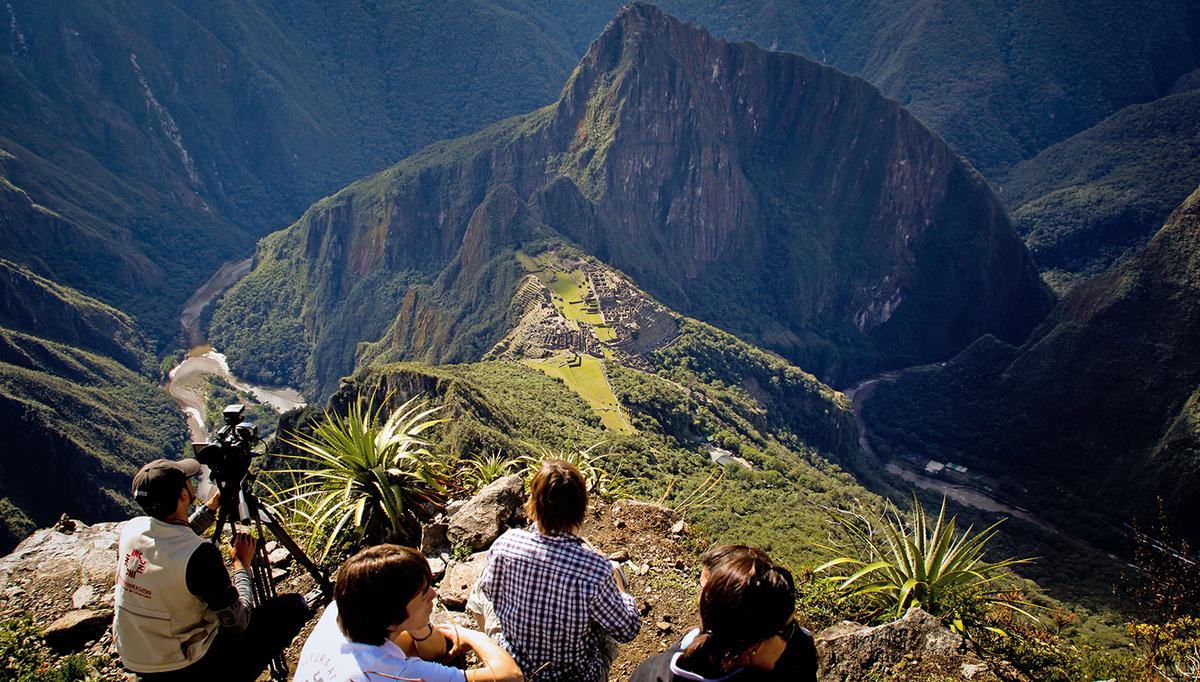
Aguas Calientes, the small town at the base of Machu Picchu, sits in the cloud forest at a dramatically lower altitude than Cusco — and the food reflects the change. Subtropical fruit, fresh river trout from the Urubamba, and jungle-influenced preparations appear on menus that would feel out of place in the highlands.
The Machu Picchu Tour by Train passes through some of the most lush and biodiverse landscapes in Peru, and the towns along the way are worth stopping in for a meal. For travelers with time, staying a night in Aguas Calientes allows for dinner at one of the town’s riverside restaurants — river trout with Andean herbs, coca leaf–infused soups, and fresh tropical juices that don’t exist at altitude.
For the most adventurous, the Inca Jungle Trail descends through exactly this cloud-forest terrain on the way to Machu Picchu — passing cacao-growing country, coffee farms, and subtropical villages where the food is entirely different from anything encountered in Cusco or Lima.
The Amazon — Where the Ingredients Come From
The ultimate chapter of Peru’s gastronomic story lies in the Amazon, where much of the country’s most extraordinary produce originates. Cacao, exotic fruits, jungle peppers, river fish, and ingredients with no name in any language outside the region — the Amazon is where Peruvian food begins.
Several lodges in the Manu Cultural Zone and the Tambopata National Reserve include cacao plantation tours, where guests pick pods directly from trees, open them, taste the fresh white pulp surrounding the beans, and follow the process through to fermentation and drying. It is the most direct possible connection between ingredient and finished product.
The Amazon Rainforest Tours available through Machu Picchu Team range from 3 to 6 days and include options in both Manu and Tambopata — two of the most biodiverse regions on Earth, and the source of flavors that drive some of Lima’s most celebrated restaurants.
Don’t miss in the Amazon: fresh cacao, exotic jungle fruits, river fish preparations, aguajina (palm fruit drink), medicinal plant tastings
A Complete Gastronomic Route Through Peru
| Region | Duration | Key Food Experiences |
|---|---|---|
| Lima | 2–3 days | Market tour, ceviche class, pisco sour, fine dining |
| Cusco | 2–3 days | San Pedro Market, cooking class, chocolate workshop, Novoandina dinner |
| Sacred Valley | 1–2 days | Pachamanca, Pisac market, MIL restaurant, cheese tasting |
| Machu Picchu | 1–2 days | Cloud forest trout, coca tea, jungle fruits |
| Amazon | 3–4 days | Cacao farm, exotic fruit tasting, jungle cooking |
A full gastronomic journey through all five regions runs approximately 9 to 14 days, depending on pace. A focused 9-day route covering Lima, Cusco, the Sacred Valley, and Machu Picchu — without the Amazon extension — is the most popular format and fits naturally with the classic Peru itinerary that Machu Picchu Team designs for its travelers.
For those who prefer to combine ruins and food in equal measure, options like the Cusco City + Sacred Valley + Machu Picchu 3-Day Tour build in stops at markets, cooking experiences, and restaurants alongside the archaeological highlights.
The Bigger Picture
Peruvian cuisine is considered one of the most diverse in the world — on par with French, Chinese, and Indian food for complexity and cultural depth. It combines the flavors of four continents across three completely different ecosystems — coast, highlands, and jungle — each producing ingredients found nowhere else on Earth.
A gastronomic journey through Peru is not a tour you take for the food alone. It is a way of understanding the landscape, the history, and the people in a way that no museum or ruin can fully provide. Every dish has a geography, and every meal is a story.
The table is set. Peru is waiting.