Food tourism has grown significantly in recent years, and travelers across the world are increasingly seeking deeper connections with what they eat — visiting producers, learning ancient techniques, and understanding how landscape shapes flavor. Cheese, in particular, has emerged as one of the most compelling reasons to take a trip. It is rooted in place, shaped by altitude and climate, and carries centuries of tradition in every bite.
Most of that conversation focuses on Europe. But Peru, a country better known for its Inca ruins and ceviche, harbors one of the continent’s most extraordinary and overlooked cheese cultures. With an estimated 50 distinct varieties, around 400,000 producers spread across the Andean highlands, and a tradition that blends colonial technique with indigenous knowledge, Peru’s cheese world is richer — and more diverse — than almost anyone expects.
A multi-region journey through Peru’s cheese-producing heartlands, from the dairy hills of Cajamarca to the markets of Cusco’s Sacred Valley and the volcanic landscape of Arequipa, offers a travel experience that is as surprising as it is delicious.
Why Peru’s Cheese Deserves Attention
Peru’s cheesemaking history began in the colonial era, when Spanish settlers introduced cattle, sheep, and goats to the Andes. But over generations, local producers adapted these imported techniques to their own landscape, traditions, and resources — creating varieties that exist nowhere else in the world.
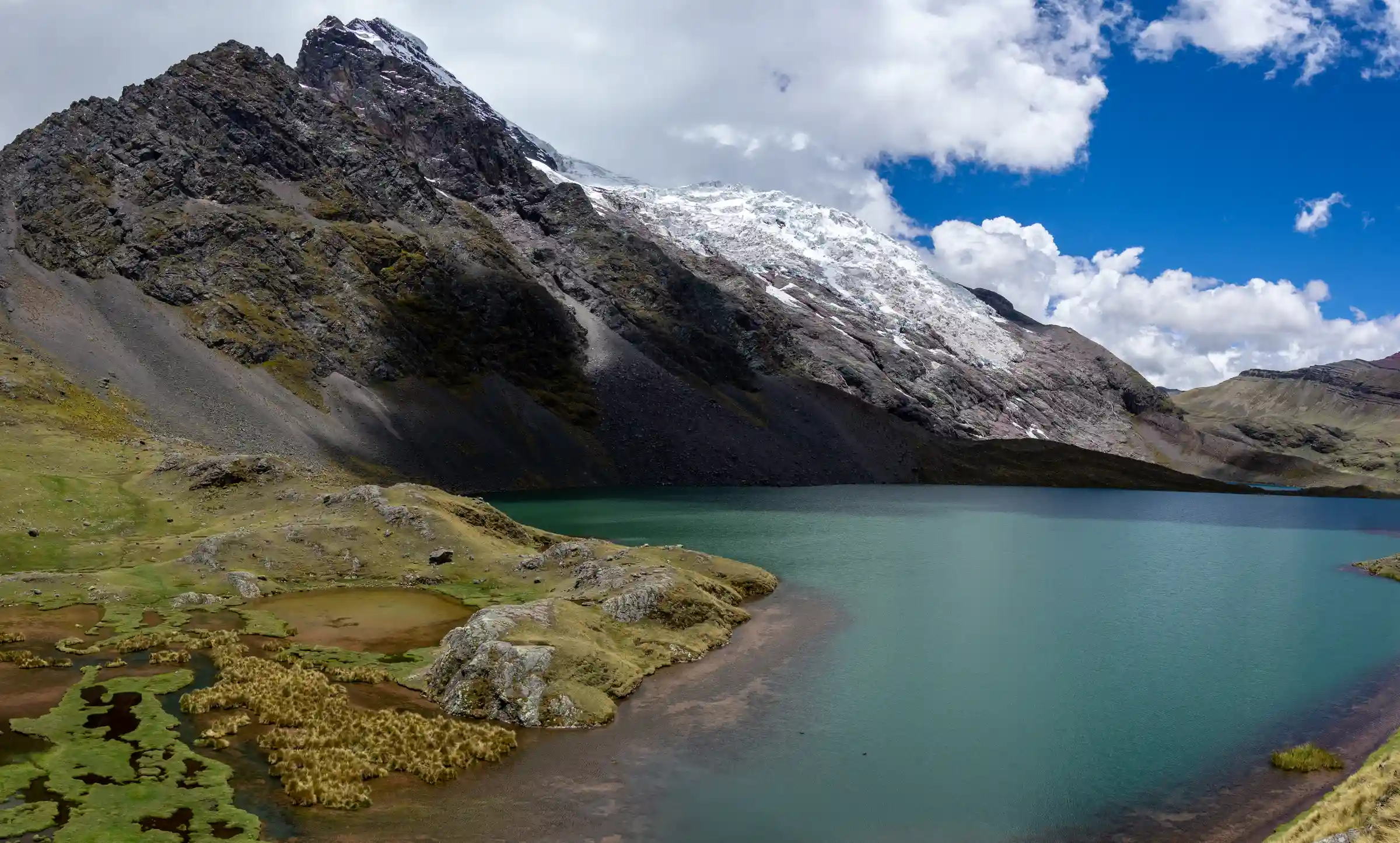
The key ingredient is altitude. The vast majority of Peru’s milk comes not from industrial coastal farms, but from small herds grazing at between 3,000 and 4,500 meters above sea level. At these elevations, the grass is richer, the air is thinner, and the milk develops a distinctive character that changes completely from valley to valley. The same technique applied in Cajamarca in the north and in Puno in the south produces cheeses that taste nothing alike — because the land, the water, and even the microbes in the air are different.
The Ministry of Agriculture estimates that around 50 varieties of cheese are produced nationally. The four most representative — Queso Andino, Queso Paria, Queso Mantecoso, and Queso Fresco — are each deeply tied to specific regions. But beyond these anchors lies an expanding world of artisan production: aged cheeses rubbed in achiote, blue cheeses inoculated with local mold cultures, soft goat cheeses matured in Andean caves, and wheels covered in fig leaves and hardwood ash.
| Cheese | Region | Type | Flavor Profile |
|---|---|---|---|
| Queso Mantecoso | Cajamarca | Semi-fresh, spreadable | Creamy, mildly acidic, buttery |
| Queso Andino | All highlands | Semi-hard | Mild, subtly salty, smooth |
| Queso Paria | Puno / Southern Andes | Fresh | Pleasant, slightly salty, smooth |
| Quesillo | Cusco / Sacred Valley | Fresh curd | Milky, delicate |
| Queso Rojo | Colca Valley, Arequipa | Fresh | Milky, unique, slightly salty |
| Queso de Cabra Serrano | Cusco / Arequipa / Junín | Aged goat | Complex, earthy, tangy |
| Cordillera Verde | Celendín, Cajamarca | Aged, artisan | Floral, verdant, soft paste |
Cajamarca — Peru’s Undisputed Cheese Capital
Any serious cheese journey through Peru begins in Cajamarca, a colonial city set in the highlands of northern Peru at 2,750 meters. The region produces nearly 20% of the country’s milk, and its cheese culture is so embedded in daily life that no Cajamarquino breakfast is complete without a spread of mantecoso on fresh bread.
Queso Mantecoso — literally “buttery cheese” — is the undisputed star of the region and arguably the most famous cheese in all of Peru. Made using a 200-year-old technique unique to Cajamarca, it begins as a fresh curd called quesillo, which is then salted and worked through grinders to develop its characteristic spreadable texture, straw-yellow color, and mildly acidic, creamy flavor. In 2024, a Mantecoso from the Lácteos D’Celendín brand scored a near-perfect 95 out of 100 at the National Cheese Competition organized by Peru’s Ministry of Agriculture — earning the title of Best Cheese in Peru.
The cheese destination within Cajamarca is Chugur, a small town in the Hualgayoc province known as “El Paraíso de los Quesos.” The S’Chugur dairy, founded in 1974, now produces over 23 varieties — from classic Mantecoso and Quesillo to Swiss-style tilsit, aged goat cheese, cheeses with rocoto pepper, oregano, and cumin, and an achiote-rubbed wheel inspired by French mimolette. Visitors to the town can tour the production rooms, watch women work the quesillo by hand, and sit down to a tasting that could easily fill an afternoon.
In nearby Celendín, the family-run Lácteos D’Celendín pushes further into experimentation. Their “Shill Shill” — a cheddar-style wheel aged at least 12 months, rubbed in lard and wrapped in cotton cloth — is one of the most complex cheeses produced anywhere in South America. Their blue cheese, inoculated with mold cultivated from local bread left to age in their cellar, is a small-scale creative achievement that would be extraordinary anywhere in the world.
Don’t miss in Cajamarca: Queso Mantecoso with fresh bread for breakfast, a tour of S’Chugur in Chugur, aged wheels at Lácteos D’Celendín, manjar blanco (Cajamarca’s caramel spread) alongside your cheese tasting
The Sacred Valley and Cusco — Cheese at the Heart of Inca Country
From Cajamarca, the cheese trail moves south into the highlands of Cusco and the Sacred Valley — the ancient agricultural heartland of the Inca Empire, and a region where cheese plays a quieter but equally essential role in daily food culture.
The most iconic cheese experience in this region is not a tasting menu or a farm tour. It is choclo con queso: giant kernels of Sacred Valley corn — a distinct variety cultivated here since Inca times, with kernels the size of a thumbnail — boiled and served alongside a thick slice of fresh Quesillo. It is sold at market stalls, roadside stops, and family homes throughout the valley, and it is one of the great simple pleasures of Andean food. The best version in Peru is widely considered to be found right here, in the markets of Pisac and Ollantaytambo.
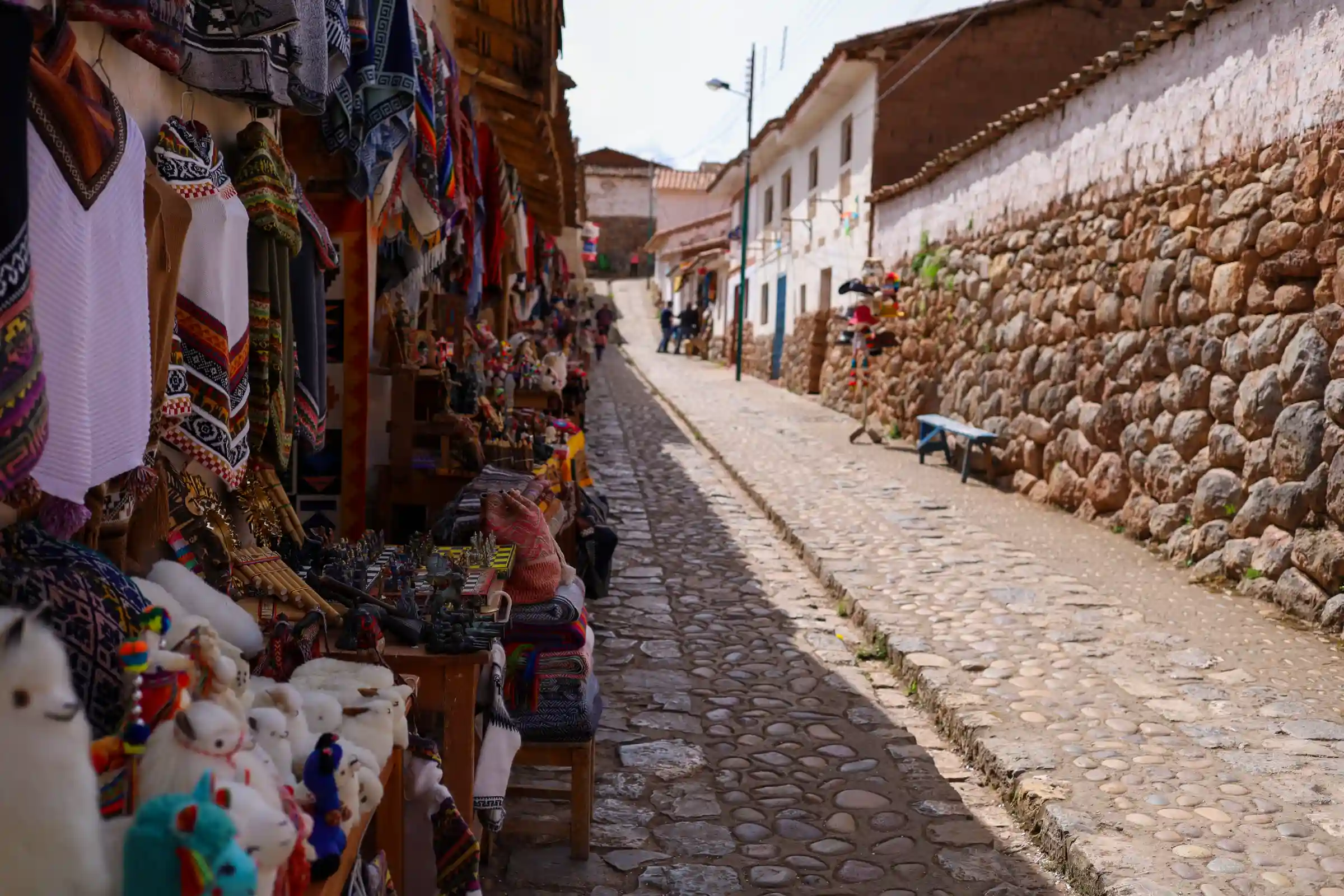
The markets of the Sacred Valley are also the best places to buy Queso Andino directly from the producers who make it. At the Pisac market on Sunday mornings, highland women bring wheels of fresh cheese wrapped in cloth, along with quesillo still warm from that morning’s production. The combination of fresh bread, highland cheese, and chicha morada is as good a breakfast as the Andes have to offer.
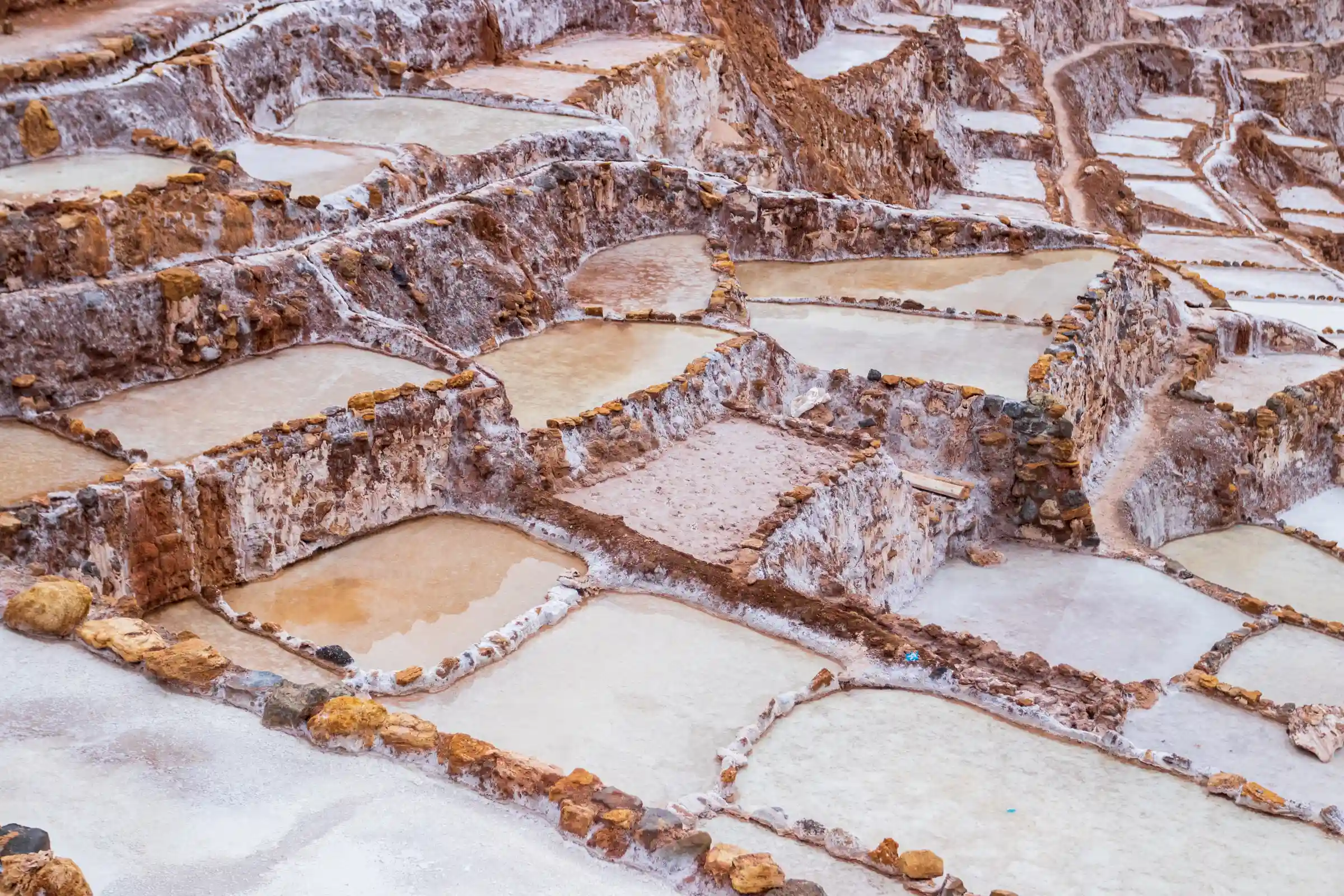
For travelers exploring the region with Machu Picchu Team, a Sacred Valley Tour passes through both Pisac and Ollantaytambo — the two best market towns for fresh cheese in the entire region. The Moray and Maras Salt Mines Tour adds another layer of culinary depth, visiting the famous Inca salt pans at Maras — the very salt that has been used to cure Andean cheeses for centuries.
In Cusco itself, the Cusco City Tour is an ideal opportunity to explore the San Pedro Market, where vendors sell wheels of fresh Queso Andino, rounds of Quesillo, and aged highland cheeses alongside ají peppers, dried herbs, and every variety of Andean potato. A guided visit here is as educational as any museum in the city.
Don’t miss in the Sacred Valley and Cusco: Choclo con queso at Pisac market, fresh Quesillo from morning producers, Queso Andino from San Pedro Market, Cusco-style cheese boards paired with chicha morada
💡 Tip: The Machu Picchu + Sacred Valley 2-Day Tour with Machu Picchu Team gives you a full day in the valley — enough time to stop at the Pisac market and the ChocoMuseo in Ollantaytambo, for a morning of cheese followed by an afternoon of chocolate.
Arequipa — The Home of Peru’s Rarest Cheese
Arequipa, the “White City” built in volcanic sillar stone in southern Peru, has its own distinct cheese culture shaped by the dramatic geography of the region. The most extraordinary example is Queso Rojo — Red Cheese — produced only in the tiny community of Lluta, in the Colca Valley, approximately four hours from Arequipa. It is one of the rarest cheeses in all of Peru: a fresh cheese with a distinctive reddish hue, a milky and slightly salty flavor, and a production so geographically limited that almost no one outside the region has ever tasted it.
Queso Paria, the foundational cheese of the southern Andes, is at its best in Arequipa and the neighboring regions of Puno and Ayacucho. Originally made with a mixture of cow’s and sheep’s milk from animals grazing at altitudes above 3,000 meters, it now uses exclusively high-altitude cow’s milk, which gives it a flavor and texture impossible to replicate at lower elevations. In Arequipa, Queso Paria is the essential ingredient in rocoto relleno — the city’s most iconic dish, a spicy pepper stuffed with a mixture of meat and melted cheese — and in pastel de papa, a layered potato cake held together with paria and cream.
The artisan shop Chaqchao in Arequipa offers one of the best cheese and local product tasting experiences in southern Peru, pairing regional cheeses with Peruvian coffee and craft beer in a relaxed café setting that invites a long afternoon.
Don’t miss in Arequipa: Queso Rojo from the Colca Valley, Queso Paria in rocoto relleno, cheese and coffee pairing at Chaqchao, manjar blanco from local dairy shops
Lima — Where All the Cheeses Come Together
Every regional cheese trail in Peru eventually leads back to Lima, where the country’s best artisan producers have found a growing audience among food-conscious city dwellers. Specialty shops like La Gastrónoma in Miraflores curate selections from across the country — Mantecoso from Cajamarca, Paria from the south, aged wheels from Celendín, and experimental varieties that most travelers would never encounter in the regions themselves.
S’Chugur, the great dairy of Cajamarca, now has multiple Lima locations, making it the easiest point of entry for anyone wanting to taste the breadth of Peruvian artisan cheese in a single sitting. Their tastings include everything from the classic Mantecoso to 23 distinct varieties — cheeses with spices, herbs, and local seasonings that reflect the full range of Andean tradition.
Lima is also the right place to end with a proper tabla de quesos peruanos — a Peruvian cheese board — at one of the city’s gastronomy-focused restaurants. Paired with Peruvian wine from the Ica region or a flight of pisco, it is a meal that functions as both conclusion and introduction: a reminder of everything tasted on the journey, and a reason to go back for more.
Don’t miss in Lima: S’Chugur artisan dairy, La Gastrónoma gourmet shop, Peruvian cheese board with Ica wines or pisco, cheese-based sauces in classic Lima dishes (papa a la huancaína, ocopa)
A Complete Peruvian Cheese Route
| Region | Key Cheeses | Must-Do Experience |
|---|---|---|
| Cajamarca | Mantecoso, Quesillo, Andino tipo suizo, Achiote, Azul | Tour S’Chugur dairy in Chugur; aged wheels at Lácteos D’Celendín |
| Sacred Valley | Quesillo, Queso Andino, fresh highland cheese | Choclo con queso at Pisac market; Ollantaytambo stalls |
| Cusco | Queso Andino, Quesillo, aged goat | San Pedro Market guided visit; cheese and chicha pairing |
| Arequipa | Queso Rojo, Queso Paria | Colca Valley tour; rocoto relleno; Chaqchao tasting |
| Lima | All Peruvian varieties | La Gastrónoma; S’Chugur; cheese board with Ica wine |
A complete cheese journey through all four regions runs comfortably over 10 to 12 days. For travelers combining cheese with the classic Peru circuit, Machu Picchu Team can build itineraries that weave market visits, farm stops, and highland tastings into routes that also include the Inca Trail, the Salkantay Trek, and a Machu Picchu Tour by Train — passing through the very landscapes where many of these cheeses are produced.
The Bigger Picture
Peru’s cheese culture is shaped by the same forces that make its cuisine extraordinary: altitude, ecological diversity, and centuries of tradition adapted rather than abandoned. The milk from a herd grazing at 4,000 meters above sea level in Puno tastes nothing like milk from the Cajamarca valleys, and the women who turn that milk into Queso Paria by hand carry knowledge that cannot be found in any textbook.
France has around 1,200 cheese varieties. Peru has around 50. But those 50 are the product of a landscape so varied — from cloud forests to salt flats to volcanic valleys — that each one is genuinely unlike anything else in the world.
The cheese board is set. Peru is waiting.