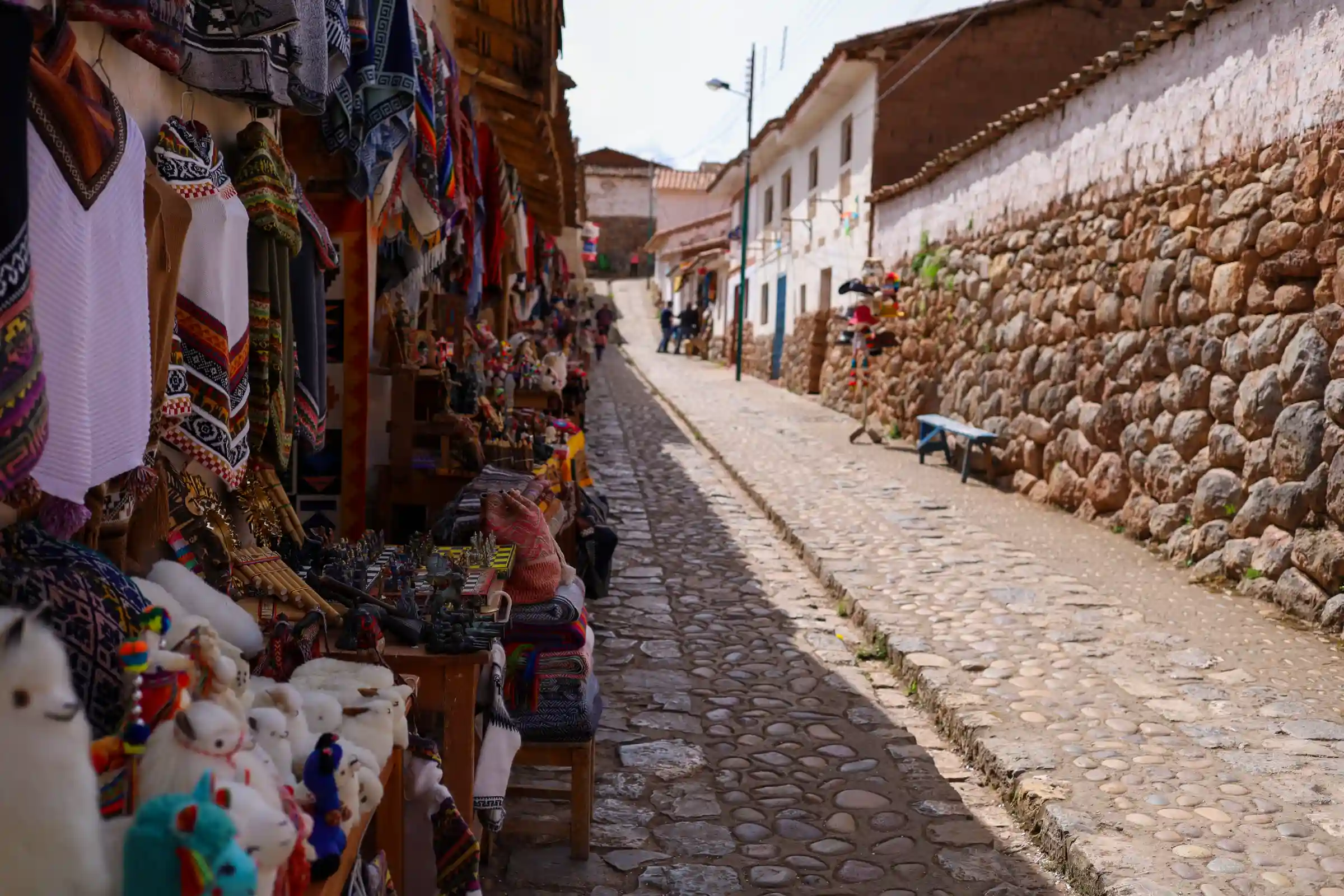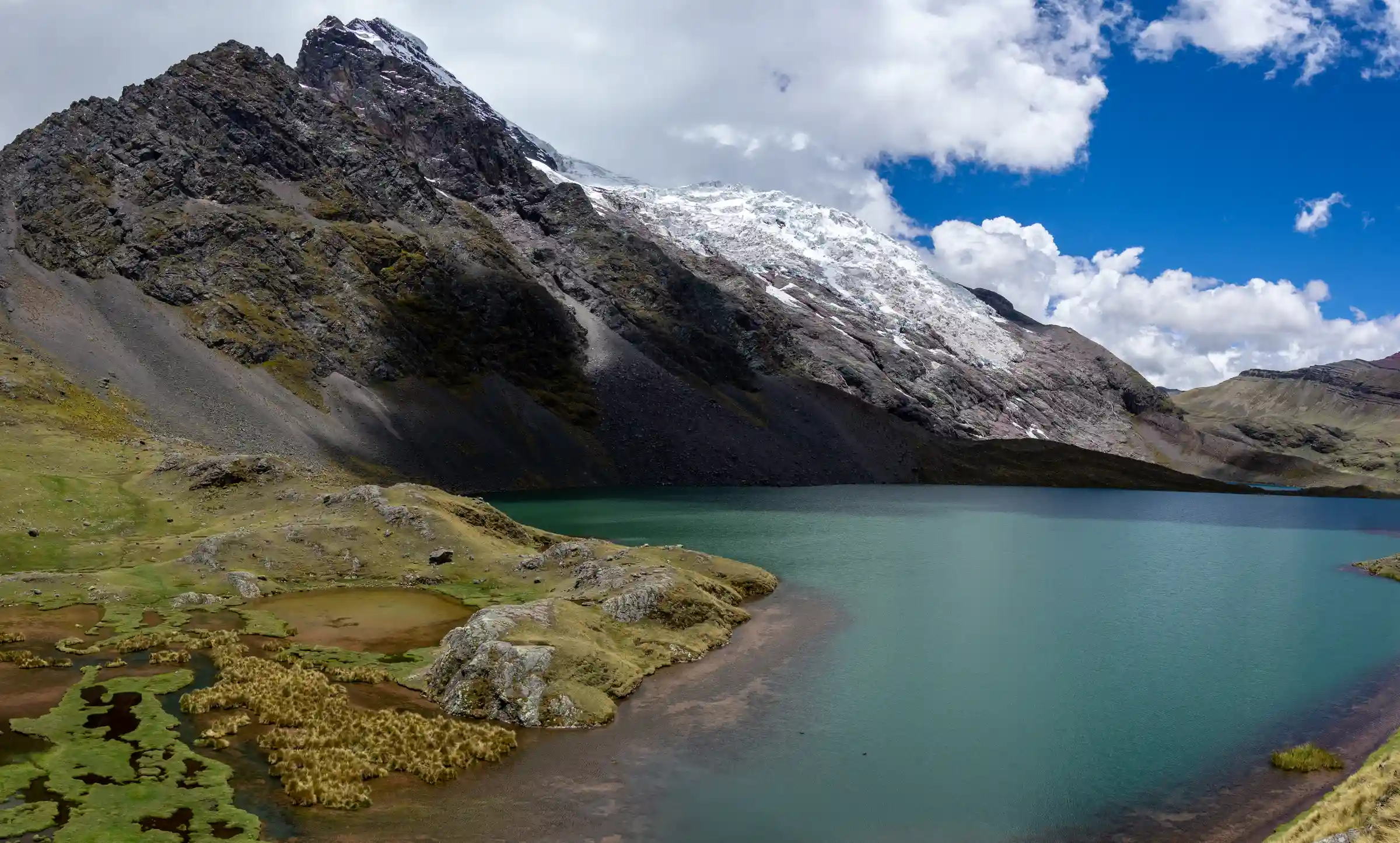
Discover the Maras Salt Mines in Peru with our complete travel guide. Learn how to visit from Cusco, how the salt pools work, the best time to go, what to bring, and how to combine Maras with Moray.
The Maras Salt Mines, locally known as Salineras de Maras, are one of the most distinctive attractions in the Sacred Valley of Peru.
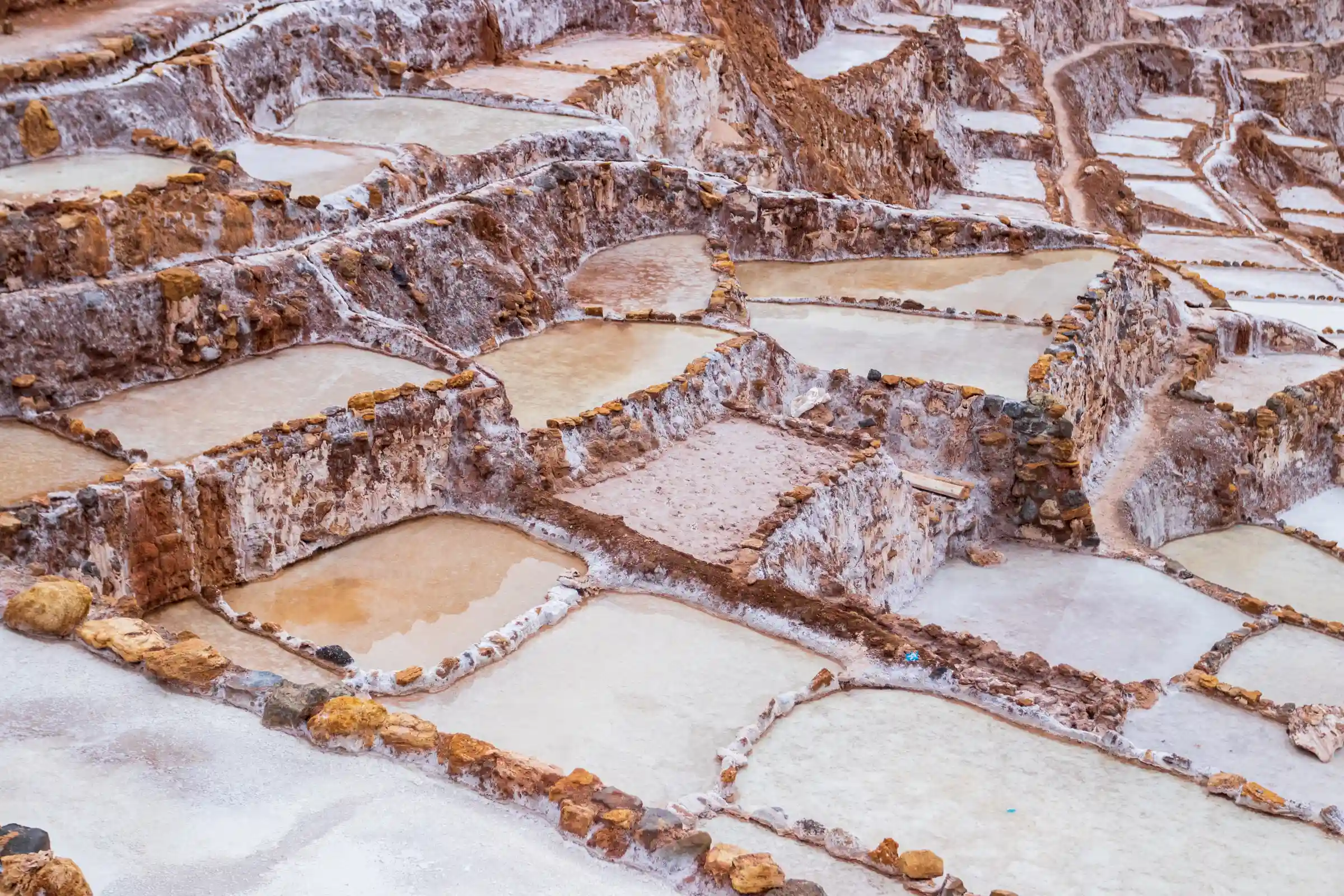
Thousands of small salt pools cascade down the side of a mountain, creating a spectacular landscape of white, cream, brown, and golden terraces. These pools have been used for salt production for generations and remain an important part of the economy and cultural heritage of the local community.
Located between Cusco and the Sacred Valley, the Maras Salt Mines are easy to combine with other popular attractions such as Moray, Chinchero, Ollantaytambo, and the Sacred Valley.
Unlike many attractions around Cusco, Maras is not primarily an archaeological site. It is a living salt-production area, where traditional methods continue to be used today.
This complete Maras Salt Mines Travel Guide from Machu Picchu Team in Cusco explains how to visit, what to expect, how the salt pools work, the best time to go, what to bring, how to combine Maras with Moray, and everything travelers should know before planning their visit.
Maras Salt Mines at a Glance
| Detail | Information |
|---|---|
| Destination | Maras Salt Mines |
| Local name | Salineras de Maras |
| Region | Cusco, Peru |
| Area | Sacred Valley |
| Approximate altitude | Around 3,000–3,200 m / 9,840–10,500 ft |
| Main attraction | Thousands of traditional salt pools |
| Recommended visit | 45 minutes–1.5 hours |
| Difficulty | Easy |
| Typical tour combination | Maras + Moray |
| Best general season | April to October |
| Entrance | Separate from the Cusco Tourist Ticket |
| Distance from Cusco | Approximately 50 km / 31 miles by road |
| Best for | Culture, photography, landscapes and local traditions |
What Are the Maras Salt Mines?
The Maras Salt Mines are a large collection of shallow salt evaporation pools built into the side of a mountain near the town of Maras.
The pools are supplied by naturally salty water emerging from the mountain.
Rather than using modern industrial machinery, the traditional system directs this water through small channels toward individual pools.
The water remains in the pools while the sun and dry mountain air gradually cause it to evaporate.
Salt is left behind.
This process is repeated until enough salt accumulates to be collected.
The result is one of the most unusual landscapes in the Cusco region.
Why Are the Maras Salt Mines Famous?
Maras is famous for the visual effect created by thousands of small pools covering a steep mountainside.
From the main viewpoints, visitors can see an enormous network of terraces descending toward the Sacred Valley.
Depending on the season and stage of salt production, the pools may appear:
- White.
- Beige.
- Cream.
- Golden.
- Light brown.
- Reddish.
This creates an almost geometric landscape surrounded by Andean mountains.
Maras is also important because salt production remains connected with local families and community traditions.
Where Are the Maras Salt Mines?
The salt mines are located near the town of Maras, northwest of Cusco and close to the Sacred Valley.
They are often visited together with Moray, another famous attraction in the same general area.
The location makes Maras convenient for travelers staying in:
- Cusco.
- Urubamba.
- Ollantaytambo.
- Sacred Valley hotels.
It can be visited as a half-day excursion or included in a longer Sacred Valley itinerary.
Are the Maras Salt Mines Natural?
The salty water itself comes from a natural underground source.
However, the individual salt pools are constructed and maintained by people.
The landscape therefore represents a combination of:
natural geology + traditional engineering + generations of human activity.
This is one of the reasons Maras is so interesting.
You are not simply observing a geological formation.
You are visiting an active cultural landscape.
How Do the Maras Salt Mines Work?
The process is remarkably simple but effective.
Step 1: Salty Water Emerges From the Mountain
A natural spring provides water with a high concentration of dissolved minerals and salt.
Step 2: Water Travels Through Small Channels
A network of channels distributes water across the mountainside.
Step 3: Pools Are Filled
Individual salt pools receive a controlled amount of water.
Step 4: Water Evaporates
Sunlight and dry air gradually remove the water through evaporation.
Step 5: Salt Crystals Remain
As the water disappears, salt becomes concentrated on the bottom and sides of the pool.
Step 6: Salt Is Collected
Local producers harvest the salt and prepare it for different uses.
The process continues throughout suitable periods of the year.
How Many Salt Pools Are There at Maras?
The mountainside contains thousands of individual salt pools.
From a distance they appear almost like scales covering the slope.
Each pool is relatively small, but together they create an enormous terraced system.
The exact number can change over time as pools are maintained, restored, or modified.
For travelers, the most impressive experience is seeing the complete network from above rather than focusing on a specific number.
History of the Maras Salt Mines
Salt production in the Maras area has deep roots in Andean history.
The traditional system has been used for generations and is generally associated with periods extending back before and during the Inca era.
The Incas understood the economic importance of salt and incorporated existing local production systems into their broader regional economy.
Today, the salt mines remain strongly associated with the local community.
This continuity is what makes Maras particularly interesting.
It is not simply an abandoned historical structure.
It continues to function.
Why Was Salt Important in the Andes?
Salt was valuable for several reasons.
It could be used for:
- Food preparation.
- Food preservation.
- Trade.
- Animal products.
- Traditional practices.
- Regional exchange.
In mountainous environments, reliable salt sources could have significant economic value.
Maras became important because its natural spring provided a continuous source of saline water.
Who Owns the Salt Pools?
The pools are traditionally associated with local families and community-based production.
Different families may manage individual pools or groups of pools.
This means tourism takes place within an active production environment rather than a conventional archaeological park.
Visitors should therefore respect barriers, signs, and local instructions.
Can Visitors Walk Inside the Salt Pools?
Access to the production pools is generally restricted.
Visitors normally observe the salt mines from designated paths and viewpoints.
This protects:
- Salt quality.
- Local production.
- Workers.
- Visitors.
- The traditional terraces.
Do not cross barriers or enter production areas for photographs.
The best panoramic views are available from designated observation areas.
Maras Salt Mines vs Moray
Maras and Moray are frequently confused because they are commonly visited on the same tour.
They are completely different attractions.
| Maras Salt Mines | Moray |
| Salt production | Inca archaeological site |
| Thousands of small pools | Large circular terraces |
| Active cultural landscape | Historical agricultural complex |
| Separate entrance | Included in Cusco Tourist Ticket |
| White and brown terraces | Green agricultural terraces |
| Local salt tradition | Inca engineering and agriculture |
Both are worth visiting.
Together they provide an excellent half-day excursion from Cusco.
What Is Moray?
Moray is an archaeological site consisting of unusual circular terraces built into natural depressions.
The site is often associated with Inca agriculture and the management of different environmental conditions.
Its design is completely different from the salt pools at Maras.
Because the two attractions are relatively close, most travelers visit them during the same tour.
Does the Cusco Tourist Ticket Include Maras?
No.
This is one of the most important things travelers should know.
The Maras Salt Mines are not included in the Cusco Tourist Ticket, or Boleto Turístico del Cusco.
Maras has a separate entrance fee.
However:
Moray is included in the Cusco Tourist Ticket.
Remember:
Maras Salt Mines = separate entrance.
Moray = Boleto Turístico.
How to Visit Maras Salt Mines From Cusco
There are several ways to reach Maras.
The easiest options include:
- Organized tour.
- Private tour.
- Taxi.
- Private transportation.
- Combination tour with Moray.
Most first-time visitors choose an organized Maras and Moray tour from Cusco.
This simplifies transportation and allows a guide to explain both attractions.
Maras and Moray Half-Day Tour
One of the most popular excursions from Cusco combines:
Cusco → Chinchero area → Moray → Maras Salt Mines → Cusco
Exact routes vary by tour operator.
The experience normally requires approximately half a day.
This makes it suitable for travelers who want to keep the afternoon or evening free.
Typical Maras and Moray Itinerary
Morning: Departure From Cusco
Most tours begin in the morning.
Travelers leave Cusco and head toward the highlands above the Sacred Valley.
The drive provides views of:
- Mountains.
- Agricultural fields.
- Rural communities.
- Andean landscapes.
Visit Moray
The first major stop may be Moray.
Visitors observe the circular terraces and learn about Inca agricultural practices and engineering.
Continue to Maras
The journey then continues toward the salt mines.
The road descends through dramatic mountain scenery before reaching the entrance area.
Explore the Salt Mines
Visitors walk to designated viewpoints and learn about:
- Salt production.
- Traditional channels.
- Evaporation pools.
- Community management.
- Different types of salt.
Return to Cusco
After visiting Maras, the tour returns toward Cusco.
Depending on the itinerary, additional stops may be included.
How Long Do You Need at Maras Salt Mines?
Most travelers need approximately 45 minutes to 1.5 hours.
This provides enough time to:
- Walk through the visitor area.
- Learn how the pools work.
- Take photographs.
- Observe workers when production is active.
- Visit local salt shops.
You generally do not need an entire day exclusively for Maras.
Best Time to Visit Maras Salt Mines
Maras can be visited throughout most of the year.
However, the visual appearance of the pools changes according to weather and salt production.
Dry Season
The drier season generally runs from approximately April or May through October.
Advantages include:
- More sunshine.
- Lower chance of rain.
- Clearer mountain views.
- Easier road conditions.
- Stronger salt evaporation.
The pools can appear brighter and whiter during productive dry periods.
Rainy Season
The rainy season generally runs from approximately November through March.
During this time:
- Landscapes become greener.
- Clouds are more common.
- Pools may contain more water.
- Roads can become wetter.
- Salt colors may appear darker.
Maras is still worth visiting.
In fact, the contrast between the green mountains and the salt terraces can be beautiful.
Maras Salt Mines by Season
| Season | What to Expect |
| April–May | Green landscapes and improving weather |
| June–August | Dry conditions and strong sunshine |
| September–October | Good weather and attractive landscapes |
| November–March | More rain and greener surroundings |
What Is the Best Time of Day to Visit?
Morning visits are popular because they can provide:
- Cooler temperatures.
- Comfortable walking.
- Good photography conditions.
- Easy combination with Moray.
Late afternoon can also provide interesting lighting.
Midday sunlight may create strong reflections from the pools.
Photographers should consider how direct sunlight affects the bright salt surfaces.
Is Sunrise or Sunset Better?
Standard tour schedules do not usually focus on sunrise or sunset.
However, photographers may prefer softer morning or late-afternoon light.
The surrounding mountains can create dramatic shadows during these periods.
How High Are the Maras Salt Mines?
The Maras region sits at approximately 3,000 to 3,200 meters / 9,840 to 10,500 feet above sea level, depending on the exact location.
This is slightly lower than central Cusco but still high enough for travelers arriving directly from sea level to notice the altitude.
Fortunately, visiting Maras does not require strenuous hiking.
Is Altitude Sickness a Problem at Maras?
Altitude symptoms are possible, particularly for travelers who have just arrived in the Cusco region.
However, a standard visit involves limited physical effort.
Helpful precautions include:
- Walk slowly.
- Drink enough water.
- Avoid excessive alcohol before the excursion.
- Spend time acclimatizing in Cusco or the Sacred Valley.
Seek professional medical assistance if severe altitude symptoms develop.
How Difficult Is Visiting Maras?
Visiting the Maras Salt Mines is generally easy.
The attraction requires some walking, but it is not a trek.
Visitors may encounter:
- Uneven paths.
- Steps.
- Slopes.
- Dust.
- Wet surfaces during rainy weather.
Comfortable walking shoes are recommended.
Maras Salt Mines for Older Travelers
Most older travelers can visit Maras comfortably.
The main considerations include:
- Altitude.
- Uneven ground.
- Steps.
- Sun exposure.
Travelers with limited mobility should check the accessibility of the exact viewpoint used by their tour.
Maras Salt Mines With Children
Maras can be an interesting destination for families.
Children often enjoy seeing how salt comes from mountain water.
Parents should supervise children carefully around:
- Steps.
- Slopes.
- Barriers.
- Production areas.
The short visit also makes Maras easier for families than a long archaeological tour.
What to Wear to Maras Salt Mines
Wear comfortable clothing suitable for high-altitude weather.
Recommended items include:
- Comfortable walking shoes.
- Lightweight pants.
- T-shirt.
- Light sweater.
- Waterproof jacket.
- Hat.
- Sunglasses.
Layering is useful because weather can change quickly.
What to Pack for Maras
Bring a small daypack with:
- Water.
- Sunscreen.
- Hat.
- Sunglasses.
- Rain jacket.
- Camera or phone.
- Personal medication.
- Small amount of cash.
You do not need trekking equipment.
Maras Packing Checklist
| Item | Recommended |
| Comfortable walking shoes | ✓ |
| Sunscreen | ✓ |
| Hat | ✓ |
| Sunglasses | ✓ |
| Water | ✓ |
| Rain jacket | ✓ |
| Camera | ✓ |
| Cash | ✓ |
| Trekking poles | Not necessary |
| Heavy hiking boots | Not necessary |
Sun Protection at Maras
Sun exposure can be strong because of the altitude and open landscape.
There is limited shade around some viewpoints.
Bring:
- Sunscreen.
- Sunglasses.
- Hat.
The bright salt pools can also reflect significant light.
Rain Protection
Mountain weather can change quickly.
A lightweight waterproof jacket is useful throughout the year.
During the rainy season, bring stronger rain protection.
Photography at Maras Salt Mines
Maras is one of the most photogenic places near Cusco.
Popular photographs include:
- Wide views of the entire salt complex.
- Patterns formed by individual pools.
- Mountain landscapes.
- Close-up textures.
- Salt workers from appropriate viewing areas.
- Water channels.
Photography Tips
Use a Wide View
Wide-angle photographs help show the enormous scale of the salt terraces.
Look for Patterns
The pools create interesting geometric patterns.
Include the Mountains
Do not photograph only the salt pools.
The surrounding mountains help explain the dramatic location.
Avoid Blocking Paths
Popular viewpoints can become busy.
Take your photographs and allow other travelers to use the space.
Respect Local Workers
Ask before taking close personal photographs of individuals.
Can You Buy Maras Salt?
Yes.
Visitors can often purchase locally produced salt and related products near the attraction or in the surrounding region.
Products may include different varieties of salt.
These can make practical souvenirs because they connect directly with the place you have visited.
What Makes Maras Salt Different?
The salt comes from mineral-rich water emerging naturally from the mountain.
Different stages of harvesting can produce salt with different colors, textures, and mineral characteristics.
Travelers may encounter products marketed for:
- Cooking.
- Seasoning.
- Gourmet use.
- Bath or cosmetic purposes.
Ask local sellers about the intended use of each product.
Can You Take Maras Salt Home?
In many cases, packaged salt can be transported as a souvenir.
However, international travelers should always respect customs and agricultural import regulations in their destination country.
Pack food products appropriately.
What Else Can You Visit Near Maras?
The area around Maras contains several attractions worth combining.
Moray
The most obvious combination.
Moray is close enough to make a Maras and Moray tour one of Cusco’s most popular half-day activities.
Chinchero
Chinchero is known for:
- Inca terraces.
- Colonial architecture.
- Textile traditions.
- Local markets.
- Mountain scenery.
It can be added to some longer itineraries.
Sacred Valley
Travelers can combine Maras with destinations such as:
- Urubamba.
- Ollantaytambo.
- Pisac.
This works particularly well for private tours.
Ollantaytambo
Travelers heading toward Machu Picchu can sometimes design an itinerary that includes Maras and Moray before continuing toward Ollantaytambo.
This can reduce unnecessary backtracking to Cusco.
Maras Salt Mines and Machu Picchu
Maras should not replace Machu Picchu.
The experiences are completely different.
A well-planned Cusco itinerary can include both.
For example:
Day 1: Arrive in Cusco.
Day 2: Cusco City Tour.
Day 3: Maras and Moray.
Day 4: Sacred Valley and Ollantaytambo.
Day 5: Machu Picchu.
This provides a good balance of archaeology, culture, landscapes, and local traditions.
Suggested Cusco Itinerary With Maras
| Day | Activity |
| Day 1 | Arrive and acclimatize |
| Day 2 | Cusco City Tour |
| Day 3 | Maras and Moray |
| Day 4 | Sacred Valley |
| Day 5 | Machu Picchu |
| Day 6 | Free day or additional excursion |
Should You Visit Maras Before or After Machu Picchu?
Either option works.
Visiting Maras before Machu Picchu is useful for travelers who want a gradual introduction to the Sacred Valley.
Visiting after Machu Picchu works well for travelers looking for a shorter, easier excursion after several busy travel days.
Maras vs Sacred Valley Tour
A traditional Sacred Valley Tour focuses more heavily on major Inca archaeological sites and towns.
Maras offers a more specialized cultural experience.
| Maras & Moray | Sacred Valley |
| Usually half day | Usually full day |
| Salt production | Major Inca sites |
| Moray terraces | Pisac and Ollantaytambo |
| Shorter excursion | Longer excursion |
| Easy walking | More archaeological exploration |
Ideally, travelers should experience both.
Maras Salt Mines vs Rainbow Mountain
These attractions are completely different.
Maras
Best for:
- Culture.
- Photography.
- Easy sightseeing.
- Half-day tours.
- Families.
- Travelers avoiding strenuous hiking.
Rainbow Mountain
Best for:
- Hiking.
- High-altitude landscapes.
- Adventure.
- Mountain scenery.
Maras is considerably easier physically.
Maras Salt Mines vs Humantay Lake
Humantay Lake requires a significant hike at high altitude.
Maras requires only light walking.
Choose Maras if you prefer:
- Easier access.
- Cultural attractions.
- Short excursions.
Choose Humantay if you prefer:
- Hiking.
- Mountain landscapes.
- Physical challenge.
Is Maras Worth Visiting?
Yes, particularly when combined with Moray.
Maras offers something travelers will not see at the major Inca ruins.
It combines:
- Traditional production.
- Natural resources.
- Local community heritage.
- Mountain scenery.
- Photography.
Because the visit is relatively short, it is also easy to include in a larger Cusco itinerary.
Is Maras Too Touristy?
Maras is a popular attraction.
During busy periods, there may be many visitors at the main viewpoints.
However, the scale of the salt mines remains impressive.
Travelers who want a quieter experience should consider:
- Visiting earlier.
- Choosing a private tour.
- Traveling outside peak months.
Remember that tourism is only one part of the area.
Salt production remains an important local activity.
Responsible Travel at Maras
The salt mines are a working cultural landscape.
Visitors should behave respectfully.
Stay in Designated Areas
Do not enter restricted production pools.
Do Not Touch the Salt Pools
Contamination can affect production.
Respect Workers
People working at Maras are not part of an attraction staged for tourists.
Respect their work and privacy.
Avoid Littering
Take all waste with you.
Buy Locally
Purchasing genuine local products can help support the community economy.
Common Mistakes When Visiting Maras
Mistake 1: Thinking Maras Is Included in the Boleto Turístico
It is not.
Mistake 2: Confusing Maras With Moray
Maras is the salt mine.
Moray contains circular Inca terraces.
Mistake 3: Wearing Uncomfortable Shoes
The visit is easy, but the terrain can still be uneven.
Mistake 4: Forgetting Sunscreen
The high-altitude sun can be strong.
Mistake 5: Expecting to Walk Through the Pools
Access to production areas is restricted.
Mistake 6: Visiting Only Maras
If time allows, combine it with Moray because the two attractions complement each other very well.
Frequently Asked Questions About Maras Salt Mines
What are the Maras Salt Mines?
The Maras Salt Mines are thousands of traditional salt evaporation pools built on a mountainside near the Sacred Valley of Peru.
Where are the Maras Salt Mines?
They are located near the town of Maras in the Cusco region, between Cusco and the Sacred Valley.
How far are the Maras Salt Mines from Cusco?
The area is approximately 50 kilometers from Cusco by road, although actual travel time depends on the route and traffic.
How long does it take to visit Maras?
Most travelers spend approximately 45 minutes to 1.5 hours at the attraction.
How long is a Maras and Moray tour?
A standard combined tour generally takes approximately half a day.
Is Maras included in the Cusco Tourist Ticket?
No.
Maras requires separate admission.
Is Moray included in the Boleto Turístico?
Yes.
Moray is included in the relevant Cusco Tourist Ticket circuit.
Are Maras and Moray the same place?
No.
They are two completely different attractions located relatively close to each other.
How do the salt pools work?
Salty spring water is distributed into shallow pools.
The water evaporates, leaving salt behind for harvesting.
Are the Maras Salt Mines still active?
Yes.
The area remains associated with active salt production managed by local families and the community.
Can you walk inside the salt mines?
Visitors generally remain within designated tourist areas and viewpoints rather than entering the active salt pools.
Can you buy salt at Maras?
Yes.
Locally produced salt and related products are commonly available.
What is the best time to visit Maras?
The drier months from approximately April to October generally provide good weather and strong salt evaporation conditions.
Can I visit during the rainy season?
Yes.
The scenery becomes greener, although the appearance of the pools and road conditions may differ.
Is Maras difficult to visit?
No.
The visit is considered easy and requires only light walking.
Do I need hiking boots?
No.
Comfortable walking shoes with good grip are sufficient.
Is Maras suitable for children?
Yes.
Families can visit easily, although children should be supervised near slopes and barriers.
Is Maras suitable for older travelers?
Generally, yes.
The excursion is much less strenuous than mountain hikes around Cusco.
What altitude are the Maras Salt Mines?
They are located at roughly 3,000–3,200 meters above sea level.
Is Maras higher than Cusco?
Generally, no.
Central Cusco is approximately 3,400 meters above sea level.
Do I need to acclimatize?
Some acclimatization is still recommended because the entire region is at high altitude.
Can I visit Maras independently?
Yes.
Travelers can arrange transportation independently, although an organized or private tour simplifies logistics.
Should I hire a guide?
A guide is not strictly necessary for appreciating the landscape, but having one greatly improves understanding of the traditional salt-production system and regional history.
Can I combine Maras with Ollantaytambo?
Yes.
Private itineraries can combine Maras and Moray with onward travel toward Ollantaytambo.
Can I visit Maras on the way to Machu Picchu?
It can be incorporated into certain itineraries before continuing to Ollantaytambo and taking a train toward Machu Picchu.
This requires careful scheduling.
Is Maras worth visiting if I have only three days in Cusco?
If your priorities are Machu Picchu and the main Sacred Valley attractions, those should come first.
However, Maras and Moray make an excellent half-day addition when your schedule permits.
What should I bring?
Bring:
- Water.
- Sunscreen.
- Hat.
- Sunglasses.
- Rain protection.
- Comfortable shoes.
- Camera.
- Small amount of cash.
How Much Time Should You Allocate to Maras and Moray?
For most travelers, half a day is ideal.
This leaves enough time to explore both sites without rushing while keeping the rest of the day available.
Travelers interested in photography, local communities, or private sightseeing may prefer a slower itinerary.
Final Tips for Visiting the Maras Salt Mines
Maras is easy to visit, but a few simple preparations make the experience better.
Combine Maras with Moray.
They are close and provide completely different experiences.
Remember the separate entrance.
Maras is not included in the Cusco Tourist Ticket.
Wear comfortable shoes.
Paths can be uneven.
Use sunscreen.
The Andean sun is strong.
Carry rain protection.
Weather around Cusco changes quickly.
Respect restricted areas.
The pools remain part of an active production system.
Bring a camera.
The landscape is one of the most unusual around Cusco.
Buy local products responsibly.
Maras salt makes a meaningful regional souvenir.
Take time to understand the process.
The attraction becomes much more interesting once you understand how mountain water becomes salt.
Visit the Maras Salt Mines With Machu Picchu Team
The Maras Salt Mines offer travelers an opportunity to discover a side of Cusco that is very different from Machu Picchu and the region’s famous archaeological sites.
Here, the main attraction is the relationship between people, mountains, water, salt, and centuries of local knowledge.
Thousands of pools covering the mountainside create an unforgettable landscape, while the continued production of salt connects modern communities with traditions developed over generations.
Machu Picchu Team, based in Cusco, helps travelers organize visits to Maras, Moray, Chinchero, the Sacred Valley, Ollantaytambo, Machu Picchu, and other destinations throughout the Cusco region.
Whether you visit as part of a half-day Maras and Moray tour or include the salt mines in a larger Sacred Valley itinerary, Maras is an excellent addition to a trip through Peru.
It is not simply a place to take photographs.
It is a living cultural landscape that shows how Andean communities have learned to use the natural resources of the mountains for generations.