
The Maras salt mines (Salineras de Maras) are thousands of small salt pools that cascade down a mountainside above the Sacred Valley, near Cusco. A natural salty spring feeds them, and local families still harvest the salt by hand, as people have done since before the Incas. This travel guide explains how the Maras salt mines work, how to visit them from Cusco, the entrance fee, the best time to go, and how to combine them with the circular terraces of Moray.
Maras salt mines at a glance
| Local name | Salineras de Maras |
| Location | Near the town of Maras, above the Sacred Valley, Cusco region |
| Distance from Cusco | About 50 km, around 1.5 hours by road |
| Altitude | About 3,000 to 3,200 m, lower than Cusco (3,400 m) |
| Entrance | S/ 20, paid separately; not included in the Cusco Tourist Ticket |
| Visit length | 45 minutes to 1.5 hours |
| Difficulty | Easy |
| Usual combination | Maras and Moray, a half-day tour |
| Best season | April to October |
What are the Maras salt mines?
The Maras salt mines are a working salt production site, not an archaeological ruin. Several thousand shallow pools, each only a few square meters, cover a steep slope of the Qaqawiñay mountain. Depending on the season and the stage of the harvest, they look white, cream, golden, light brown or even pinkish, creating one of the most photographed landscapes in Peru.
The pools belong to families from the local communities, who work them through a cooperative. Each family maintains its own pools, and the salt is sold in the area and in the rest of Peru.
How the Maras salt mines work
- A salty spring: warm, very salty water flows out of the mountain from an underground source, the remains of an ancient sea.
- Channels: a network of tiny channels carries the water down the slope.
- Filling the pools: each family opens its channel to fill its pools with a few centimeters of water.
- Evaporation: the strong sun and dry Andean air evaporate the water over several weeks.
- Harvest: the salt crystals that remain are scraped, dried and packed by hand.
The process works best in the dry season, when evaporation is fastest. The first, whitest layer is the most valued, and some pools produce a pinkish salt rich in minerals.
History of the salt mines
Salt has been harvested at Maras since before the Incas. The Incas incorporated the salt mines into their economy, where salt was essential for cooking, preserving meat and fish, trade and ceremonies. During the colonial period and up to today, the same families of Maras have kept the tradition alive, making the Maras salt mines a living cultural landscape that connects modern Andean communities with their ancestors.
How to visit the Maras salt mines from Cusco
On a Maras and Moray tour (recommended)
The easiest way is our Moray and Maras Tour, from USD 15. It leaves from our office on Plaza Regocijo at 8:30 AM, visits Moray and the salt mines with a guide, and returns to Cusco around 3:00 PM. Entrance fees are paid separately: S/ 20 for the salt mines, and the Cusco Tourist Ticket for Moray.
On an ATV tour
For more adventure, our Moray and Maras ATV Tour (from USD 40) crosses the farmland of the Maras plateau by quad bike.
On a Sacred Valley tour
Our full-day Sacred Valley Tour (from USD 23) includes Chinchero, Moray, Maras, Ollantaytambo and Pisac in one long day.
On your own
You can take a colectivo from Cusco toward Urubamba, get off at the Maras junction and hire a taxi from there to Moray and the salt mines, or hire a private taxi for the day. It is possible but takes more time to organize.
Entrance fee: Maras is not in the Cusco Tourist Ticket
- Maras salt mines: S/ 20, paid in cash at the entrance, managed by the local community.
- Moray: included in the Cusco Tourist Ticket (Boleto Turístico), partial ticket S/ 70 or general ticket S/ 130.
Read our guide to the Cusco Tourist Ticket.
Maras salt mines and Moray
| Maras salt mines | Moray | |
|---|---|---|
| What it is | Working salt pools | Inca circular terraces |
| Highlight | Thousands of white and brown pools | Giant green concentric rings |
| Entrance | S/ 20, separate | Cusco Tourist Ticket |
| Visit | 45 minutes to 1.5 hours | About 1 hour |
Moray, about 10 km from the salt mines, is a set of circular terraces built in natural depressions. The temperature changes between the levels, and many researchers believe the Incas used it to study crops in different conditions. Together, Maras and Moray make one of the best half-day trips from Cusco.
Best time to visit the Maras salt mines
- April to October (dry season): sunny days, clear views and active salt production; the pools look brighter and whiter.
- November to March (rainy season): greener landscapes and fewer visitors, but the pools hold more water and look darker, and production slows.
Mornings are usually clearer and less crowded. In the middle of the day, the white salt reflects strong light, so sunglasses are essential.
Tips for visiting the Maras salt mines
- Stay on the marked paths and viewpoints; walking inside the pools is not allowed, to protect the salt and the families’ work.
- Wear comfortable shoes with grip; the paths are narrow and can be slippery.
- Bring sunscreen, a hat, sunglasses, water and a light rain jacket.
- Carry soles in cash for the entrance and for buying salt.
- Ask before photographing the workers.
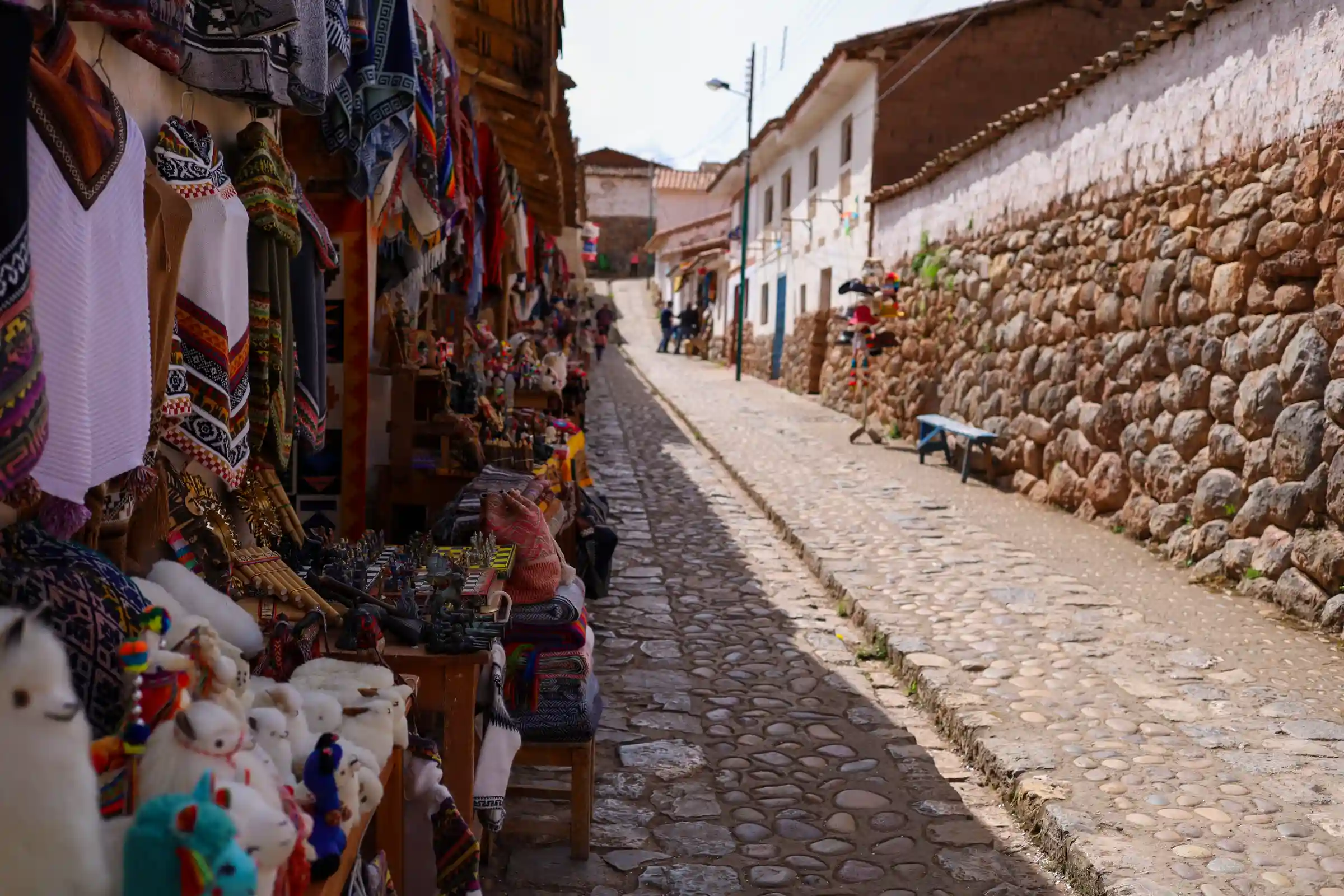
- Buy salt from local stalls: pink salt, salt with herbs or bath salts make great souvenirs and support the community.
Altitude and difficulty
At about 3,000 to 3,200 m, the salt mines are lower than Cusco, and the visit only involves short walks with a few slopes and steps. It is suitable for children and older travelers, and a good easy excursion for your first days in Cusco. Read our tips on altitude sickness in Cusco.
Add Maras to your Cusco itinerary
| Day | Plan |
|---|---|
| 1 | Arrive in Cusco and rest |
| 2 | Cusco City Tour (from USD 13) |
| 3 | Maras and Moray |
| 4 | Sacred Valley |
| 5 | Machu Picchu |
Read more about the 15 must-see places in the Sacred Valley and see all our tours in Cusco. For official tourism information on the region, visit Peru.travel.
Frequently asked questions about the Maras salt mines
How much is the entrance to the Maras salt mines?
S/ 20 per person, paid in cash. It is not included in the Cusco Tourist Ticket.
How far are the Maras salt mines from Cusco?
About 50 km, around 1.5 hours by road.
Can you walk on the salt pools?
No. Visitors stay on the marked paths and viewpoints to protect the salt production.
Are Maras and Moray the same place?
No. Maras is the salt mines and Moray is an Inca site with circular terraces, about 10 km apart. Most tours visit both.
Are the Maras salt mines a UNESCO World Heritage Site?
No. They are a traditional salt production site managed by the local community.
Can I buy salt at Maras?
Yes. Local families sell several types of salt at stalls near the entrance.