
Manu National Park is one of the most biodiverse places on Earth: a protected area of about 1.7 million hectares in southeastern Peru that climbs from Amazon lowland rainforest at about 150 m to Andean grasslands at about 4,200 m. It is a UNESCO World Heritage Site and the best place in Peru to see wildlife such as giant otters, macaws, monkeys and, with luck, jaguars. Best of all, you can reach it by road from Cusco. This guide covers the zones of Manu, how to get there, the best time to go, what you can see, and how to choose a tour.
Manu National Park at a glance
| Location | Cusco and Madre de Dios regions, southeastern Peru |
| Area | About 1.7 million hectares |
| Altitude | From about 150 m to 4,200 m |
| Protected since | National park in 1973; UNESCO Biosphere Reserve in 1977; World Heritage Site in 1987 |
| Wildlife | About 1,000 bird species, more than 200 mammals and 13 primates |
| Access | By road from Cusco, about 8 to 10 hours to the lowlands |
| Best time | May to October, the drier season |
The zones of Manu National Park
The Manu Biosphere Reserve is divided into zones with different levels of protection. Which one you visit depends on your time and budget:
- Cultural Zone: the area along the road and the Alto Madre de Dios River, with cloud forest, lodges and local communities. It is the most accessible part, perfect for 3- to 4-day trips, with cock-of-the-rock leks, monkeys, birds and night walks.
- Reserved Zone: the lower Manu River, open only to licensed operators with a permit. It has the oxbow lakes with giant otters, the big clay licks of macaws, and the best chance to see jaguars, tapirs and other large mammals. Trips last 5 days or more.
- Intangible Zone: most of the national park, closed to tourism and reserved for research and for indigenous peoples, including groups living in voluntary isolation.
Wildlife in Manu National Park
Manu covers so many altitudes and habitats that scientists still discover new species there. Some numbers from UNESCO and research in the park:
- About 1,000 bird species, roughly 10% of all the birds in the world
- More than 200 mammal species, including 13 primates
- Between 2,000 and 5,000 plant species
- More than 1,300 species of butterflies
Species travelers hope to see:
- Andean cock-of-the-rock, Peru’s national bird, in the cloud forest
- Macaws and parrots at the clay licks
- Monkeys: woolly, spider, howler, capuchin and squirrel monkeys
- Giant otters in the oxbow lakes of the Reserved Zone
- Caimans, capybaras and tapirs
- Jaguars and pumas, rare but possible on the rivers of the Reserved Zone
The park is also home to Matsigenka and other indigenous communities, and to pre-Inca and Inca remains and petroglyphs on its edges.
How to get to Manu National Park
From Cusco by road (the usual route)
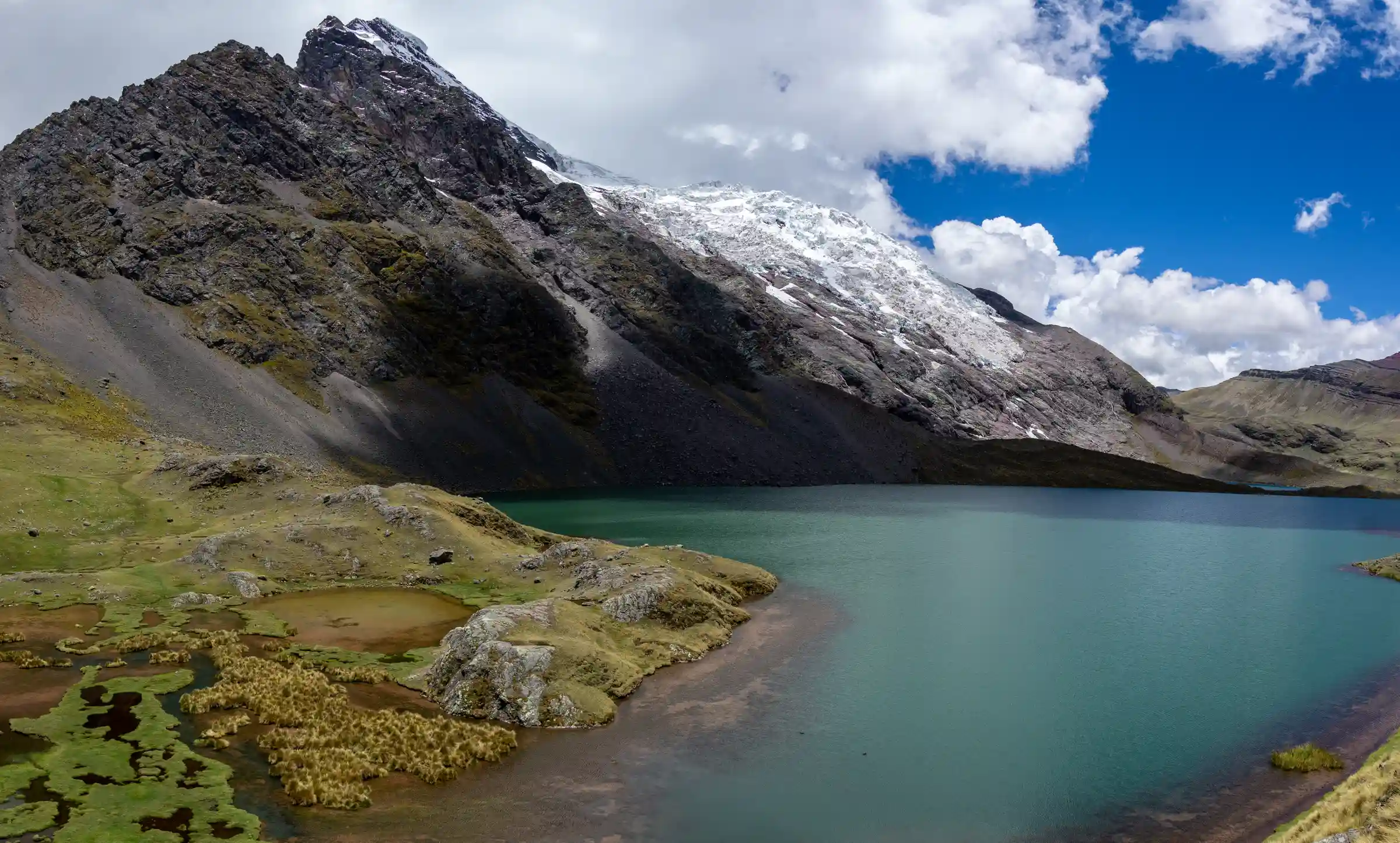
The classic route leaves Cusco early in the morning, passes the colonial town of Paucartambo and climbs to the Acjanaco viewpoint at the park’s edge, about 3,500 m, with views over the Amazon. From there, the road drops through the cloud forest of the Kosñipata Valley to Pilcopata and Atalaya, in the lowlands. For the Reserved Zone, a boat continues down the Alto Madre de Dios River to Boca Manu and up the Manu River.
By plane
Occasional small charter flights land at the Boca Manu airstrip and save a day on longer trips, but they depend on the operator and the weather.
From Puerto Maldonado
There is also a route by road and river through Boca Colorado, used by some operators, but most travelers reach Manu from Cusco.
Best time to visit Manu National Park
Manu is a rainforest, so it can rain any day. The drier and best season is May to October: fewer rain showers, lower rivers and better wildlife watching at the lakes and clay licks. From November to April it rains more, and roads and trails can be muddy, but the forest is green and there are fewer visitors.
- In the lowlands, days are hot and humid, often 30 to 35 °C.
- In the cloud forest and at Acjanaco, it is much cooler, and nights can be cold.
- From May to August, cold fronts from the south called friaje can drop lowland temperatures to about 10 °C for a few days. Bring a fleece.
Lodges and tours in Manu National Park
Lodges in Manu are simple but comfortable, with mosquito nets, shared or private bathrooms and meals made with local produce. Electricity and hot water are limited in many lodges. Tell us in advance about vegetarian or other diets.
| Tour | Zone | From (USD) |
|---|---|---|
| Manu Tour 3 Days | Cultural Zone | 289 |
| Manu Tour 4 Days | Cultural Zone | 299 |
| Manu Reserved Zone 5 Days | Reserved Zone | 1,290 |
Our tours include the transport from Cusco, a naturalist guide, lodges, meals and park entrance fees as listed on each tour page. See all our Amazon tours.
Manu, Tambopata or Iquitos?
- Manu: the best for wildlife and birdwatching, reachable by road from Cusco, ideal for 3 to 5 days or more.
- Tambopata: the easiest, with a short flight from Cusco or Lima to Puerto Maldonado and comfortable lodges; good for 2 to 4 days. See our Tambopata 2 Days Tour (from USD 270).
- Iquitos: in northern Peru, for Amazon River cruises; it is far from Cusco and Machu Picchu.
What to pack for Manu
- Light, quick-dry long-sleeved shirts and long pants against insects
- A fleece for the cloud forest and cold fronts
- Rain jacket or poncho, and waterproof bags for your gear
- Insect repellent, sunscreen, a hat and a headlamp
- Comfortable closed shoes; rubber boots are usually provided at lodges
- Binoculars and a camera with extra batteries
- Cash in small notes: there are no ATMs in the forest
- Passport, and ask your doctor about the yellow fever vaccine and other travel health advice
For official information about the park, see UNESCO’s page on Manu National Park. Combine Manu with Machu Picchu tours and tours in Cusco for a complete trip.
Frequently asked questions about Manu National Park
Where is Manu National Park?
In southeastern Peru, in the Cusco and Madre de Dios regions, between the Andes and the Amazon. It is reached by road from Cusco.
How many days do I need for Manu?
At least 3 to 4 days for the Cultural Zone. To visit the Reserved Zone, with its lakes and clay licks, plan 5 days or more.
Can I visit Manu National Park on my own?
You can travel independently to parts of the Cultural Zone, but the Reserved Zone is only open with licensed operators, and the Intangible Zone is closed to visitors.
Can you see jaguars in Manu?
It is possible but not guaranteed. The best chances are on the rivers of the Reserved Zone, especially in the drier months.
Is Manu better than Tambopata?
Manu has more biodiversity and is more remote; Tambopata is easier and quicker to reach. Choose by the time you have and how much wildlife you want to see.