
Research and validity: Sources checked November 14, 2026. Rules and quoted rates apply as labeled; confirm 2027 arrangements with the relevant authorities and operator.
An Amazon rainforest is busy even when it appears silent. A macaw may disappear beyond the canopy before breakfast, an otter family may travel along an oxbow lake while guests are having lunch, and nocturnal frogs may begin calling only after the rain. This makes wildlife observation a matter of understanding habitats, daily routines and seasonal conditions rather than purchasing a guarantee for a list of species.
For travelers planning the Peruvian Amazon in 2026 or 2027, this guide explains how animals use rivers, forests, clay licks and lakes; why wet and dry periods change access; and how to organize patient, ethical observation. The focus is especially relevant to Manu and Tambopata, although the same principles help travelers visiting other parts of the Amazon basin.
Why is wildlife easier to hear than to see in a tropical forest?
Dense foliage interrupts sightlines, and many animals move above ground level or remain motionless when disturbed. A howler monkey may be audible over a great distance even though the troop is hidden. Birds reveal themselves through calls, alarm notes and movement among branches. Insects and frogs may be detected by sound long before a torchlight or binoculars finds them. Experienced naturalists spend time listening rather than walking continually.
The arrangement of vegetation matters. A canoe on an oxbow lake offers relatively open views of shores and emergent trees, while a forest path may provide only a narrow tunnel beneath the canopy. Clay licks concentrate birds at certain locations but are not active all day. Road edges and secondary forest may show adaptable species that are harder to see inside intact primary forest. None of these sites is inherently superior; each shows a different part of the ecosystem.
Wildlife often responds to human noise or boat traffic before humans notice it. Quiet arrivals and patient observation can improve the experience without any need to bait, imitate or approach animals. An honest trip description emphasizes opportunities and appropriate habitat, not ‘guaranteed jaguar’ or ‘all Amazon animals in two days.’
Which animals are most associated with each habitat?
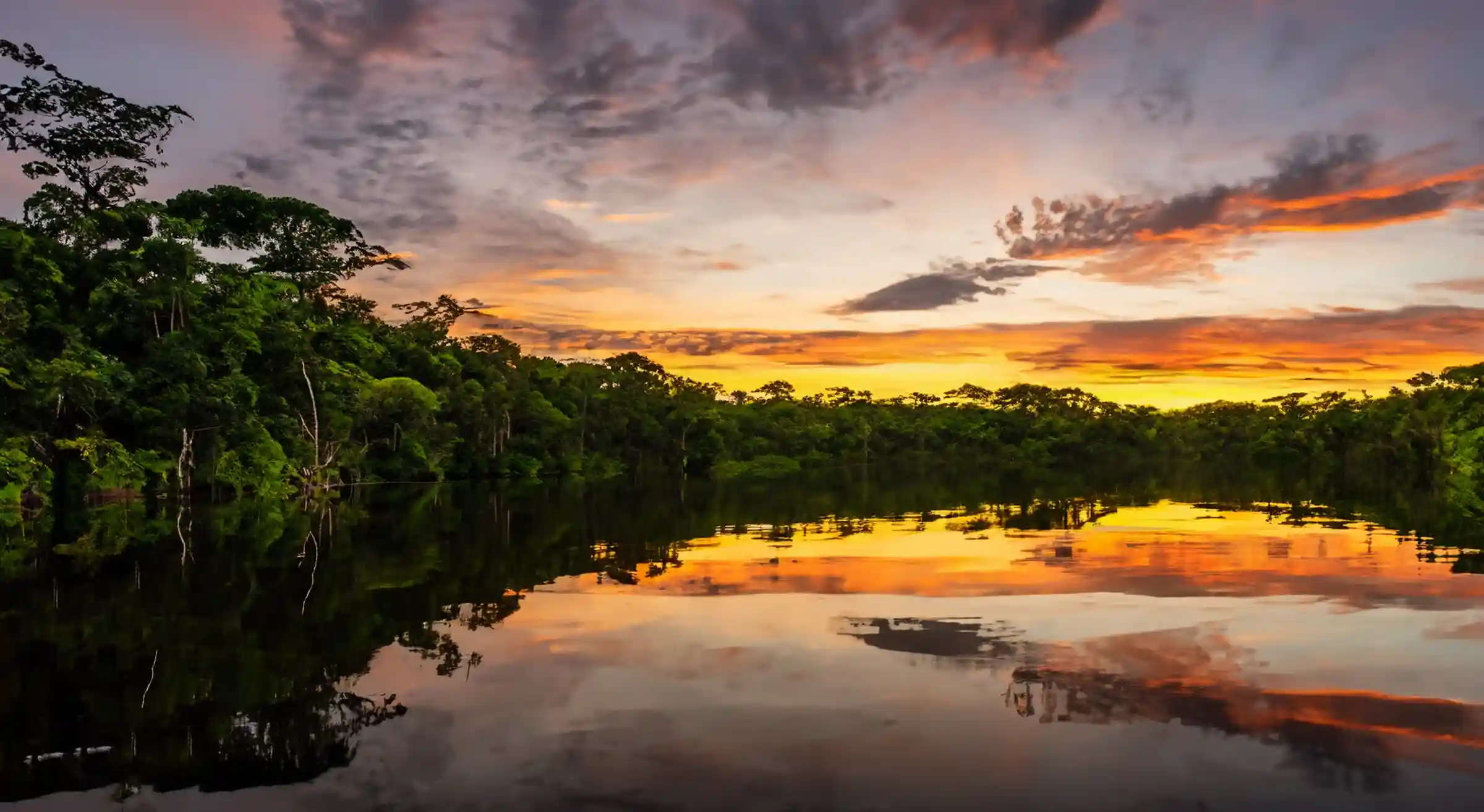
Oxbow lakes: Waterbirds, hoatzins, caimans, turtles and, where populations persist, giant river otters. Vegetated lake margins offer food, shelter and nesting areas. A visit by quiet paddle canoe may reveal more subtle behavior than a fast motorboat crossing. On some lakes, the animals are sensitive to approach and tourism restrictions are designed to reduce pressure.
Riverbanks: Capybaras, shorebirds, butterflies, caimans and occasional larger mammals may use exposed edges. Seasonal water movement changes the bank itself, and a good skipper must prioritize navigation over wildlife chasing. Along sand and mud, tracks can be as revealing as the animal that made them, provided the guide explains the limits of identification.
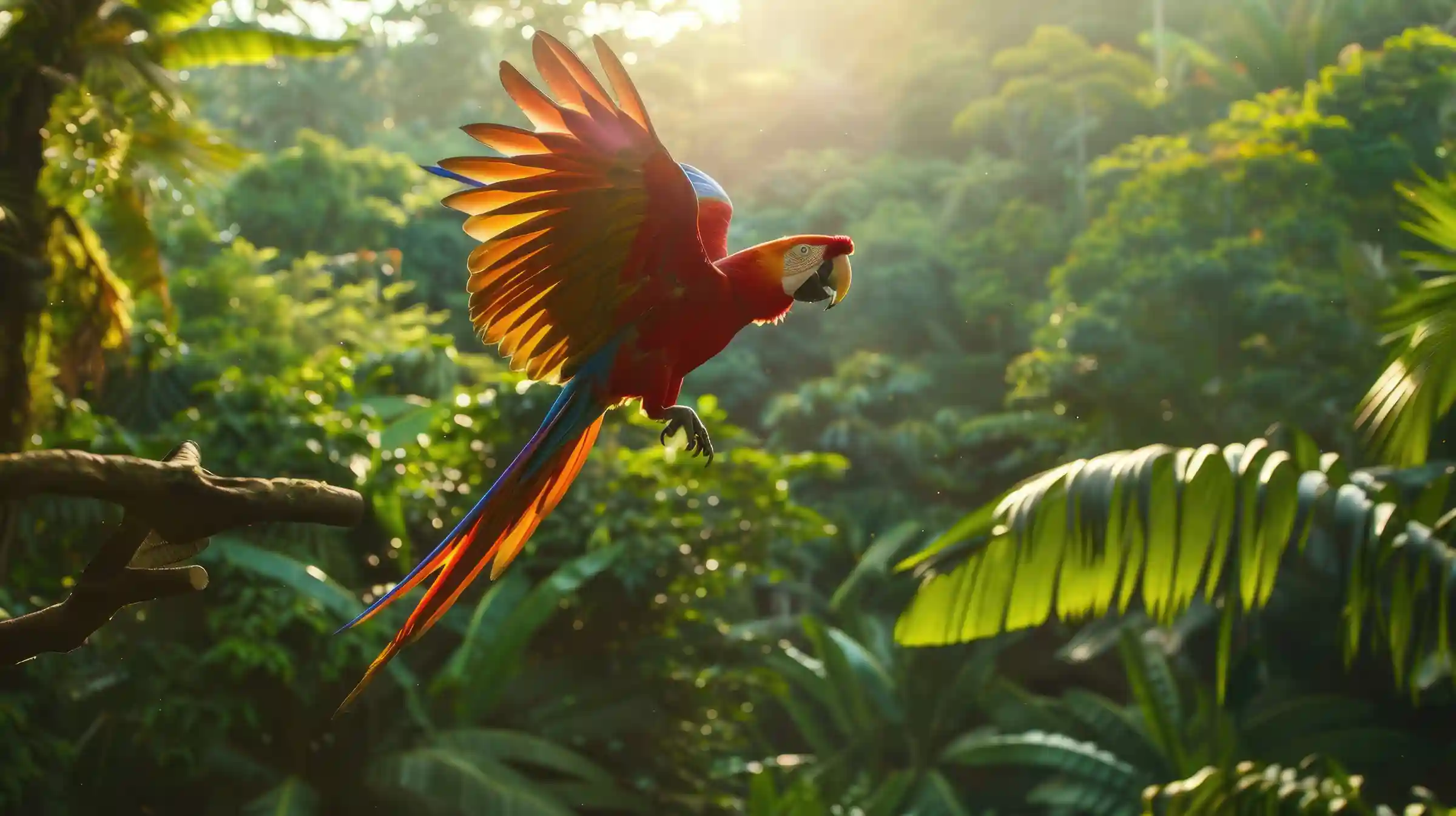
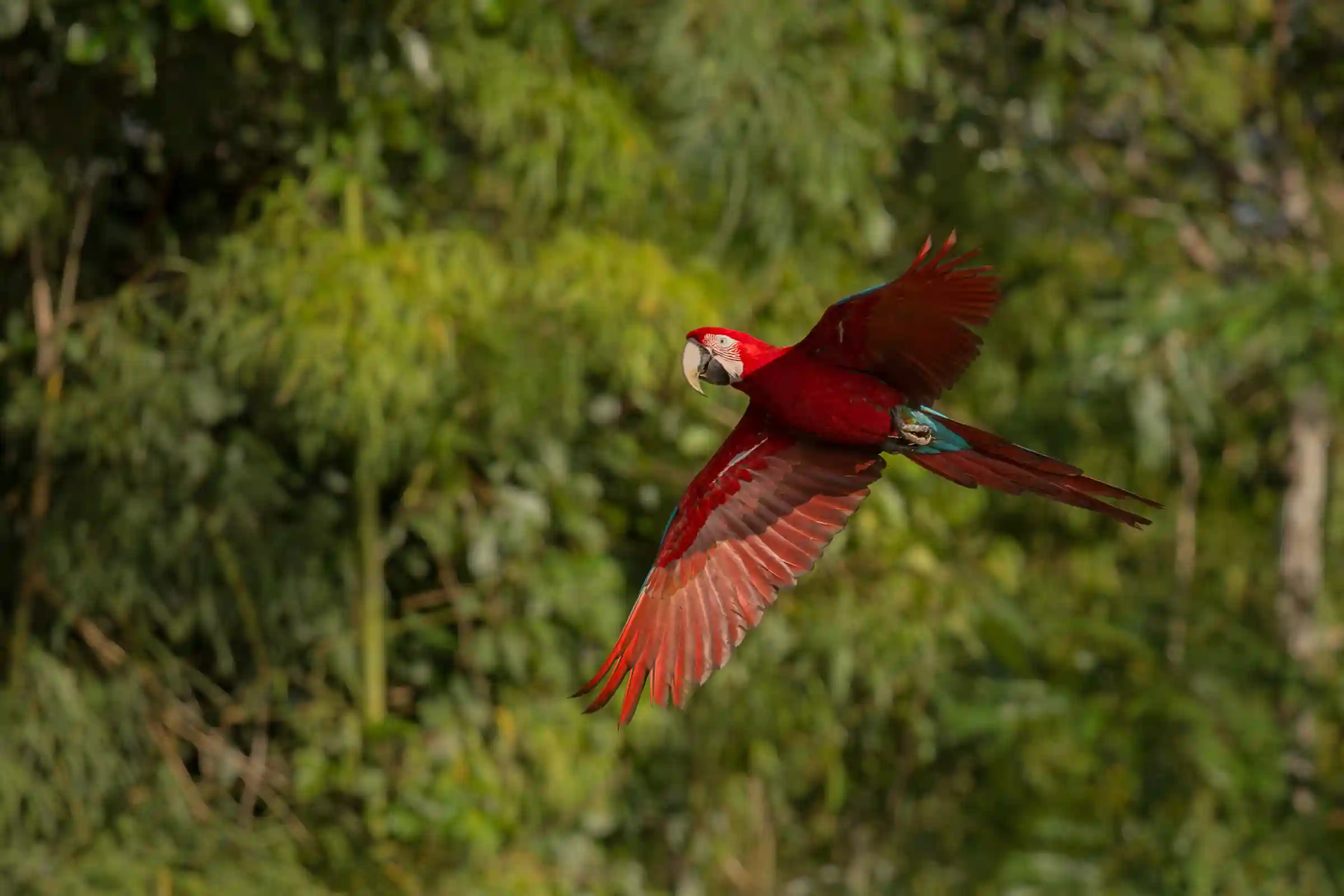
Canopy: Parrots, macaws, toucans, monkeys, squirrels and innumerable smaller birds occupy levels that are difficult to view from the ground. Look for fruiting trees, gaps in the canopy and natural movement. Standing still beneath a tree that attracts birds can be more productive than covering several kilometers of forest.
Forest floor: Leaf litter shelters frogs, reptiles, arthropods and mammals that may be scarce or nocturnal. Tapirs, peccaries and large cats range widely and are seldom predictable tourist encounters. Tracks, feeding traces, scat and camera-trap records can teach visitors about presence without requiring a direct sighting.
What changes in the wet months, approximately December to March?
Heavy rainfall can create temporary pools, flood certain low-lying areas, move river sediments and stimulate reproductive activity among some amphibians and invertebrates. The precise timing varies among species and locations; a frog chorus after rain is not a promise that every species will breed in the same month. Higher water can make some shoreline areas harder to reach on foot, while other channels become navigable. Thick cloud cover may also alter the quality of light and the times when birds are visible.
Wildlife may disperse into flooded vegetation or change feeding locations as available fruit, insects and water conditions shift. Greater water access can sometimes help a boat-based excursion, yet high currents can make river travel dangerous. A wet-season tour must be ready to change the planned trail or delay a launch for safety. Visitors who insist on exactly the same timetable as a dry-season brochure may miss the value of a different forest rhythm.
Rain can make night walks fascinating for people interested in frogs, insects and plant life. It also creates slippery paths and makes it harder to use camera equipment or hear quiet movements during downpours. The appropriate response is waterproof protection, moderate expectations and respect for a guide’s decision to cancel an unsafe walk.
What changes in the relatively dry months, often May to October?
Less persistent rain often makes some trails easier and can expose river margins that are covered at higher water. Certain animals may be concentrated near reliable water sources or fruiting trees, though local patterns are not simple and evidence should not be generalized to every species. Clay-lick viewing can benefit from more favorable mornings, but cloud, raptors, disturbance or lack of birds can still interrupt activity.
Low water has its own logistical disadvantages. A riverboat can take longer through shallow sections, may be forced to use a different landing point, or may not reach a small creek. More exposed mud does not automatically mean more animals; animals may avoid banks that become noisy or heavily used. At a lodge, the timing of a forest walk should be adjusted to daylight, temperature, trail condition and wildlife behavior rather than treated as an unchanging annual schedule.
The best advantage of the drier season is often operational predictability, not guaranteed abundance. Travelers still need rain gear, and travelers on early-morning boat trips may need an extra warm layer if a temporary cold surge makes the air feel unexpectedly cool.
Which species are likely, possible, rare or exceptionally difficult to see?
It is more useful to ask about relative detectability than to publish a numerical probability without field data. Macaws or parrots can be conspicuous at an active clay lick, though an actual group visit may still see few birds. Monkeys and caimans are often included in typical lodge observations, but the exact species vary by habitat and time. Giant river otters can be a major reason to visit suitable oxbow lakes; seeing them depends on whether a family uses the location at the time of travel and on respectful viewing distance.
A jaguar or tapir is a different category of expectation. Both can inhabit broad Amazon landscapes, but they do not appear on command and generally move over large areas. A researcher may document their presence with camera traps far more reliably than a tourist will see them from a trail. Large cats should never be baited or tracked aggressively for tourism. A guide who reports fresh tracks honestly is providing a genuine wildlife interpretation even without the animal in view.
| Animal group | Where a guide may look | Best observation approach | Expectation |
|---|---|---|---|
| Macaws and parrots | Clay licks, fruiting canopy, forest edges | Early visits, distant quiet observation | Variable; sometimes conspicuous |
| Monkeys | Canopy, fruiting trees | Listen, look upward, allow time | Possible on many forest itineraries |
| Caimans | River and lake edges | Approved low-disturbance water viewing | Possible, never guaranteed |
| Giant river otters | Suitable oxbow lakes and waterways | Quiet canoe, distance, patient waiting | Special sighting; location-dependent |
| Frogs and insects | Wet leaf litter and vegetation | Guided evening walk, careful light | Often more detectable after rain |
| Tapir and jaguar | Broad forest and river habitats | Respectful chance encounters and tracks | Uncommon to very rare as sightings |
How does the time of day affect sightings?
Dawn often offers a burst of birdsong and movement as animals begin feeding. This is why a clay-lick excursion might require getting up before sunrise. Late afternoon can be useful for river wildlife and birds settling toward roosts. The middle of the day is not ‘dead time,’ however. Butterflies may visit sunny gaps, reptiles can use warm edges, and fruiting trees may attract animals at irregular hours.
Night introduces an entirely different community of sounds. Walking a short loop with a qualified guide may reveal spiders, insects, frogs and occasional nocturnal mammals. Avoid shining powerful beams repeatedly into an animal’s eyes, especially birds perched to sleep or active hunters. It is better to observe one creature briefly with gentle light and leave it undisturbed than to pursue a series of stressful photographs.
Plan a schedule with observation time rather than constant transfers. A four-day tour with three patient mornings can provide richer encounters than a rushed itinerary promising eight separate attractions without enough time at any of them.
Can wildlife migration or breeding schedules be predicted for visitors?
Some bird species move regionally, some follow fruit availability, and others use established feeding or roosting sites. Reproductive timing may depend on local rains, day length or food supply, but broad predictions such as ‘all monkeys have babies in August’ are unsupportable. A visitor should request recent local observations from a specialist guide rather than use a social-media calendar as a guarantee.
Macaw clay-lick activity can fluctuate with season and immediate weather. Giant otters use home ranges and may not appear at the same portion of a lake each day. A spectacular photograph taken by a lodge last year says little about the species’ location next Tuesday. Responsible marketing identifies both the opportunity and its uncertainty.
For 2027, consider an animal-interest itinerary rather than a fixed-animal itinerary: dawn birdwatching, lake interpretation, daytime forest ecology, a weather-permitting evening walk and a second observation window. This allows nature to determine the highlights.
What can animal behavior tell visitors about forest conservation?
Wildlife is linked to large systems. A fruiting tree supports insects and birds; those animals may disperse seeds or feed predators. Fallen vegetation shapes a river’s habitat, while flooding distributes nutrients through the forest. Large predators depend on extensive connected habitat and adequate prey. The absence of one visible animal does not mean the forest has no ecological value.
Conservation areas protect habitat at a scale that a single viewing platform cannot represent. Park rules about trail access, feeding, photography and boat traffic exist partly because repeated small disturbances can have a cumulative effect. Wildlife tourists can support these rules by choosing authorized guiding, refusing animal-contact attractions and avoiding activities that put nests, dens or roosts at risk.
Tourists should also remember that living forest landscapes support local people. Rainforest interpretation is more thoughtful when it includes conservation employment, river transport, community rules and the costs of protecting a large protected area. An ethical experience avoids treating rare species or Indigenous residents as staged encounters.
How does Machu Picchu Team integrate wildlife into an itinerary?
Machu Picchu Team publishes guided Manu Cultural Zone excursions including cloud-forest birdwatching, Machuwasi Lake and a parrot clay lick. Its Tambopata three-day description includes a dawn visit to the Chuncho Clay Lick, an evening caiman search and a paddle canoe visit to Sandoval Lake. These illustrate an important design principle: several habitats and observation periods can complement one another without promising specific animal encounters.
The published Manu inclusions refer to guide services, boats, lodge accommodation, meals and safety equipment, while Tambopata lists bilingual guiding, boat transfers and stays in two lodges. Travelers interested in specialist birding or photography should check whether their group is general-interest or can be tailored privately. Tell reservations about serious allergies, accessibility needs or specialist photographic equipment before departure so that its practical suitability can be assessed.
A guide’s best contribution may be to explain why the group is not seeing an animal, why an outing must wait for weather, or why a distant encounter is preferable to moving closer. The value of a wildlife tour lies in the quality of field interpretation as well as its photographs.
How should you build an animal-focused itinerary?
Begin with two or three priorities rather than ten species. Someone fascinated by macaws should confirm a dawn clay-lick visit and sufficient travel time. Someone interested in giant river otters should consider an oxbow-lake activity with an appropriate guide. A traveler keen on amphibians might prefer at least one night walk and tolerance for wet conditions. A photographer may choose fewer destinations and more time at each.
Then check the route: locations, transport hours, sunrise departures, legal access, group size and whether a change of lodge costs observation time. Pack binoculars; they can transform a distant bird into a meaningful encounter. Plan to take notes about behavior, calls and habitats rather than documenting only a list of names. Finally, accept that a healthy forest is not a zoo: a memorable journey can include both remarkable sightings and long stretches of patient discovery.
What does traveling into the Peruvian Amazon actually involve?
The first surprise for many visitors is how much of an Amazon trip happens before the first wildlife sighting. A lodge may appear near Puerto Maldonado on a map, yet reaching its dining room can involve an airport pickup, a drive over paved and unpaved roads, a river transfer, a landing where bags are carried by hand, and a short walk on wet soil. In Manu, an itinerary beginning in Cusco can cross the high Andes and cloud forest before reaching tropical lowlands. The transitions are not wasted time: altitude, vegetation, farming, river traffic, and the types of birds change visibly along the way.
A good itinerary describes where each night is spent, what mode of transport is used, and how much time remains for nature observation after transfers. Ask whether a published duration means time on a boat, elapsed time including stops, or simply the operator’s typical estimate in favorable conditions. A one-hour transfer in low water may become slower when a skipper must avoid shallow channels; a journey delayed by a storm may end with less daylight. Rather than judge a program by the number of activities printed on its page, examine its usable early-morning and late-afternoon hours.
For travelers with only two or three nights, Tambopata often offers a convenient base through Puerto Maldonado. A longer Manu journey can be worthwhile for the gradual transition from cloud forest to lowland habitat, but not every tour marketed as ‘Manu’ enters the national park’s restricted tourism sectors. Ask for the exact route, checkpoint, destination and accommodation. The names ‘Manu Cultural Zone,’ ‘Manu Biosphere Reserve,’ and ‘Manu National Park’ are not interchangeable statements about legal visitor access.
What changes between the wet and relatively dry months?
Rainfall is possible in the Amazon at any time. Official visitor information for Manu and Tambopata identifies December to March as the wetter period and generally recommends visits in the comparatively drier months. That does not mean the forest becomes dry from May onward. Paths may remain muddy, humidity remains high, and a heavy downpour can interrupt an afternoon even in July or August. Seasonal transitions differ by river, elevation, and the weather pattern of a particular year.
In wetter months, river levels can rise, narrow paths may become slippery, and boats may need to wait for safer conditions. The landscape can look lush and waterways may give access to places that are difficult during low water. In drier months, exposed banks and firmer ground can make some activities more straightforward, while low water can oblige longer walks, different landing points, or a change in river route. Neither season guarantees more animals: breeding cycles, food availability, daily weather and the behavior of individual species matter as much as the calendar.
Plan with a flexible rather than a rigid hour-by-hour expectation. The operator should explain the alternate activity when an observation platform, trail or river sector is temporarily unsuitable. A worthwhile substitute might be a different forest trail, a sheltered interpretation walk, a quieter canoe excursion, or time devoted to listening for birds. The quality of guiding often becomes most visible on a day when the weather does not cooperate.
Which health preparations matter before departure?
Arrange travel-health advice well before arriving in Peru. The CDC’s Peru guidance recommends yellow fever vaccination for many lower-elevation Amazon destinations and identifies malaria risks in areas below 2,500 m east of the Andes. The right malaria prevention decision depends on an individual itinerary, medical history and professional advice. A recommendation for the lowland Amazon should not be confused with requirements for high-altitude Cusco, central Lima or Machu Picchu. The CDC states that Peru does not impose a yellow-fever vaccination requirement for entry, while recommending protection for relevant destinations; other countries on the itinerary can have their own rules.
Carry prescribed medicine in its original labeled packaging, together with an appropriate supply for travel delays. Tell the reservations team in advance about serious allergies, dietary restrictions, mobility needs and medical conditions relevant to the planned activity. Do not expect a riverside lodge to maintain a pharmacy, a full-time doctor or continuous communications. Check whether the operator has a documented evacuation procedure, first-aid equipment, a workable communications method, and staff who can contact medical services. These are more meaningful questions than whether the website uses the word ‘adventure.’
On the ground, prevention is practical: long lightweight sleeves, trousers, insect repellent used according to its label, footwear that closes securely, safe drinking water and regular hand cleaning. Heat and humidity make dehydration easy to miss. Drink regularly, but avoid forcing excessive water. Be careful at boat landings and after rain; a slip on wet steps is a more ordinary and sometimes more probable problem than a dramatic encounter with a dangerous animal.
What should visitors pack, and what should they leave at home?
Carry a daypack that can stay with you on walks and in the boat. It should hold rain protection, drinking water, medicines, an insect repellent, a headlamp, sun protection, a dry bag for valuables, a modest first-aid supply for personal use, and a spare battery or power bank. Include a small cloth to dry binocular eyepieces and camera equipment. A waterproof liner inside a normal backpack is usually more dependable than trusting a bag advertised as ‘water resistant.’
Choose subdued, lightweight clothing that dries quickly. Two or three light layers are more useful than a single heavy cotton garment. A brimmed hat, socks that rise above the ankle, and shoes with secure grip make walks more comfortable. Bring sandals for use inside appropriate lodge areas, not for unsupported nighttime trail exploration. Rubber boots may be provided on specific tours, but sizes and availability should be confirmed before booking rather than assumed. Professional photo lenses, drones, large tripods and recording equipment may be subject to operational or protected-area permissions.
Bring the original passport or other accepted travel document, insurance details, emergency-contact information, any required medical documents, and some small Peruvian-sol notes for expenses that are clearly excluded. Keep a digital backup of important documents offline. If traveling with a wheelchair, walking aid, support animal, specialized medical equipment, or another requirement affecting transport, tell the operator before payment; boats, stairs, narrow paths and remote bathrooms can create limitations that a standard accessibility label does not capture. Never assume that a service animal can enter a sensitive wildlife area without prior authorization.
How are environmental rules applied inside protected areas?
Peru’s protected areas are managed under rules that distinguish tourism sectors, visitor activities, approved service providers and sensitive conservation areas. SERNANP advises visitors to use authorized operators, register at control points when required, remain on permitted trails and avoid touching or feeding wildlife. A reservation with a lodge outside a protected area is not, by itself, permission to enter every trail, lake or clay lick inside it. Entrance charges and access arrangements should be checked against the protected area’s current official listing.
Visitors can help by keeping a respectful distance from animals, remaining quiet near viewing sites, staying with the guide and taking every piece of waste out. Avoid deliberate attempts to attract wildlife with food, recorded calls or bright light. Do not collect feathers, plants, insects, soil or artifacts as souvenirs. The ethical issue is not limited to species protection: river margins and forest paths are also used by local residents who deserve privacy and predictable access.
A professional guide may decide not to approach an animal, not to land at a crowded bank, or to turn around when conditions deteriorate. Such decisions can be disappointing in the moment, yet they are marks of responsible operation rather than evidence that a tour is poorly run. A memorable Amazon visit is one that leaves animals able to behave normally after the boat has departed.
How can travelers compare tour prices without being misled?
First establish exactly what is being sold. Some programs begin at a Cusco hotel; others start only after the traveler reaches Puerto Maldonado. Some include flights, while many do not. Lodge class, number of nights, permitted protected-area visits, guide language, boat travel, drinking water, meals and airport transfers may vary. An apparently cheaper trip can cost more after a flight, entrance ticket, equipment rental, private-room supplement or additional transfer is added.
The official SERNANP visitor page for Tambopata lists general entrance fees by duration: S/30 for one day, S/60 for two to three days and S/150 for four to thirty days at the time checked in November 2026. The Manu National Park page publishes the same general duration bands. These are park fees, not the total cost of an expedition; different visitor categories and individual access rules apply. Confirm the current tariff and whether it is included in your contracted tour. Fees shown on the official portal may change before travel in 2027.
Do not treat a sample price found in an article as an unchangeable quote for all travelers. Before paying, ask for the final price in a specified currency, the cancellation terms, what happens if river transport changes, whether international card-processing fees apply, and what proof of booking you will receive. A transparent operator can itemize the major services even when the itinerary is sold as an all-inclusive package.
What should a guide and operating team actually provide?
A trained local guide contributes much more than a list of species names. They know where visitors can legally walk, when to stop speaking, how to interpret alarm calls, and when a promising-looking encounter would cause an animal too much disturbance. Boat operators read currents and submerged obstacles; lodge staff monitor water, food storage and trail condition; kitchen staff keep meals practical for hot, humid field days. The quality of these often-overlooked roles shapes the experience.
Ask about the language and practical natural-history experience of the person who will lead your group. A large mixed group with different interests may spend less time quietly studying one animal than a small birdwatching group. Conversely, a general-interest tour can be excellent for first-time visitors because it balances forest ecology, short walks, river travel and rest. Private guiding is useful when a party has an unusually slow pace, specialist photography interests or specific dietary and accessibility requirements.
For food, ask what meals are actually included and whether vegetarian, vegan, gluten-free and serious allergen requirements can be supported safely. Responsible kitchens rely on hand hygiene, clean equipment, appropriate storage temperatures and safe water, but a specific certification or food-safety standard should never be claimed unless the provider can document it. On a private trip, customized menus can be discussed before booking; complex supplies or a separate cook may involve a surcharge that should be confirmed in writing.
What about the human side of rainforest travel?
The forest is not an empty stage constructed for visitors. Nearby towns, river settlements, farmers, Indigenous communities, boat crews and conservation staff live and work in these landscapes. Tourism can create income for guides, cooks, accommodation providers, transport workers and artisans, but it can also place pressure on water supplies, river wildlife, local prices and cultural privacy if the benefits are poorly shared. Ask who owns or manages the operation and whether local workers have meaningful roles rather than only token appearances.
Never assume that an Indigenous community is open to unannounced visits or photography. Community-based activities should be organized with informed agreement from residents, clear expectations and respectful payment. Peoples living in isolation or initial contact must not be treated as tourist attractions; Peru’s Ministry of Culture has specific protections for their territories and right to avoid contact. Ethical travel is sometimes the decision not to visit a sensitive place at all.
The most useful ‘authentic experience’ may be an ordinary conversation with a guide about why a river changes course, which plants fruit at different times, how a family adapts to a flood, or what conservation work looks like after tourists go home. These observations cannot be guaranteed on a schedule, but making space for them can turn a wildlife checklist into a deeper understanding of the Amazon.
How far in advance should a rainforest trip be organized?
For a standard short lodge program, practical planning can begin several weeks or months ahead, with additional lead time for school holidays, peak travel months, specialist guides and limited-capacity destinations. Small remote facilities may have fewer rooms and less flexibility for last-minute group changes. Longer trips in permitted Manu sectors, tailored wildlife photography departures and private transport merit earlier discussion. The exact lead time depends on the operator and permits, so resist articles that claim an official universal booking deadline where none exists.
Reserve essential arrival and departure connections with the lodge schedule in mind. If the group is expected to start river travel in the morning, an afternoon flight into Puerto Maldonado may not be useful. Build an overnight buffer when a missed long-distance connection would cause the loss of an expensive fixed tour. Keep the last day flexible too: boat arrivals can be slower than planned, and an international flight scheduled immediately after an uncertain river transfer is avoidable risk.
For 2027 travel, verify current SERNANP regulations, entrance fees, transport availability and medical advice close to departure. Future river conditions, animal activity and flight timetables cannot be reliably predicted a year in advance. A quality itinerary is resilient enough to handle change without pretending that tropical travel follows an exact script.
Relevant trip options and further reading
Explore the habitats described in Manu Cultural Zone 3 Days, Tambopata 3 Days, and Sandoval Lake Full Day.
Source notes and verification
- SERNANP: Tambopata visitor information — trails, seasonal visits, clay licks and lakes.
- SERNANP: Manu visitor information — protected habitats and visitor sectors.
- CDC travel health for Peru — seasonal health planning and mosquito protection.
- WCS Amazon camera-trap research — monitoring the less visible mammals.