
Research checked: November 14, 2026. Peru’s official accommodation classifications are distinguished from marketing language and online reviews. Individual amenities, hotel rates and availability for 2027 must be reconfirmed.
A beautiful hotel photograph rarely shows how a cold Cusco morning feels when the shower runs lukewarm, whether a room has quiet windows, or how far a guest must climb to reach reception. In the Peruvian Andes, accommodation quality is partly about the room and partly about altitude, historic buildings, mountain access and the logistics of tomorrow’s tour. The cheapest or highest-star property is not automatically the best fit.
Travelers planning Cusco, the Sacred Valley, Ollantaytambo, Puno, Arequipa and trekking bases need a way to evaluate accommodations beyond decorative descriptions. This guide explains what Peru’s classification system means, how facilities differ by geography, and which questions prevent avoidable surprises.
What does Peru officially mean by a hotel, hostal or albergue?
Peru has an official framework for classifying or categorizing accommodation. Government guidance explains that qualifying establishments can obtain certificates for hotels from one to five stars, apart-hotels from three to five stars, hostales from one to three stars, or an albergue classification. The requirements involve infrastructure, equipment, services and personnel. The relevant regulations include Supreme Decree 001-2015-MINCETUR and referenced infrastructure standards. A certificate is issued by the corresponding regional government or, in Lima, the competent metropolitan authority.
The presence of the word “hotel” in an online listing does not by itself prove that a property has a particular official star classification. Likewise, a charming family guesthouse may provide excellent hospitality without positioning itself as a formally categorized luxury hotel. When the distinction matters, use MINCETUR’s directory of qualified tourism providers and request the exact registered business name. Think of stars as one piece of evidence, not as an international guarantee that every guest preference will be satisfied.
| Accommodation description | What to verify | Common misunderstanding |
|---|---|---|
| Officially categorized hotel | Certificate and star category | Stars guarantee identical amenities across countries |
| Hostal or guesthouse | Legal details and actual room amenities | Smaller properties always mean lower quality |
| Boutique hotel | Whether “boutique” is a brand description | “Boutique” is a fixed Peru government star grade |
| Lodge / rural albergue | Power, heating, water, food and transfers | All remote properties work like city hotels |
| Homestay | Sleeping arrangements, bathrooms and host expectations | A family stay includes standard hotel services |
| Trek camp | Tents, mats, toilets, food and support team | A camp can be compared directly with a hotel star rating |
How do standards differ between Cusco and the Sacred Valley?
Cusco sits around 3,399 m (11,152 ft). Many attractive hotels occupy converted historic buildings with thick walls, inner courtyards and narrow stairways. These features can be wonderful, but room temperature, step-free access and street noise vary. A property a few streets from the Plaza de Armas may sit on a steep lane; a location described as “five minutes from the center” can feel far longer with luggage or altitude symptoms. Ask for an exact map pin and whether a vehicle can reach the front door.
The Sacred Valley has lower-altitude locations such as Urubamba and Ollantaytambo, often with gardens, broad properties and more open views. These can provide a gentler first night after arrival from Lima, depending on the traveler and schedule. However, staying far from a train departure point may require an early-morning car transfer. A large valley resort is not necessarily more convenient than a smaller property near Ollantaytambo station.
Hotels in Aguas Calientes, or Machu Picchu Pueblo, serve a different purpose. Many guests stay one night to reach an early archaeological entry, so a reliably timed breakfast, luggage storage and clear station directions may matter more than a pool or spa. Train arrival, pedestrian streets and the distance to the bus queue need to be considered before choosing a room.
Are heating and hot water guaranteed at high altitude?
No single amenity should be inferred from the word “Andean.” Some hotels use central heating or radiators; others rely on electric heaters, thick blankets or insulation. A room with a fireplace may require special staff assistance and may not be heated continuously. Ask whether heating is included, which hours it operates, and whether the bathroom stays comfortable on cold mornings.
Hot-water systems also differ. In one property, individual electric showers supply hot water intermittently; in another, central storage supplies several rooms. A shower may be available but less powerful when multiple guests use it simultaneously. In a rural lodge, available electricity or water pressure may be limited. Do not equate a one-time review complaint with a universal pattern, but look for recent, repeated observations across independent guests.
Peru’s dry Andean season, often approximately May to September in the Cusco region, can bring clear days and notably cold nights. In the wetter season, damp clothing and mud add a different concern. Ask whether there is a heated drying area, laundry service or a way to dry boots without damaging them. A hotel that works beautifully in June may feel very different during a sustained February rain.
How important are stairs and accessibility?
Historic architecture is a strength of Cusco tourism and a real mobility constraint. A renovated colonial courtyard may have uneven stone thresholds, short flights of steps and upper-floor rooms without elevators. A hotel advertised as “accessible” may offer only an accessible entrance, not a bathroom designed for wheelchair use or a route without stairs from the taxi drop-off point. Request detailed photographs and measurements where needed, and confirm the exact room rather than a general category.
For guests with walkers, canes or crutches, ask about handrails, slippery surfaces in rain, room distance from reception, bath or shower arrangements and baggage assistance. A service animal request needs advance discussion with the hotel and with separate attractions or transport providers; policies and lawful access vary by context. If a guest needs a refrigerator for medication or a power outlet for medical equipment, confirm whether electricity is reliable at night and whether a backup arrangement is available.
Do not book a remote trek lodge on the assumption that a comfortable city hotel can supply the same mobility support. A village property reached via steps or rough paths may be unsuitable even if its rooms are pleasant.
What should the room rate include?
A hotel quote may be room-only, bed-and-breakfast, half-board or an all-inclusive arrangement. Clarify the room configuration, guest count, taxes, fees, cancellation terms and payment currency. “Double room” may mean one double bed or two separate beds depending on the booking system. A triple may involve an extra bed or sofa bed. A family should ask for the precise number of conventional beds and the ages accepted under any child policy.
Local and international booking channels can display amounts differently. Confirm the final total shown at checkout and the documentation required for any tax treatment claimed by the property; tax rules should not be paraphrased into a blanket promise that all foreign travelers avoid a particular tax. Ask whether breakfast starts early enough for a 4:30 a.m. pickup and whether a packed breakfast is included or extra.
Laundry, room service, heating, baggage storage, airport transfers, oxygen service, early check-in and late check-out may be charged separately. A hotel that appears inexpensive can cost more after a long transfer to a tour meeting point. The fairest comparison uses the door-to-door cost for the experience you actually plan.
What matters for food safety and special diets at a hotel?
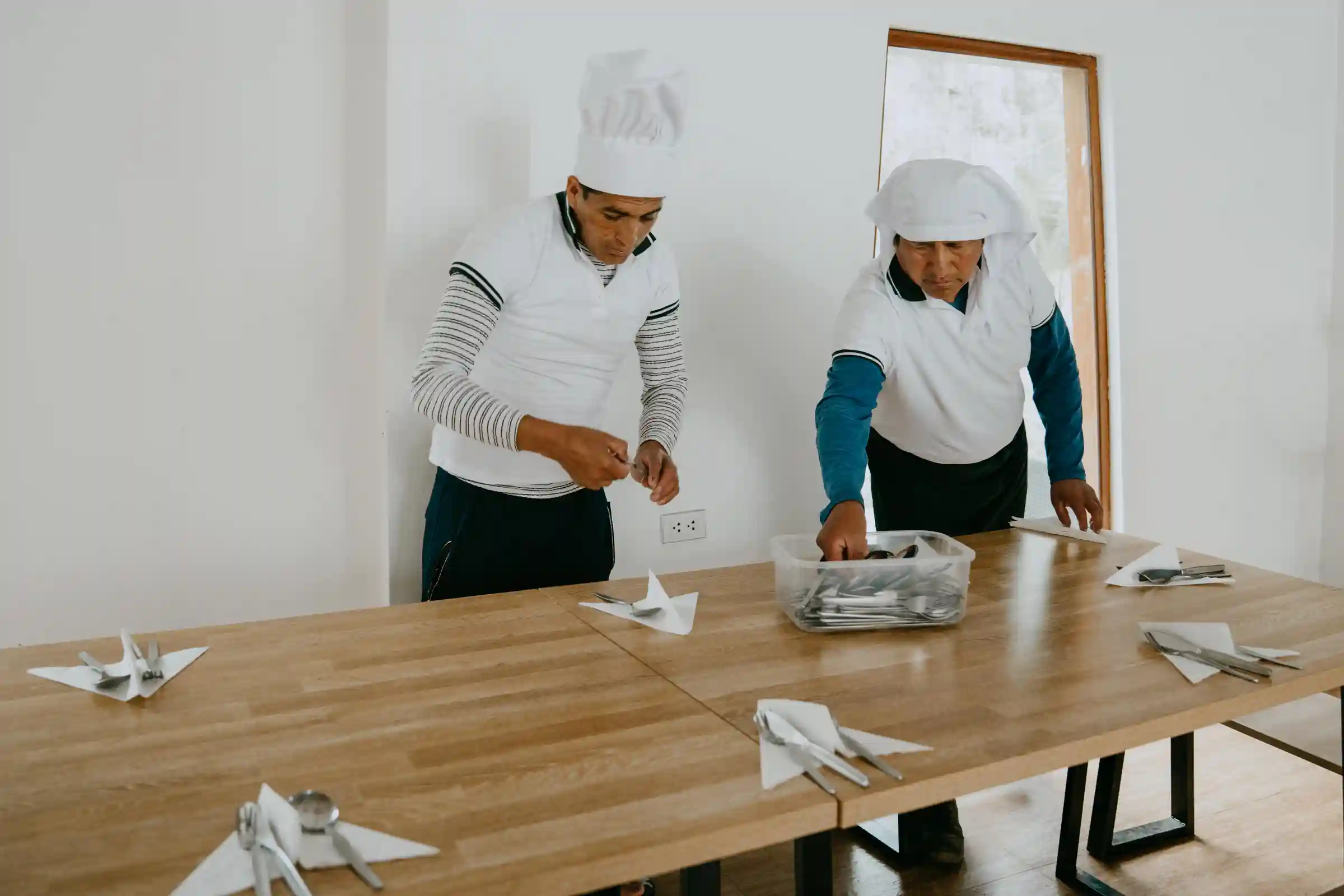
Breakfast can be a highlight of an Andean stay, with fruit, breads, eggs, local grains and hot drinks. Travelers with celiac disease, severe food allergies or other restrictive diets should not rely on a buffet label alone. Shared tongs, toaster surfaces, kitchen utensils and self-service tables can create cross-contact. Contact the hotel in advance, explain the consequences of exposure and request written confirmation of what the kitchen can safely prepare.
For ordinary food hygiene, choose freshly prepared hot foods, look for reasonable storage conditions and use reliable drinking water. The CDC advises caution with raw or undercooked animal products, unpasteurized dairy and water of uncertain safety. Travelers with strict medical diets should consider bringing permitted shelf-stable food from home after checking customs rules; an expensive private hotel cannot always obtain specialist products locally at short notice.
A remote hotel may offer one fixed dinner menu. Ask whether meals can be customized, which nights the kitchen operates and whether there is an alternative restaurant nearby. In small villages, the word “nearby” can mean a long walk without lighting.
How do guest expectations change in Puno, Arequipa and small trekking towns?
Puno sits roughly 3,800 m (12,467 ft) above sea level and can have cold nights even when daytime sun feels strong. A lake-facing room should be assessed for heating, access, boat-transfer arrangements and distance from the dock. An island homestay on Lake Titicaca has a different social and physical experience from a categorized city hotel. Running hot water, private bathrooms and continuous electricity cannot be assumed in every community stay.
Arequipa is lower, at approximately 2,335 m (7,661 ft), with a historic center and different daytime climate. Hotels in the Colca Canyon corridor may be more exposed to temperature swings and may rely on local infrastructure. In Chivay and near hiking villages, ask whether a reservation includes transport to the trailhead and what time dinner is served. Early departures for canyon excursions can make standard breakfast hours irrelevant.
The most useful property is the one that supports the following day’s plans without excessive transfer, fatigue or uncertainty. Luxury and practicality often overlap, but they are not the same thing.
How does hotel selection affect a guided Machu Picchu package?
The published Cusco–Machu Picchu five-day itinerary from Machu Picchu Team lists four hotel nights, divided between Cusco and Aguas Calientes, with breakfast and a chosen accommodation category. It states that when a confirmed property is unavailable, a similar hotel of the same category can be assigned. This is a useful illustration of why travelers should ask for named properties, room categories, locations and substitution terms before payment.
It is also useful to separate hotel services from a trekking operator’s services. On the agency’s four-day Inca Trail, guests sleep in tents with sleeping mats and group dining facilities, supported by guides, porters and cooks. That is a multi-day mountain camp, not a hotel stay. The published trek includes vegetarian, vegan and gluten-free meals, but anyone with a serious allergy should discuss preparation and possible cross-contact well ahead of departure. Special private-dining arrangements may involve additional costs.
Travelers who require a particular hotel elevator, wheelchair-accessible bathroom, medical refrigerator or a professional filming kit should tell reservations before confirmation. It is much easier to check feasibility while choosing the hotel than after rooms and tickets are issued.
Why do review scores need context?
A five-star online rating is a crowd average, not an official category. Recent reviews are generally more useful than a photograph or testimonial from several years ago. Look for patterns: consistently good hot water, reliable early breakfast, staff who help with transport, or noise complaints tied to a specific room type. A single glowing review may describe a different room, season or price than the one on offer now.
Notice the dates and purpose of negative comments. A traveler requiring uninterrupted high-speed internet for work may judge an otherwise pleasant rural lodge harshly; a guest seeking a peaceful remote retreat might love that same property. Reviews can alert you to a question but should not substitute for asking the hotel directly about the exact facility you need.
Checking the provider’s official identity is especially useful when a property is marketed through a third party. Peru’s MINCETUR qualified-provider directory can be consulted for classified or categorized accommodation. An absence from a particular category listing should be interpreted carefully rather than used as proof that every unlisted guesthouse is fraudulent.
When should you book for 2027, and what is still unknown?
Book early when your dates align with high demand, a major festival, a long weekend, or a limited train and Machu Picchu entry schedule. There is no universal number of months that guarantees the best hotel price. High-season conditions vary by property and town; small lodges may fill because they have few rooms rather than because the entire region is sold out. Flexible cancellation can be valuable if flights and permits are not yet confirmed.
For travel in 2027, recheck the rate, precise room, heating, water, breakfast hours, tax treatment, cancellation deadline and check-in conditions. Confirm the road access or taxi drop-off during local street works or events. A well-chosen hotel should help the traveler recover, acclimatize and start the next day comfortably—not simply look beautiful in a gallery.
How can you tell whether a hotel will support acclimatization?
A hotel cannot prevent altitude illness simply by offering tea, a quiet room or a scenic view. Still, accommodation can help travelers rest during the first days at elevation. Ask whether rooms are quiet, whether check-in can be arranged after an early arrival, and whether safe drinking water and a light meal are available. An elevator or a ground-floor room may matter when a guest is unusually tired from altitude. The location relative to restaurants and clinics can be more important than the hotel’s decorative style.
Travelers flying from sea-level Lima to Cusco should consider the height of their initial overnight destination and avoid planning a demanding mountain excursion before they have adjusted. A hotel in the Sacred Valley may be an option because some valley towns are substantially lower than Cusco, although the choice must fit the next day’s transport. A hotel booking should never be sold as a medical treatment. If symptoms become severe or worsen, seek medical assessment rather than relying on a commercial “oxygen bar” or unverified promise of quick recovery.
Ask whether front-desk staff can communicate with your travel coordinator if you need to change a pickup. Keep the travel-insurance assistance number accessible. Good hospitality cannot remove the need for sensible health decisions.
What should you ask about noise, light and sleep quality?
Historic centers attract visitors because of churches, plazas, restaurants and evening activity. The same locations can produce traffic noise, music, bells or deliveries in the early morning. A room overlooking a picturesque square may offer a memorable view and a poor night’s sleep. Read recent reviews for noise patterns, but request a quiet room on the booking rather than expect that a hotel can move you when fully occupied.
Thick historic walls can block some noise while inner courtyards transmit voices between rooms. In modern properties, thin doors or stairwell traffic may be more relevant. Ask whether windows open onto the street, a courtyard or a service area. If you need darkness for recovery after an overnight flight, check curtains and whether exterior security lighting enters the room. Heavy sleepers and early risers may prioritize these details differently.
For travelers leaving at 4 a.m., breakfast availability and reliable wake-up arrangements matter as much as silence. A hotel far from the pickup zone can create an unnecessary early taxi ride. Ask the tour operator to confirm the actual pickup policy before choosing accommodation solely from an online map.
What is a sensible checklist for a room with a view of the Sacred Valley?
A valley panorama can be spectacular, but a view should not disguise a long transfer to the next activity. Check how far the property lies from the main road, whether access is paved, whether the hotel can arrange reliable taxis and whether rain affects the approach. Ask about the last safe transfer hour if the train from Machu Picchu arrives late. A remote rural location may be perfect for a quiet stay and inconvenient for a tightly scheduled multi-city package.
Room specifics matter too. “Mountain view” can describe a broad landscape from a shared terrace rather than a private window. Confirm what is actually included in the room type paid for. For independent travelers, ask about evening dining and safe pedestrian routes. A hotel offering breakfast and dinner on-site may reduce reliance on remote night transfers.
Consider the season. Valley gardens can be green during wetter months, while dry-season evenings may feel cooler. Rain can limit outdoor seating and make footwear storage more important. A refundable reservation can protect flexibility before entry tickets and train schedules are fixed.
How should travelers evaluate Wi-Fi and electrical facilities?
An international visitor may need internet access for a remote-work call, online check-in or cloud backups. A hotel’s statement that it has Wi-Fi does not confirm usable speed in the exact room, stability at night or backup during a power interruption. Ask about recent connection performance and whether there is mobile coverage from your carrier or a local SIM as a fallback. Rural lodges and island homestays may have fundamentally different power systems from central Cusco hotels.
If you travel with a CPAP machine, refrigerated medication, battery-powered mobility equipment or other essential medical devices, notify the property well ahead of arrival. Ask whether the device’s voltage needs an adapter or transformer, where it can safely be connected and what happens during an outage. Do not accept a casual assumption that every room has a spare outlet next to the bed. A medical device may require a specific room or an entirely different property.
Photographers need another set of questions: is there a secure place for gear, do rooms have enough electrical outlets, can batteries be charged safely, and is there a dry area for equipment after rain? Protect camera batteries according to airline and manufacturer rules; never improvise unsafe charging systems.
How does breakfast timing change a supposedly good hotel deal?
For a city break, a breakfast served from 7:00 to 10:00 may be convenient. For a 4:30 a.m. trekking pickup or an early train connection, it may be effectively useless. Ask for the actual service hours and whether the hotel provides a packed breakfast when guests depart earlier. Confirm whether a packed meal is already included in the room rate, needs a previous-day request, or costs extra.
A guest with food allergies should check the packed breakfast ingredients just as carefully as the dining-room menu. A sandwich made in advance may have a different preparation process from cooked eggs ordered in the morning. For celiac disease, shared kitchen surfaces and commercially prepared breads create questions that must be discussed in advance. Bring approved food if the hotel cannot confirm a safe option.
Sometimes a hotel near the railway station without a large buffet is a better choice than a more luxurious property that requires an hour of transfer before dawn. Compare what the package makes possible, not just its amenity list.
What changes when a hotel is included in a tour package?
When accommodation comes through a travel package, the traveler may pay the agency rather than the hotel directly. Ask whether the booking includes a named property or a category to be assigned later. If the hotel is substituted, the new location, room configuration and practical facilities may matter as much as the nominal category. Two properties of the same official rating can differ in elevator access, heating, transfer time and noise.
Save the accommodation confirmation and ask whom to contact if the reserved room is unavailable on arrival. The agency may coordinate a replacement, but a guest should report a significant mismatch while it can still be corrected. If a promised private bathroom is missing or the room is inaccessible to a traveler whose mobility need was agreed, take factual photographs where appropriate and contact the supplier promptly.
On complex routes, luggage transfer and storage can also be part of the package. Ask which bags move with you to Aguas Calientes and which remain in Cusco. Travel by train may involve baggage rules that differ from an ordinary hotel stay; planning luggage early avoids an awkward morning at the station.
What does “sustainable” or “eco-lodge” tell you about facilities?
A lodge using the word “eco” may be focused on energy, local employment, water management or habitat protection. It is not a standardized promise that the rooms have solar power, hot showers or a particular building material. Ask for specific practices and facilities: drinking-water treatment, waste handling, electricity hours, local sourcing and ways the property minimizes environmental impact. Evidence is more useful than branding.
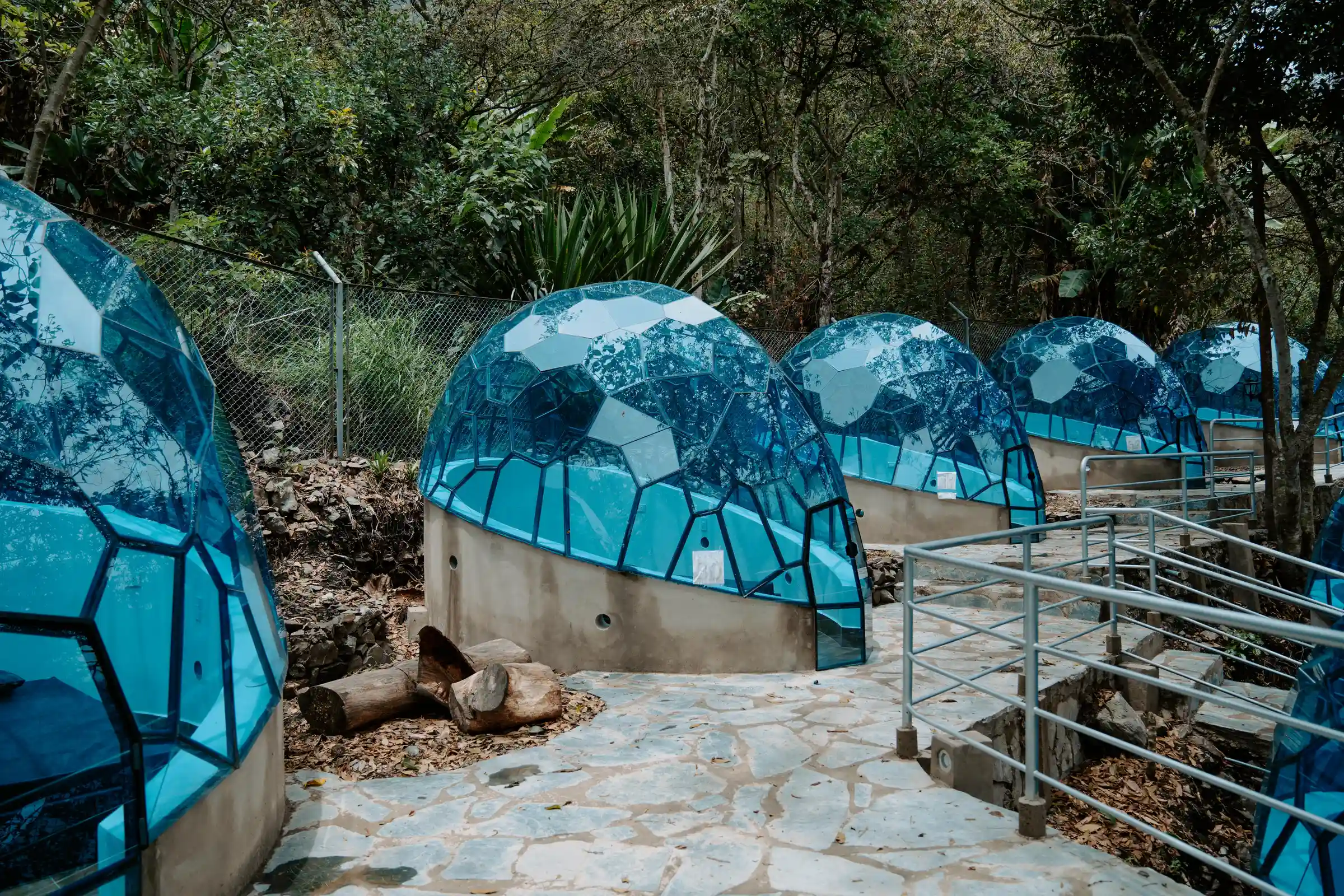
In remote Andean areas, a property may limit energy use or hot-water hours because of its infrastructure. This can be a reasonable operational choice if guests know in advance. It becomes a problem when photographs and descriptions suggest a city-hotel standard that the property does not provide. Travelers should understand both the comforts and the limitations of a remote setting.
Respect the local community around accommodation. Do not photograph residents through their windows, enter farmland for a landscape photo or pressure staff for cultural experiences outside their work. Responsible lodging includes being a responsible guest.
What is a practical hotel-booking timeline for a multi-city Peru trip?
Start by fixing the travel dates and the attractions with limited admissions. Next, place hotel nights around the real transfer chain: airport, Cusco, Sacred Valley, Ollantaytambo, Aguas Calientes, Puno or Arequipa as needed. Choose hotels after accounting for how long it takes to move between locations, not simply by selecting the cheapest room in each city. Early starts and late arrivals can change the sensible district.
Before making a nonrefundable payment, verify actual check-in and check-out hours, whether the hotel knows your booking category, the cancellation deadline and any special needs. If your flight schedule changes, contact the hotel promptly and request written acknowledgment of a late arrival. A reservation may be released after a no-show under the hotel’s conditions even when the traveler still intends to arrive.
One week before travel, reconfirm any uncommon requirement: accessible room, refrigerator, specific bedding, an early packed breakfast or transfer for a large group. A simple confirmation email can be more useful than many hours of comparing generic online star ratings.
Frequently asked questions about Andean hotels
Does a five-star hotel guarantee a comfortable temperature?
No. A formal category can indicate qualifying infrastructure and services, but room comfort depends on heating equipment, insulation, the exact room and personal preferences. Ask the property whether heating is available overnight and whether it is controlled centrally or in each room. In cold Andean locations, recent winter-season reviews may be particularly informative.
Is sleeping in the Sacred Valley better than sleeping in Cusco?
It depends on the traveler’s acclimatization needs and schedule. Some Sacred Valley towns are lower than Cusco and may be attractive for an initial night. However, Cusco is often convenient for city sightseeing and multi-day tour pickups. Compare elevations and transfers, and seek individualized medical advice if you have a condition affected by altitude.
Should I trust a property that calls itself a “luxury boutique hotel”?
Treat the phrase as a description rather than proof of official star classification. Check the legal identity, photos of the booked room type, services, recent guest feedback and any official categorization that matters to you. A small stylish property may provide excellent service, but a polished description is not a substitute for confirming heating, bathroom and accessibility details.
Can every rural lodge supply a vegetarian or gluten-free meal?
No. Many lodges can prepare suitable meals with advance notice, but ingredient availability and safe preparation vary. A strict medical requirement needs written confirmation, including cross-contact considerations. A simple vegetarian preference is easier to support than a severe allergen exclusion. Carry safe backup food when the consequences of unsuitable meals are serious.
Is an oxygen service at a hotel a substitute for acclimatization?
No. Oxygen may have a medical role under appropriate circumstances, but a hotel’s commercial offer is not a diagnosis or a substitute for a clinician’s assessment. Serious altitude symptoms require proper medical attention. Travelers should plan a sensible ascent rather than depend on a hotel amenity to make an unsuitable route safe.
What if my family needs connecting rooms?
Ask for the exact arrangement before payment. “Adjacent rooms” and “connecting rooms” are not equivalent: only the latter normally have an internal connecting door. Room combinations may be limited, and a free child bed may not fit. Confirm the number of conventional beds, the child ages used for pricing and whether any additional guest is allowed.
Are all Aguas Calientes hotels close to the Machu Picchu buses?
The town is compact, but walking routes and stairs can still vary, and luggage makes a difference. Ask for the actual route to the bus departure area and train station. For an early entry, breakfast timing and smooth luggage arrangements may be more useful than a panoramic room that requires an awkward uphill walk.
What should I reconfirm for a 2027 stay?
Confirm current room price, applicable taxes and fees, the exact category, heating, hot water, accessibility, breakfast arrangements, transport connection and cancellation deadline. The broad Andes climate and geography remain relevant, but an individual hotel’s management, facilities and prices can change. Written confirmation close to travel is the best protection against assumptions.
Source notes and verification
The official class/category framework is described by Peru’s government guide to accommodation classification and the MINCETUR directory of qualified tourism providers. Food- and water-safety advice follows the CDC’s Food and Water Precautions for Travelers. A specific package accommodation example is found on Machu Picchu Team’s five-day Cusco and Machu Picchu tour. Official hotel classification is distinct from a guest review score, a marketing description or a promise about the exact room. Room prices, tax treatment, breakfast schedules and facilities vary by provider and date; reconfirm individual 2027 arrangements instead of treating a generic example as a price quotation.