
MACHU PICCHU TEAM TRAVEL · TREKKING GUIDE
How Difficult Is the Salkantay Trek?
Altitude, Fitness & Preparation Guide
Salkantay Trek difficulty is generally rated moderate to challenging because of its high altitude, long hiking days, and steep mountain trails. The highest point is Salkantay Pass at 4,630 meters (15,190 feet). With proper acclimatization, physical preparation, and a suitable itinerary, many active travelers can complete this unforgettable trek to Machu Picchu.
3, 4 & 5-Day Treks
Local Trekking Experts
4,630 m
Salkantay Pass
Moderate–Hard
Overall Difficulty
3–5 Days
Trekking Options
Preparation
Fitness & Acclimatization
Salkantay Trek Difficulty: What Should You Expect?
The Salkantay Trek is one of the most rewarding trekking experiences in Peru. The route connects the dramatic landscapes of the high Andes with the lush cloud forests surrounding Machu Picchu.
Unlike technical mountaineering, the standard Salkantay Trek does not require climbing ropes or specialist mountaineering skills. However, travelers must be prepared for long walks, high elevations, changing weather, and several consecutive days of physical activity.
Some sections are relatively gentle, while others involve steep climbs and long descents. The exact difficulty depends on the itinerary, your fitness level, your acclimatization, and weather conditions.
KEY TAKEAWAY
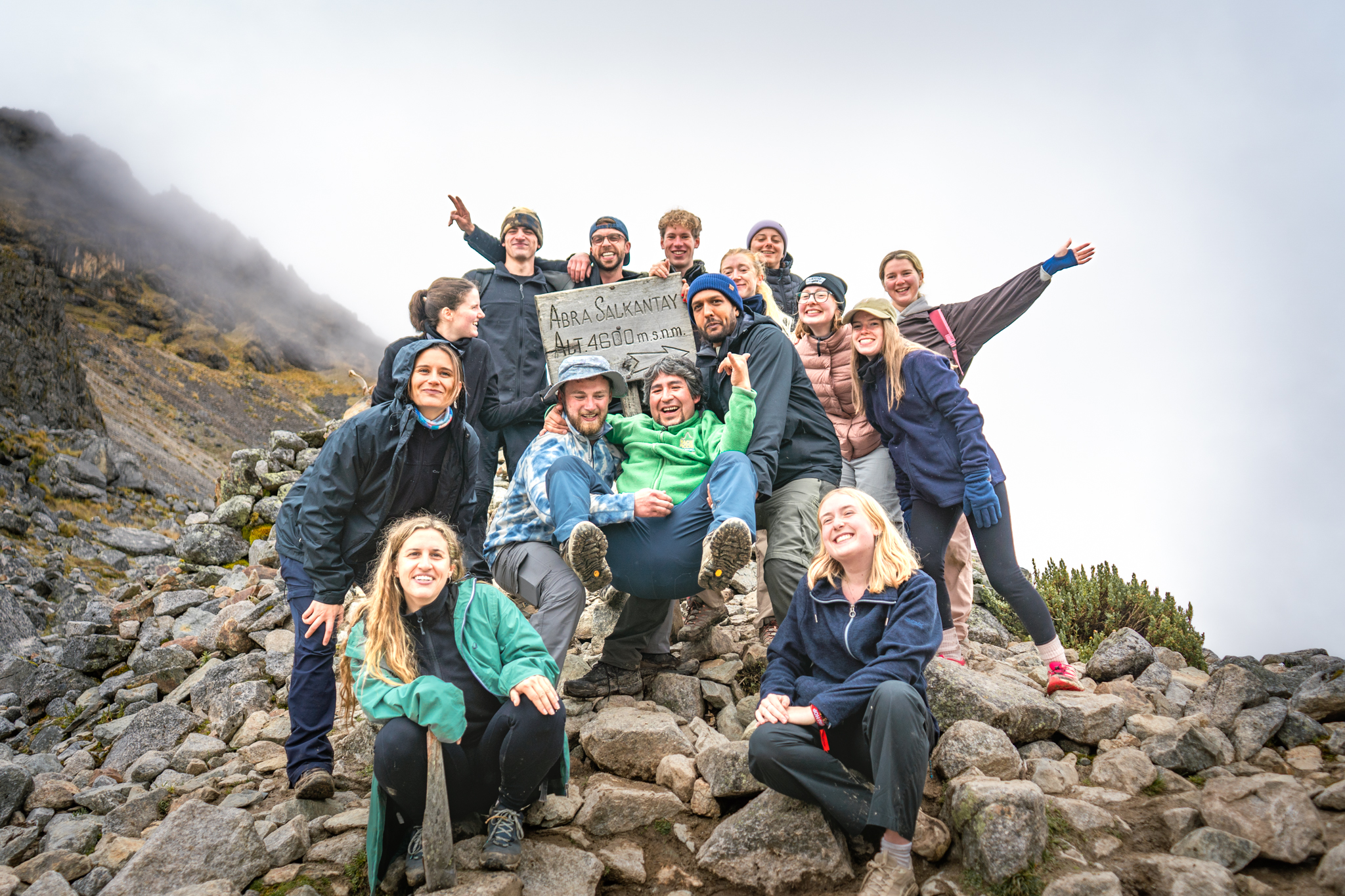
The most demanding section of the traditional Salkantay Trek is usually the ascent to Salkantay Pass at 4,630 meters, followed by a long descent. Routes including Llactapata also feature another physically challenging hiking day.
UNDERSTANDING THE CHALLENGE
What Makes the Salkantay Trek Difficult?
1. High Altitude
The trail reaches 4,630 meters. At this elevation, reduced atmospheric pressure makes breathing and physical activity more demanding.
2. Long Hiking Days
Some stages involve many hours of walking. Maintaining a comfortable pace and recovering between days are essential.
3. Steep Mountain Trails
Rocky paths, sustained ascents, and long descents can be especially tiring for the legs and knees.
4. Changing Weather
Cold mountain conditions, strong winds, rain, and warmer cloud forest temperatures require versatile clothing.
Salkantay Trek Altitude: How High Will You Climb?
Salkantay Trek altitude is one of the most important considerations when planning this adventure. The highest point of the traditional route is Salkantay Pass at 4,630 meters (15,190 feet) above sea level.
The route crosses several ecological zones, descending from the high Andes toward warmer cloud forest valleys.
| Location | Altitude | Landscape |
|---|---|---|
| Cusco | 3,400 m | Andean city |
| Soraypampa | 3,900 m | High Andes |
| Humantay Lake | 4,200 m | Glacial lake |
| Quiswarniyoc | 4,000 m | Mountain campsite |
| Salkantay Pass | 4,630 m | Highest point |
| Chaullay | 2,900 m | Mountain valley |
| Lucmabamba | 2,200 m | Cloud forest |
| Llactapata | 2,700 m | Inca archaeological site |
| Aguas Calientes | 2,000 m | Mountain town |
| Machu Picchu | 2,430 m | Inca sanctuary |
Elevations other than the confirmed Salkantay Pass altitude are approximate and may vary by location and itinerary.
Why Does Altitude Make Hiking Harder?
At higher elevations, atmospheric pressure decreases. Oxygen still makes up approximately 21% of the air, but its partial pressure is lower, reducing the amount available to your body with each breath.
This means your heart and lungs must work harder during physical activity. You may breathe faster, feel tired sooner, or need more frequent breaks when climbing.
Good physical fitness is helpful for trekking, but it does not reliably prevent altitude sickness.
What Is the Hardest Day of the Salkantay Trek?
For most travelers following the traditional high-pass route, the hardest day is the ascent to Salkantay Pass and the long descent afterward.
The climb requires sustained uphill walking at high elevation. After reaching 4,630 meters, trekkers descend toward greener valleys over uneven terrain.
However, the pass is not the only demanding section. On itineraries including Llactapata, the climb through the forest and the descent toward Hidroeléctrica can also require considerable endurance.
THE TREKKING EXPERIENCE
Salkantay Trek Difficulty Day by Day
This overview follows the general structure of our five-day Salkantay itinerary. Exact distances and daily arrangements may vary.
DAY 1
Soraypampa, Humantay Lake & Quiswarniyoc
DIFFICULTY: MODERATE
The adventure begins near Soraypampa. The climb toward Humantay Lake reaches approximately 4,200 meters and offers spectacular views of the surrounding mountains.
Even though this stage is shorter than the pass-crossing day, it can feel demanding for travelers who have not acclimatized.
Main challenge: Uphill walking at high altitude.
DAY 2
Salkantay Pass & Chaullay
DIFFICULTY: CHALLENGING
This is usually the most demanding day. The trail climbs toward Salkantay Pass at 4,630 meters before descending through the high Andes toward lower valleys.
The combination of altitude, uphill walking, and a lengthy descent makes pacing especially important.
Main challenge: High elevation, sustained climbing, and downhill fatigue.
DAY 3
Chaullay to Lucmabamba
DIFFICULTY: MODERATE
The landscape changes into a warmer cloud forest with lush vegetation and coffee-growing areas.
Breathing generally becomes easier at lower elevations, although heat, humidity, and accumulated fatigue can still be challenging.
Main challenge: Warm conditions and recovery from previous hiking days.
DAY 4
Llactapata & Aguas Calientes
DIFFICULTY: MODERATE TO CHALLENGING
The route climbs through the forest toward Llactapata, an Inca archaeological site offering distant views of Machu Picchu.
A steep descent follows, along with further walking toward Aguas Calientes. This can be one of the longest and most tiring stages.
Main challenge: Forest ascent, steep descent, and long walking distance.
DAY 5
Machu Picchu Visit
DIFFICULTY: EASY TO MODERATE
The final day focuses on exploring Machu Picchu with your guide. Expect stairs, uneven stone surfaces, and walking through the archaeological site.
Optional mountain hikes can increase the physical demands.
Main challenge: Stairs and walking within Machu Picchu.
Salkantay Trek Difficulty: 3 Days vs 4 Days vs 5 Days
Choosing the right itinerary is essential. A shorter tour is not necessarily easier because it may concentrate demanding hiking sections into fewer days.
| Tour | Physical Demands | Best For |
|---|---|---|
| Salkantay Trek 5 Days | High pass, multiple hiking days, and Llactapata | Travelers seeking a comprehensive adventure |
| Salkantay Trek 4 Days | Major highlights in a shorter itinerary | Active travelers with limited time |
| Salkantay Trek 3 Days | Compressed schedule; difficulty depends on the exact route | Travelers who have reviewed the daily requirements |
Is the five-day trek easier than the four-day trek? Not necessarily. The five-day route provides more time overall but still includes demanding hiking. The four-day itinerary can feel more intense because major sections are completed in fewer days.
Is the three-day trek the easiest? Not automatically. The specific route, daily distances, and elevation changes determine the physical demands.
Can Beginners Do the Salkantay Trek?
Yes, some beginners can successfully complete the Salkantay Trek with appropriate preparation, fitness, and acclimatization.
You do not need to be a professional athlete, but you should be comfortable walking for several hours, climbing hills, descending uneven trails, and remaining active on consecutive days.
Previous hiking experience is useful because it helps you understand your pace, endurance, equipment, and recovery needs.
Travelers with significant medical conditions or concerns about strenuous exercise should consult an appropriate healthcare professional before trekking.
GET READY FOR THE ANDES
How to Train for the Salkantay Trek
A practical Salkantay Trek training plan should focus on cardiovascular endurance, leg strength, hiking technique, and recovery.
For reasonably active travelers, six to eight weeks of progressive preparation can be useful. Travelers starting from a lower fitness level may need longer.
WEEKS 1–2
Build Endurance
Walk regularly, gradually increase your distance, and introduce gentle hills.
WEEKS 3–4
Longer Hikes
Practice longer walks, uphill sections, and descents. Begin using your trekking boots.
WEEKS 5–6
Consecutive Days
Practice hiking on back-to-back days and walking with a light daypack.
WEEKS 7–8
Recovery
Maintain your endurance, prioritize sleep, and avoid sudden increases in intensity.
This is a general training framework. Adapt your preparation to your fitness level and medical circumstances.
How Many Days Should You Acclimatize Before the Salkantay Trek?
Altitude acclimatization is one of the most important parts of preparing for the Salkantay Trek.
Whenever possible, spend several days in the Cusco region before beginning strenuous high-altitude hiking. Allowing at least two days can be a useful initial planning guideline, although some travelers need longer.
There is no guaranteed number of days that completely eliminates the risk of altitude sickness.
Acclimatization Tips
- Keep physical activity relatively light during your first days.
- Avoid strenuous exercise immediately after arrival.
- Eat regular meals and stay normally hydrated.
- Avoid excessive alcohol consumption.
- Pay attention to headaches, nausea, dizziness, and unusual fatigue.
- Ask a healthcare professional about preventive medication when appropriate.
Altitude Sickness on the Salkantay Trek
Altitude sickness can affect anyone who ascends to high elevations too quickly, regardless of physical fitness.
Common symptoms include headache, nausea, dizziness, fatigue, and loss of appetite.
⚠ IMPORTANT SAFETY INFORMATION
Tell your guide immediately if you develop symptoms of altitude illness. Do not continue ascending while symptoms are present. Confusion, difficulty walking normally, or breathlessness at rest require urgent medical assessment and prompt descent when altitude illness is suspected.
Supplemental oxygen may help in certain situations, but it does not replace appropriate descent and medical care.
Read our altitude sickness guide for Cusco and the CDC high-altitude travel guidance.
What Should You Carry on the Hardest Hiking Day?
Carrying the right essentials helps you remain comfortable without adding unnecessary weight.
- Broken-in hiking boots
- Comfortable daypack
- Drinking water
- Energy snacks
- Waterproof jacket
- Warm fleece and gloves
- Sunglasses and sunscreen
- Trekking poles
- Personal medication
- Passport and required documents
On our standard longer Salkantay itineraries, pack animals carry a duffel allowance of up to 7 kg per traveler, allowing you to walk with a lighter daypack.
For more general recommendations, see our Salkantay Trek Tips and Facts.
REST BETWEEN YOUR ADVENTURES
Sky Star Domes: A Unique Salkantay Trek Experience
Comfortable accommodation does not eliminate the physical challenges of the trek, but it can improve the experience between demanding hiking days.
Machu Picchu Team Travel offers Sky Star Domes on selected Salkantay itineraries.
Quiswarniyoc Sky Star Domes
Panoramic mountain accommodation near the high-altitude section of the trek, surrounded by dramatic Andean scenery.
Lucmabamba Sky Star Domes
Rest in a warmer cloud forest environment surrounded by lush vegetation and coffee-growing landscapes.
Our four- and five-day Salkantay itineraries include two nights in Sky Star Domes. Travelers should still bring or rent an appropriate sleeping bag.
Frequently Asked Questions About Salkantay Trek Difficulty
How hard is the Salkantay Trek?
The Salkantay Trek is generally moderate to challenging. High altitude, long hiking days, and steep mountain trails are the main physical difficulties.
What is the maximum altitude of the Salkantay Trek?
The highest point of the traditional route is Salkantay Pass, at 4,630 meters (15,190 feet) above sea level.
What is the hardest part of the Salkantay Trek?
The ascent to Salkantay Pass is usually the most difficult section. The Llactapata stage can also be demanding on itineraries that include it.
Can beginners do the Salkantay Trek?
Yes, some beginners can complete it with appropriate fitness, preparation, acclimatization, and a suitable itinerary.
How long should I train for the Salkantay Trek?
Six to eight weeks of progressive preparation can be useful for reasonably active travelers. Others may need more time.
Is Salkantay harder than the Inca Trail?
Both routes are challenging. Salkantay reaches a higher maximum elevation, while the Classic Inca Trail includes steep stone steps and multiple mountain passes.
Is the three-day Salkantay Trek easier?
Not necessarily. Shorter itineraries can concentrate demanding sections into fewer days. The exact route and daily hiking requirements matter.
Can fit people experience altitude sickness?
Yes. Good physical fitness does not reliably prevent altitude sickness. Acclimatization and monitoring symptoms are essential.
Can I rent a horse for the uphill section?
Horse assistance may be available on selected sections and departures, depending on local conditions and availability. Confirm arrangements before booking.
FIND YOUR IDEAL ADVENTURE
Choose Your Salkantay Trek
The best itinerary is the one that matches your fitness, available time, and travel interests.
5 DAYS / 4 NIGHTS
Salkantay Trek 5 Days
Experience the high Andes, cloud forest, Llactapata, and Machu Picchu.
4 DAYS / 3 NIGHTS
Salkantay Trek 4 Days
Discover major highlights in a shorter and active itinerary.
3 DAYS / 2 NIGHTS
Salkantay Trek 3 Days
A shorter adventure for travelers with limited time.
YOUR LOCAL TREKKING OPERATOR IN CUSCO
Ready for Your Salkantay Adventure?
Explore our guided trekking adventures and choose the right itinerary for your fitness level, travel dates, and interests.
Photo Gallery