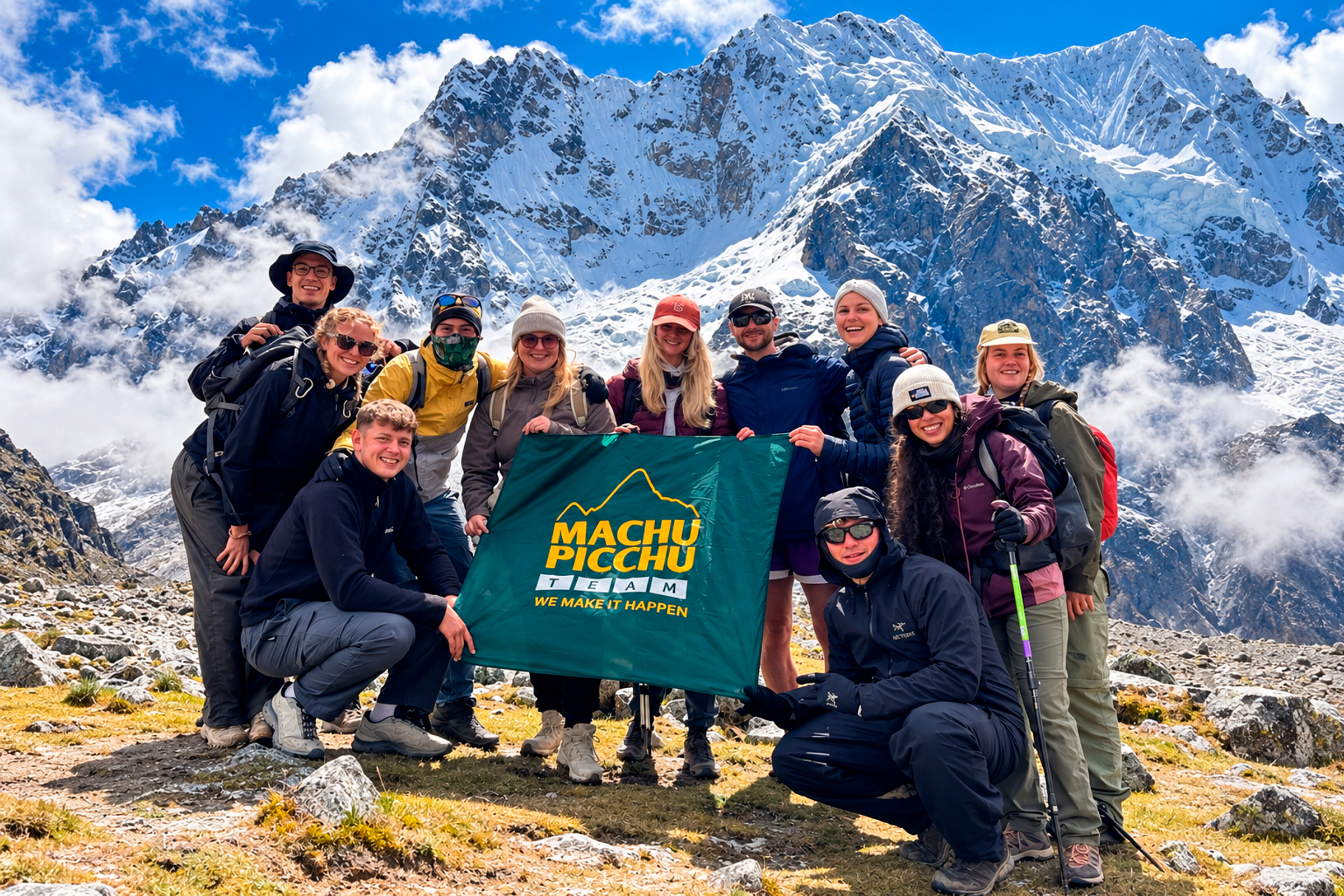

Before you hike, it helps to know the Inca Trail logistics: what you eat, where you get water, where you sleep, what the bathrooms are like, how cold it gets at night and whether your phone will work. The classic Inca Trail to Machu Picchu is a 4-day, 3-night camping trek of about 42 km, with a support team of guides, cooks and porters. This guide answers the practical questions trekkers ask most, so you know exactly what to expect on the trail.
Inca Trail logistics at a glance
| Route | Km 82 (Piscacucho) to Machu Picchu, about 42 km in 4 days |
| Highest point | Dead Woman’s Pass (Warmiwañusca), 4,215 m |
| Permits | Limited every day and sold only through licensed operators; the trail closes every February |
| Sleeping | Camping in tents, 3 nights |
| Food | All meals cooked by the trek chef |
| Water | Boiled water given by the team; bring 2 liters of capacity |
| Bathrooms | Basic toilet blocks at campsites and along the trail |
| Phone signal | Little or none on most of the route |
Inca Trail logistics: food
Food is the part of the Inca Trail logistics that surprises trekkers most. A trek chef and the porters carry the kitchen and cook every meal fresh in camp:
- Breakfast: hot drinks, bread, eggs, pancakes or porridge.
- Lunch and dinner: soup and a main course, often with Peruvian dishes such as quinoa, chicken, trout, rice and Andean potatoes.
- Snacks: fruit, cookies or chocolate for the trail, and afternoon tea in camp.
Meals are served in a dining tent with tables and stools. Vegetarian, vegan and gluten-free options are possible if you tell us when you book. Coca tea is offered every day and helps many trekkers with the altitude.
Inca Trail logistics: drinking water
Do not drink water from streams. The cooks boil and cool water for the group, and you refill your bottles at breakfast, lunch and dinner. On the first two days there are also small stalls where you can buy bottled water and drinks; after that, there are no shops.
- Carry at least 2 liters of capacity: two reusable bottles or a hydration bladder. Single-use plastic is discouraged in the Machu Picchu sanctuary.
- Add electrolytes, especially on day 2, the longest and highest day.
- As a backup, bring purification tablets or a filter bottle.
Inca Trail logistics: camping, tents and sleeping
You sleep 3 nights in official campsites run by the sanctuary. The team carries and sets up the tents, so when you arrive in camp, your tent is ready.
- Tents: usually shared by 2 people, with space for your bags.
- Sleeping pad: provided by most operators; an inflatable pad of your own adds comfort.
- Sleeping bag: bring one rated to about -5 °C, or rent one in Cusco. The nights are cold.
Porters can carry a few kilos of your personal gear, such as your sleeping bag and clothes, depending on your tour. You carry a daypack with water, snacks, a rain jacket and layers. See what to pack in our Inca Trail packing list.
Temperatures on the Inca Trail
The trail climbs from about 2,700 m to 4,215 m and drops into cloud forest near Machu Picchu, so the weather changes a lot in one day. On sunny days it can feel warm, around 20 °C or more, while at night the higher campsites can fall below 0 °C, especially from June to August. Dress in layers: a base layer, a fleece, a warm jacket, a hat and gloves for the evening, and a rain jacket or poncho at any time of year. Read more about the weather in Cusco by month.
Sun protection
You walk about 5 to 8 hours a day at high altitude, where the sun is strong even when the air is cool. Use sunscreen and reapply it during the day, wear sunglasses and a hat that covers your neck, and consider a buff, long sleeves and hiking pants.
Inca Trail logistics: phones, charging and signal
- There is little or no mobile signal on most of the trail, so tell your family before you start.
- There is nowhere to charge your phone, so bring a power bank.
- Keep your phone in airplane mode to save battery for photos.
- Your guide carries a way to call for help in an emergency, plus a first aid kit and oxygen.
Bathrooms on the Inca Trail
The campsites and some points along the route have basic toilet blocks, often squat toilets, maintained by the sanctuary. They are not always clean, so carry:
- Toilet paper and a small plastic bag to carry it out
- Hand sanitizer
- A headlamp for night visits
Between toilet stops, your guide will tell you where you can go discreetly. Leave no trash on the trail.
Showers and washing
Do not expect hot showers on the Inca Trail. Each morning and evening, the team gives you a bowl of warm water and soap to wash. Wet wipes and biodegradable soap are very useful. On the last day, you can shower at your hotel in Aguas Calientes or back in Cusco.
Bugs
In the lower, warmer sections near Machu Picchu, there are small biting sandflies. Bring insect repellent and use long sleeves and pants in the cloud forest, especially on the last day.
Permits, passport and luggage
- Permits: Inca Trail permits are limited every day and sell out months ahead from April to October. Book as early as you can; the trail closes every February for maintenance.
- Passport: bring the same original passport you used to book; it is checked at Km 82 and at Machu Picchu.
- Luggage: leave your big bag in Cusco. Your hotel can keep it, or use our free luggage storage at our office on Plaza Regocijo, open from 4:00 AM to 10:00 PM.
- Altitude: spend at least 2 days in Cusco or the Sacred Valley before the trek. Read our tips on altitude sickness in Cusco.
Inca Trail tours with all the Inca Trail logistics included
Our Inca Trail tours take care of the permit, Machu Picchu entrance, transport, camping gear, meals, water, guides and porters, and the train back:
- Inca Trail 4 Days (from USD 740): the classic route from Km 82, with 3 nights of camping.
- Inca Trail 2 Days (from USD 510): the Short Inca Trail, with a night in a hotel in Aguas Calientes instead of camping.
See all options on our Inca Trail page, and read about the Machu Picchu rules and the train to Machu Picchu for your return. The trail is part of the Historic Sanctuary of Machu Picchu, a UNESCO World Heritage Site.
Frequently asked questions about Inca Trail logistics
Are there bathrooms on the Inca Trail?
Yes. There are basic toilet blocks at the campsites and at some points on the route. Bring toilet paper and hand sanitizer.
Are there showers on the Inca Trail?
No hot showers. The team gives you warm water and soap to wash every morning and evening.
Can I drink the water on the Inca Trail?
Only treated water. The cooks boil water for the group at every meal. Do not drink from streams.
How cold does it get on the Inca Trail at night?
At the higher campsites it can drop below 0 °C, especially from June to August. Bring a warm sleeping bag and layers.
Is there phone signal on the Inca Trail?
Very little. Expect no signal on most of the route and bring a power bank, because there is nowhere to charge.
Who carries the camping gear?
The porters carry the tents, kitchen and food. You carry a daypack, and porters can carry a few kilos of your personal gear, depending on your tour.