
Planning a Salkantay trekking adventure to Machu Picchu?
Discover one of Peru’s most spectacular hiking routes, where snow-covered Andean peaks give way to lush cloud forests, coffee-growing communities and the legendary Inca citadel of Machu Picchu.
This complete guide covers trekking routes, itineraries, altitude, accommodation, costs, packing essentials and practical advice from Machu Picchu Team, a local tour operator based in Cusco.
Highest Pass
Trekking Options
Departure City
Destination
1. What Is Salkantay Trekking?
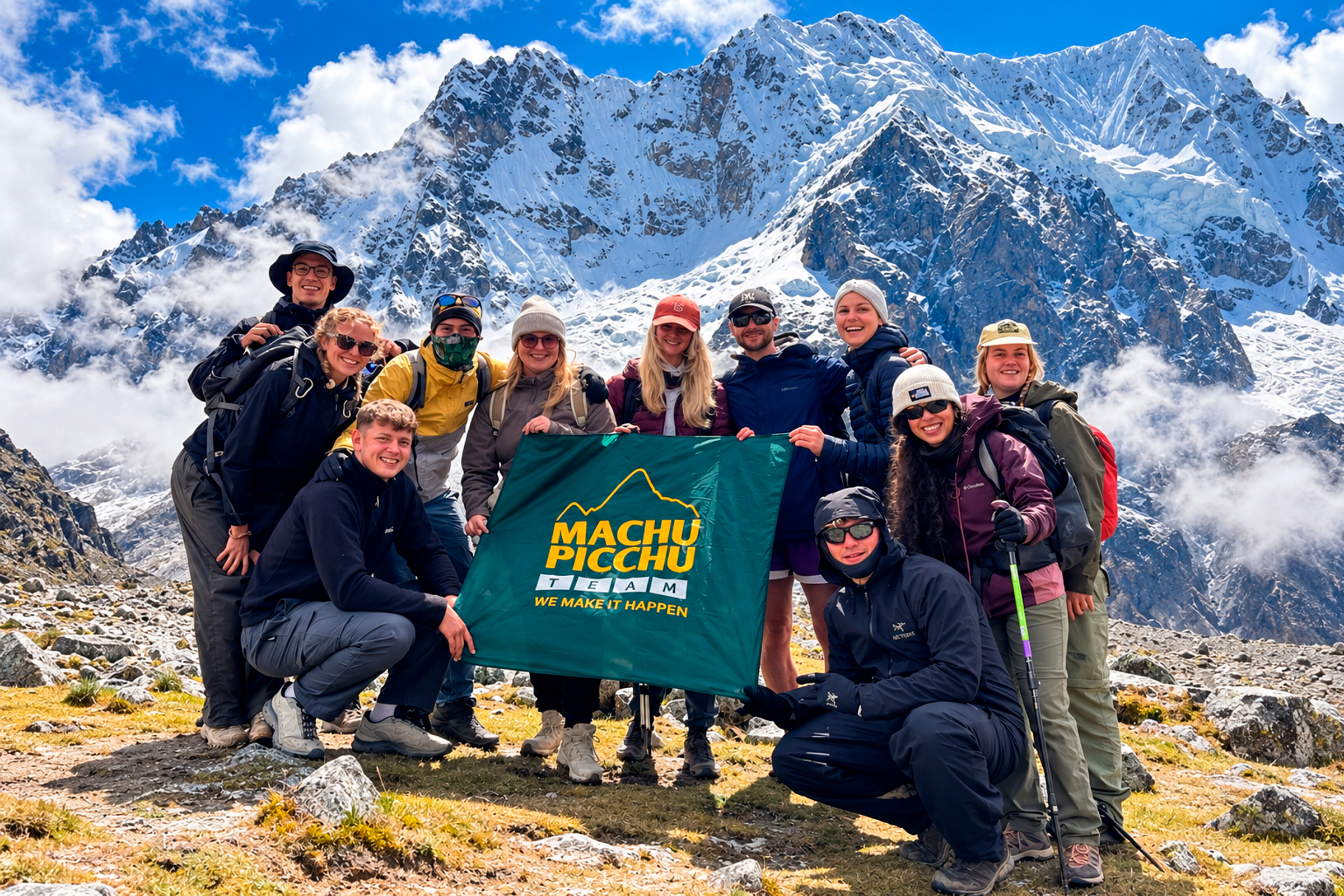
Salkantay trekking is a multi-day hiking adventure through the Peruvian Andes that leads toward Machu Picchu. The route is named after Mount Salkantay, one of the most impressive snow-covered mountains in the Cusco region.
Unlike the Classic Inca Trail, the Salkantay route is known for its dramatic changes in landscape. Trekkers travel through high-altitude valleys, beneath towering glaciers, across the Salkantay Pass and into warmer cloud forests.
The journey typically finishes with an overnight stay in Machu Picchu Pueblo, also known as Aguas Calientes, followed by a guided visit to Machu Picchu.
For travelers seeking mountain scenery, cultural encounters and an active adventure, Salkantay is one of the most rewarding alternatives to the traditional Inca Trail.
2. Salkantay Trekking at a Glance
| Feature | Details |
|---|---|
| Location | Cusco Region, Peru |
| Highest elevation | Salkantay Pass, approximately 4,630 m / 15,190 ft |
| Typical duration | 3, 4 or 5 days |
| Difficulty | Moderate to challenging, depending on route and fitness |
| Main highlights | Humantay Lake, Salkantay Pass, cloud forest, Machu Picchu |
| Accommodation | Domes, cabins and hotel, depending on package |
| Best planning advice | Arrive in Cusco several days before trekking to acclimatize |
3. Salkantay Trekking Routes: 3, 4 or 5 Days?
Choosing the right itinerary is one of the most important decisions when planning your Salkantay trekking experience.
Salkantay Trek 5 Days / 4 Nights
The five-day route is an excellent choice for travelers who want a more complete experience, with time to enjoy the mountains, cloud forest and local communities. Machu Picchu Team’s five-day itinerary includes two nights in Sky Star Domes, a night in panoramic cabins and a night in Machu Picchu Pueblo.
Salkantay Trek 4 Days / 3 Nights
The four-day route offers a more compact adventure while retaining major Salkantay highlights. It is ideal for travelers with limited vacation time who still want a genuine trekking experience. Machu Picchu Team includes two nights in Sky Star Domes on this itinerary.
Salkantay Trek 3 Days / 2 Nights
The three-day option is designed for travelers who have less time available. The route and transport arrangements differ from the longer itineraries, so it is important to review the detailed schedule before booking. Machu Picchu Team’s three-day option includes a night in the Lucmabamba Sky Star Domes.
| Feature | 3 Days | 4 Days | 5 Days |
|---|---|---|---|
| Best for | Short stays | Active travelers | Full experience |
| Sky Star Domes | 1 night | 2 nights | 2 nights |
| Panoramic cabins | No | No | 1 night |
| Pace | Condensed | Active | More varied |
Our recommendation: Choose the five-day Salkantay Trek if your schedule allows. It offers a richer experience of the changing landscapes and accommodation along the route.
4. Classic 5-Day Salkantay Trekking Itinerary
The following is a general overview of the five-day experience. Exact walking distances, overnight locations and activities depend on the operator and booked itinerary.
Day 1: Cusco – Humantay Lake – Andean Campsite
Travel from Cusco into the mountains and begin your adventure near Soraypampa. A highlight is the opportunity to visit Humantay Lake, famous for its turquoise water beneath dramatic peaks. Spend your first night surrounded by the Andes.
Day 2: Crossing Salkantay Pass
This is generally the most physically demanding day. The trail climbs toward Salkantay Pass at approximately 4,630 meters, offering spectacular views of the surrounding mountains. After reaching the pass, the route descends toward greener valleys.
Day 3: Cloud Forest and Coffee Country
The landscape changes dramatically as you enter warmer valleys with tropical vegetation, farms and coffee-growing communities. Depending on your itinerary, you may enjoy local coffee experiences and accommodation surrounded by lush scenery.
Day 4: Llactapata and Machu Picchu Pueblo
On routes that include Llactapata, trekkers can explore an archaeological site with views toward Machu Picchu. The journey continues toward the railway corridor and Machu Picchu Pueblo, where travelers prepare for their visit to the citadel.
Day 5: Guided Visit to Machu Picchu
Visit Machu Picchu with your guide using the entrance circuit assigned to your ticket. After the visit, return arrangements depend on the package selected, typically involving train and ground transportation.
5. Best Time for Salkantay Trekking
The dry season, generally from May to September, is popular because it often brings clearer mountain views and less rainfall. However, cold nights at higher elevations are common.
April and October can offer an appealing balance between changing weather and visitor numbers. From November to March, rainfall is generally more frequent and trails may be muddy or slippery.
Mountain weather can change quickly in any month. Travelers should pack waterproof clothing and warm layers regardless of the season.
6. How Difficult Is Salkantay Trekking?
Salkantay trekking is generally considered moderate to challenging. The biggest factors are high altitude, steep climbs, uneven terrain and several consecutive days of physical activity.
The Salkantay Pass is particularly demanding because oxygen availability is lower at 4,630 meters. Even fit travelers can experience altitude-related symptoms.
We recommend arriving in Cusco two to three days before departure, building up your hiking fitness beforehand and speaking with a healthcare professional if you have medical concerns about high-altitude travel.
For a detailed breakdown of altitude, preparation and the hardest sections, read our Salkantay Trek Difficulty & Altitude Guide.
7. Sky Star Domes and Accommodation
Accommodation can make a major difference to your Salkantay trekking experience. While some routes use traditional tents or basic lodges, Machu Picchu Team operates its own Sky Star Domes at selected campsites.
Our dome camps offer a distinctive way to enjoy the surrounding mountain and cloud-forest scenery. The five-day itinerary also includes panoramic cabins, providing a varied accommodation experience throughout the trek.
Travelers should note that a sleeping bag is required for the domes and is not automatically included as part of the bedding.
Discover our exclusive accommodation:
Explore the Sky Star Domes, campsites and accommodation options.
8. Salkantay Trekking Costs and What’s Included
Salkantay trekking prices vary depending on trip duration, accommodation, group size, transportation and whether Machu Picchu admission is included.
Before comparing prices, review the complete list of services rather than choosing only by the advertised starting price.
What to Check Before Booking
- Professional trekking guide and support team
- Meals during the trek and dietary options
- Accommodation at each overnight stop
- Transport from Cusco to the trekking starting point
- Duffel-bag transport and weight allowance
- Machu Picchu entrance ticket and assigned circuit
- Return train or road transportation
- Additional costs such as sleeping bags or trekking poles
Machu Picchu Team offers different Salkantay packages, including selected trek-only options. Always check the current itinerary and inclusions before making payment.
9. What to Pack for Salkantay Trekking
Because the route crosses both cold mountain environments and warmer cloud forests, layered clothing is essential.
- Comfortable, broken-in hiking boots
- Waterproof jacket and rain protection
- Warm fleece, thermal layers, gloves and hat
- Lightweight hiking clothing for warmer valleys
- Sun protection, sunglasses and sunscreen
- Reusable water bottles or hydration system
- Personal medications and basic toiletries
- Headlamp and portable power bank
- Sleeping bag suitable for mountain conditions
- Passport and booking confirmations
Pack your essentials in a small daypack and confirm your luggage allowance with the tour operator before departure.
10. Salkantay Trek vs. Inca Trail
Both routes lead to Machu Picchu, but they offer different experiences.
| Feature | Salkantay Trek | Classic Inca Trail |
|---|---|---|
| Main attraction | Mountain and cloud-forest scenery | Inca archaeological sites |
| Highest point | Approx. 4,630 m | Approx. 4,215 m |
| Typical duration | 3–5 days | 4 days |
| Trail permits | No Classic Inca Trail permit required | Advance government trail permit required |
| Arrival at Machu Picchu | Typically via Machu Picchu Pueblo | Traditionally via the Sun Gate |
Choose Salkantay if you prioritize dramatic natural scenery and varied ecosystems. Choose the Inca Trail if your main interest is following historic Inca pathways and visiting archaeological sites along the route.
11. How to Book Your Salkantay Trekking Adventure
Booking with a local operator allows you to ask detailed questions about accommodation, itineraries, group sizes and transport before departure.
Machu Picchu Team is based in Cusco and operates its own trekking departures, supported by local guides, cooks, muleteers and operations staff.
Before booking, confirm your travel dates, preferred duration, Machu Picchu ticket availability and the return transportation option included in your package.
Ready for Your Salkantay Adventure?
Discover our trekking experiences and plan your journey to Machu Picchu with a local team in Cusco.
12. Salkantay Trekking Frequently Asked Questions
Is Salkantay trekking worth it?
Yes. For travelers who enjoy hiking and mountain scenery, Salkantay offers an extraordinary combination of high Andes, cloud forest and Machu Picchu.
How many days do you need for Salkantay trekking?
Most travelers choose between three, four and five days. Five days is a good option for a more complete experience, while shorter routes suit tighter schedules.
What is the highest point of the Salkantay Trek?
The Salkantay Pass reaches approximately 4,630 meters (15,190 feet) above sea level.
Do you need to be very fit?
You do not need to be an elite athlete, but reasonable hiking fitness and preparation are important. The altitude and steep sections can be challenging.
Does the Salkantay Trek include Machu Picchu?
Many packages include a guided Machu Picchu visit, but ticket and transport inclusions vary. Some trek-only packages exclude the entrance ticket or return transportation.
Is Salkantay trekking better than the Inca Trail?
Neither is universally better. Salkantay is especially appealing for mountain scenery, while the Inca Trail is renowned for its historical pathway and archaeological sites.
Can you do Salkantay trekking during the rainy season?
Some departures operate during rainy months, depending on weather, trail conditions and operator decisions. Travelers should prepare for wet conditions and possible itinerary changes.
Can beginners do the Salkantay Trek?
Beginners with good physical preparation may be able to complete suitable itineraries, but altitude acclimatization and choosing the right route are essential.