
How fit do you need to be, and how should you physically prepare for Peru? It depends on your plans. A visit to Lima, Cusco and Machu Picchu by train needs only normal fitness, while the Inca Trail, the Salkantay Trek or Rainbow Mountain mean 5 to 8 hours of walking a day at high altitude. This guide explains the fitness level each activity needs, a simple 8-week training plan, how altitude affects even fit people, and what to pack for your health.
How fit do you need to be for Peru?
| Activity | Walking per day | Max altitude | Fitness needed |
|---|---|---|---|
| Cusco, Sacred Valley and Machu Picchu by train | 2 to 4 hours, with breaks | About 3,700 m | Basic |
| Short Inca Trail (2 days) | About 6 hours on day 1 | About 2,700 m | Moderate |
| Humantay Lake or Rainbow Mountain (1 day) | 3 to 4 hours, steep | 4,200 to 5,000 m | Moderate to good |
| Inca Jungle Trail (4 days) | Up to 6 to 7 hours | About 4,300 m (by bike) | Moderate |
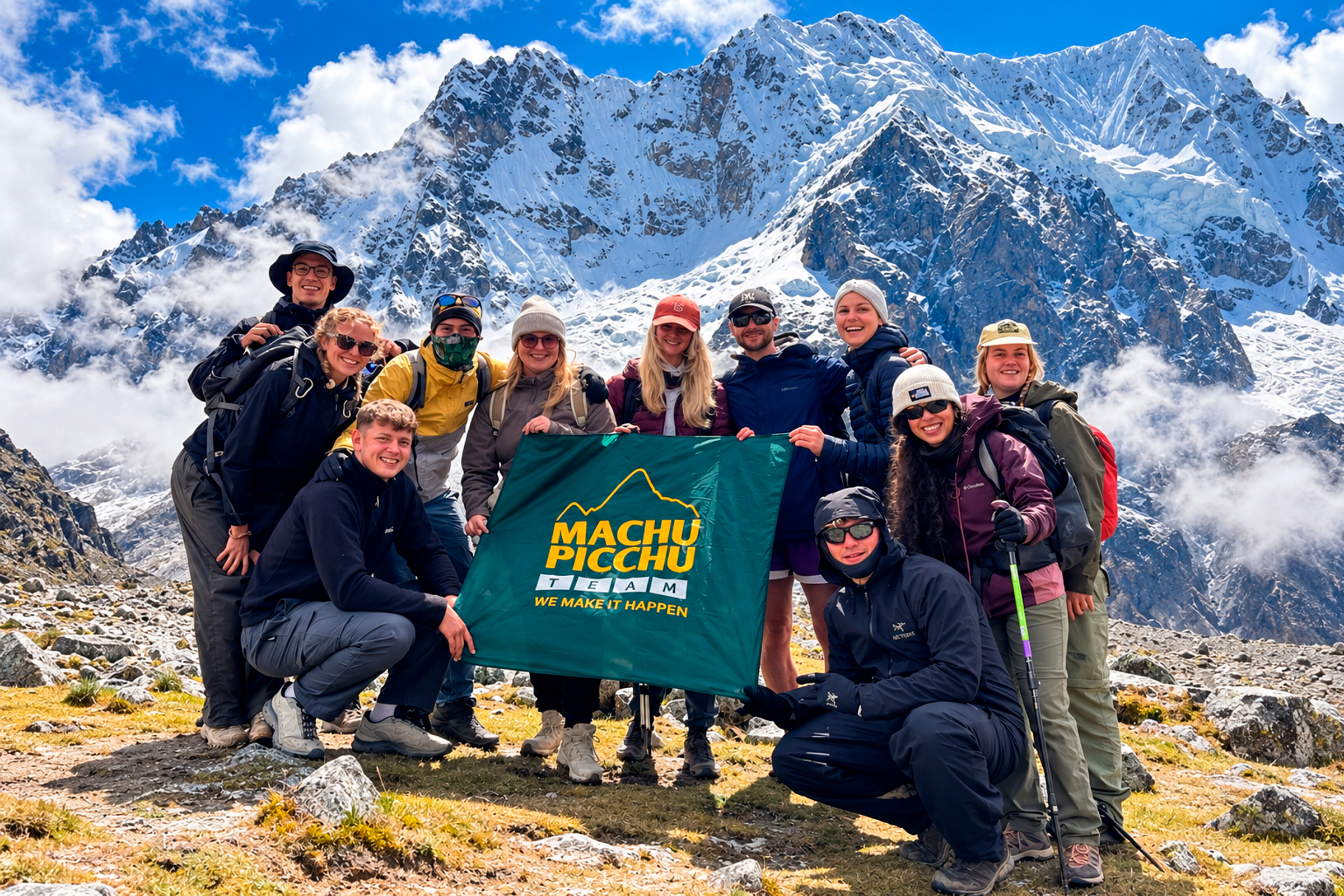
| Classic Inca Trail (4 days) | 5 to 8 hours | 4,215 m | Good |
| Salkantay Trek (4 to 5 days) | 6 to 8 hours | 4,630 m | Good |
| Ausangate Trek (4 to 6 days) | 5 to 7 hours | About 5,100 m | Very good |
The coast and the Amazon are easier on the body. The Andes are where you need to prepare: Cusco is at 3,400 m, and many of the best hikes go above 4,000 m. If you have heart, lung or blood pressure problems, are pregnant, or take regular medication, talk to your doctor before you book.
How to physically prepare for Peru: an 8-week plan
For a multi-day trek, start training about 8 weeks before the trip. For a Machu Picchu visit by train, 3 to 4 weeks of regular walking is enough.
| Weeks | Goal | What to do |
|---|---|---|
| 1 to 2 | Build a base | Walk, cycle or swim 30 to 45 minutes, 3 to 4 times a week |
| 3 to 4 | Add hills and strength | Hill walks or stairs twice a week; squats, lunges and step-ups twice a week |
| 5 to 6 | Go longer | A long hike of 3 to 4 hours every weekend with a 5 to 7 kg daypack |
| 7 | Simulate the trek | Two long hikes on consecutive days, with lots of uphill and downhill |
| 8 | Rest and recover | Shorter, easy sessions so you arrive fresh |
Train for the uphills and the downhills
Andean trails are steep stone steps. Going up builds your lungs and legs; going down is hard on the knees. Train both on stairs or hills, and consider trekking poles, which help a lot on the descents of the Inca Trail and Salkantay.
Hike in the boots you will use
Break in your hiking boots on your training walks, never on the trek. Blisters are the most common problem on multi-day hikes.
Eat well and sleep well
A balanced diet, good hydration and enough sleep help your body recover from training and arrive in Peru strong.
Fitness and altitude: why fit people get altitude sickness too
Many travelers think that being very fit protects them from altitude sickness. It does not. Altitude sickness, called soroche in Peru, depends on how high you go, how fast you go up and on your own body, not on your fitness. Marathon runners can feel it, and less fit travelers may not.
What fitness does give you is a reserve: at altitude every step costs more effort, so a fit body handles the long days much better. Training at sea level, climbing stairs or running does not acclimatize you to altitude; only time at altitude does. To prepare for the altitude:
- Spend at least 2 days in Cusco or the Sacred Valley before a trek, and 3 to 4 days before Ausangate or other very high routes.
- Take the first day very easy: no alcohol, light meals and early to bed.
- Do an easy day tour first, such as the Sacred Valley Tour (from USD 23) or the Cusco City Tour (from USD 13).
- Drink water, try coca tea, and ask your doctor about altitude medication.
Read our full guide to altitude sickness in Cusco.
Bring your own medicines
Guides are trained in first aid and carry a first aid kit and emergency oxygen, but they cannot give you medication. Pack a small personal kit:
- Your regular medicines, in their original packaging
- Painkillers and anti-inflammatories
- Medicine for diarrhea and rehydration salts
- Altitude medication, if your doctor recommends it
- Blister plasters, sunscreen, lip balm and insect repellent
Travel insurance with medical cover and emergency evacuation is strongly recommended for treks. For health advice on high-altitude travel, see the CDC guide.
Choose the right trek for your fitness
- Basic fitness: visit Machu Picchu by train on the Machu Picchu Full Day Tour by Train (from USD 280) or the 2 Day Tour by Train (from USD 310).
- Moderate fitness: the Short Inca Trail (2 days) (from USD 510) or the Inca Jungle Trail 4 Days (from USD 260), with biking, rafting and hiking.
- Good fitness: the Inca Trail 4 Days (from USD 740) or the Salkantay Trek (from USD 270).
- One-day high hikes: the Humantay Lake Tour and the Rainbow Mountain Tour, good tests before a longer trek.
On our treks, you can rent horses on some sections, walk at your own pace, and the guide always waits for the group. Read more about Inca Trail logistics and the Inca Trail packing list.
Frequently asked questions about how to physically prepare for Peru
Do I need to be fit to visit Machu Picchu?
Not very. Visiting by train needs basic fitness: you walk about 2 to 3 hours inside the citadel, with many stone steps. Hiking there needs good fitness.
How long should I train for the Inca Trail?
About 8 weeks, with regular cardio, stairs or hills, leg strength and a few long hikes with a daypack.
Is the Salkantay Trek harder than the Inca Trail?
Yes, a little. The Salkantay Pass, at 4,630 m, is higher than Dead Woman’s Pass on the Inca Trail, at 4,215 m, and the days are long, although the trail has fewer stone steps.
Does being fit prevent altitude sickness?
No. Fitness helps you walk more easily at altitude, but it does not stop altitude sickness. Only gradual acclimatization does.
Can I do a trek if I am overweight or older?
Many people do, with good preparation, a doctor’s check and a realistic choice of route. Tell us your fitness level, and we will recommend the right tour.