
These Inca Trail FAQs answer the questions travelers ask most before booking: who controls the trail, permits, routes, group size, the best season, prices, luggage, porters and what life on the trail is like. The Inca Trail to Machu Picchu is a protected route inside the Historic Sanctuary of Machu Picchu, open every month except February, and you can only hike it with a licensed operator. For the full planning guide, read our guide to hiking the Inca Trail.
Inca Trail FAQs at a glance
| Routes | 4 days from Km 82 (about 42 km), 2 days or 1 day from Km 104 (about 12 km) |
| Highest point | Dead Woman’s Pass, 4,215 m (4-day route) |
| Permits | About 500 a day on the classic route, including guides and porters |
| Closed | February, for maintenance |
| Independent hiking | Not allowed: licensed operator and official guide only |
| Price with us | From USD 400 (1 day), USD 510 (2 days), USD 740 (4 days) |
Permits and rules
Who controls the Inca Trail?
Peru’s Ministry of Culture, through the Machu Picchu National Archaeological Park, together with SERNANP for the natural area. They issue the permits, set the daily limits and maintain the trail and the official campsites.
Can I hike the Inca Trail without a guide?
No. Since 2001, every hiker must go with a tour operator licensed for the Inca Trail and an official guide. Permits are issued only to these operators.
How many permits are there per day?
About 500 people a day can start the classic route, and only around 200 of them are hikers; the rest are guides, cooks and porters. The Km 104 route (2 days and 1 day) had a limit of 250 people a day in 2026. See our guide to Machu Picchu permits.
How far in advance should I book?
For May to September, 4 to 6 months ahead; for other months, 2 to 3 months. Permits carry your name and passport number and cannot be transferred or changed. Check the Inca Trail availability.
Are mountain bikes or pets allowed?
No. The trail is for hikers only: no bikes, vehicles, animals or drones.
Routes, departures and season
How long is the Inca Trail?
- Classic Inca Trail 4 Days: about 42 km from Km 82 (about 2,700 m), with 3 nights of camping. From USD 740.
- Short Inca Trail 2 Days: about 12 km from Km 104, with a hotel night in Aguas Calientes. From USD 510.
- Inca Trail 1 Day: the same 12 km from Km 104, returning to Cusco the same day. From USD 400.
The trail only goes one way, toward Machu Picchu. You return by bus to Aguas Calientes and train to Ollantaytambo or Cusco. Read the Short Inca Trail guide to compare.
Are there departures every day?
Yes, every day from March to January, including weekends and holidays, as long as permits are available. The whole trail closes in February for maintenance and reopens on 1 March.
What is the best season for the Inca Trail?
May to September has the driest weather and the coldest nights; April and October are a good balance; November to March is warmer but rainier. Read about the best time to visit Machu Picchu.
The group, porters and campsites
What kind of group will I join?
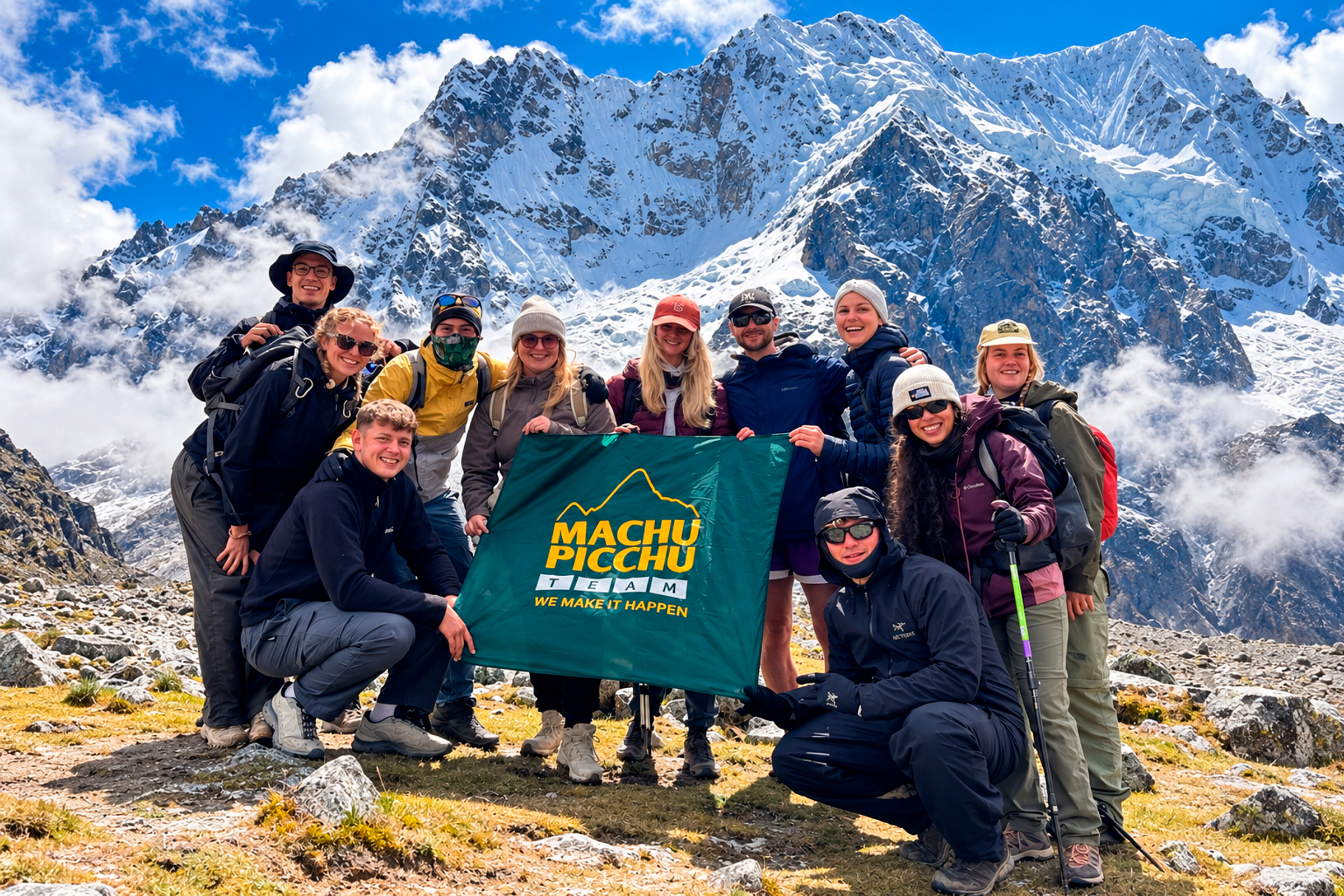
Travelers of many nationalities and ages. Groups are small and led by an official guide, and the Ministry of Culture limits group size; larger groups have two guides. You can also book a private departure for your family or friends.
What do the porters carry?
Porters carry the tents, kitchen and food. By Peruvian law, a porter’s load is limited to 20 kg, and their weight is checked at the start of the trail. You carry a daypack; ask us about an extra porter for your personal gear.
What are the campsites like?
The official campsites are run by the sanctuary. There is no electricity, phone signal or hot showers, and the toilets are basic. The team sets up your tent, cooks every meal and gives you warm water to wash. Read more in Inca Trail logistics.
Do you treat porters fairly?
Yes. We work with our own local team, hired in the Cusco region and paid fair wages. Tipping at the end of the trek is customary and goes directly to the guides, cooks and porters.
Practical questions
Where can I leave my luggage?
For free at our office in Cusco (Portal Nuevo 270, Plaza Regocijo, open from 4 AM to 10 PM), or at your hotel.
Can tourists take the local train?
No. The local train to Aguas Calientes is only for Peruvian residents. Visitors use the tourist trains of PeruRail and Inca Rail; see our guide to the train to Machu Picchu.
Is the Inca Trail hard?
The 4-day route is moderate to challenging because of the altitude and the stone steps; the 2-day route is moderate. Spend at least 2 days in Cusco first and read about altitude sickness in Cusco.
What should I pack?
Original passport, broken-in boots, warm layers, rain jacket, sun protection, headlamp and a warm sleeping bag (rental available). See the full list of what to bring for the Inca Trail.
Is there a student or child price?
Yes. On our Inca Trail tours, students with a university ID (ISIC is not accepted) and children aged 8 to 17 pay less. If permits are sold out, the Salkantay Trek needs no permit and also ends at Machu Picchu.