
Research and validity: Sources checked November 14, 2026. Rules and quoted rates apply as labeled; confirm 2027 arrangements with the relevant authorities and operator.
There is no single answer to the question ‘Should I visit Manu or Tambopata?’ Both are famous for tropical biodiversity, forest waterways and the possibility of extraordinary wildlife encounters. But they are reached by different routes, organized under different visitor rules and experienced at different speeds. The better destination depends less on which name sounds wilder and more on how many days you have, which animals or habitats interest you, and how much travel uncertainty you can comfortably accept.
This 2026–2027 comparison begins with the geographic and legal differences, then moves through likely experiences, costs, access, seasons, families, photographic opportunities and the practical decision a traveler should make before paying. It distinguishes Manu National Park’s regulated visitor sector from the more accessible Manu Cultural Zone, a distinction that is often omitted in sales descriptions.
Where are Manu and Tambopata, and why does that matter?
Manu stretches from the high Andes and cloud forest of the Cusco region toward lowland rainforest in Madre de Dios. Its journey can be a sequence of changing ecosystems: high grassland near Acjanaco, humid mountain forest around the Kosñipata route, settlements such as Pilcopata and Atalaya, and river journeys toward permitted lower-elevation areas. The full protected national park is vast, but most of it is not a freely accessible tourist playground. Official information requires authorized operators and specifies sectors, routes and control points.
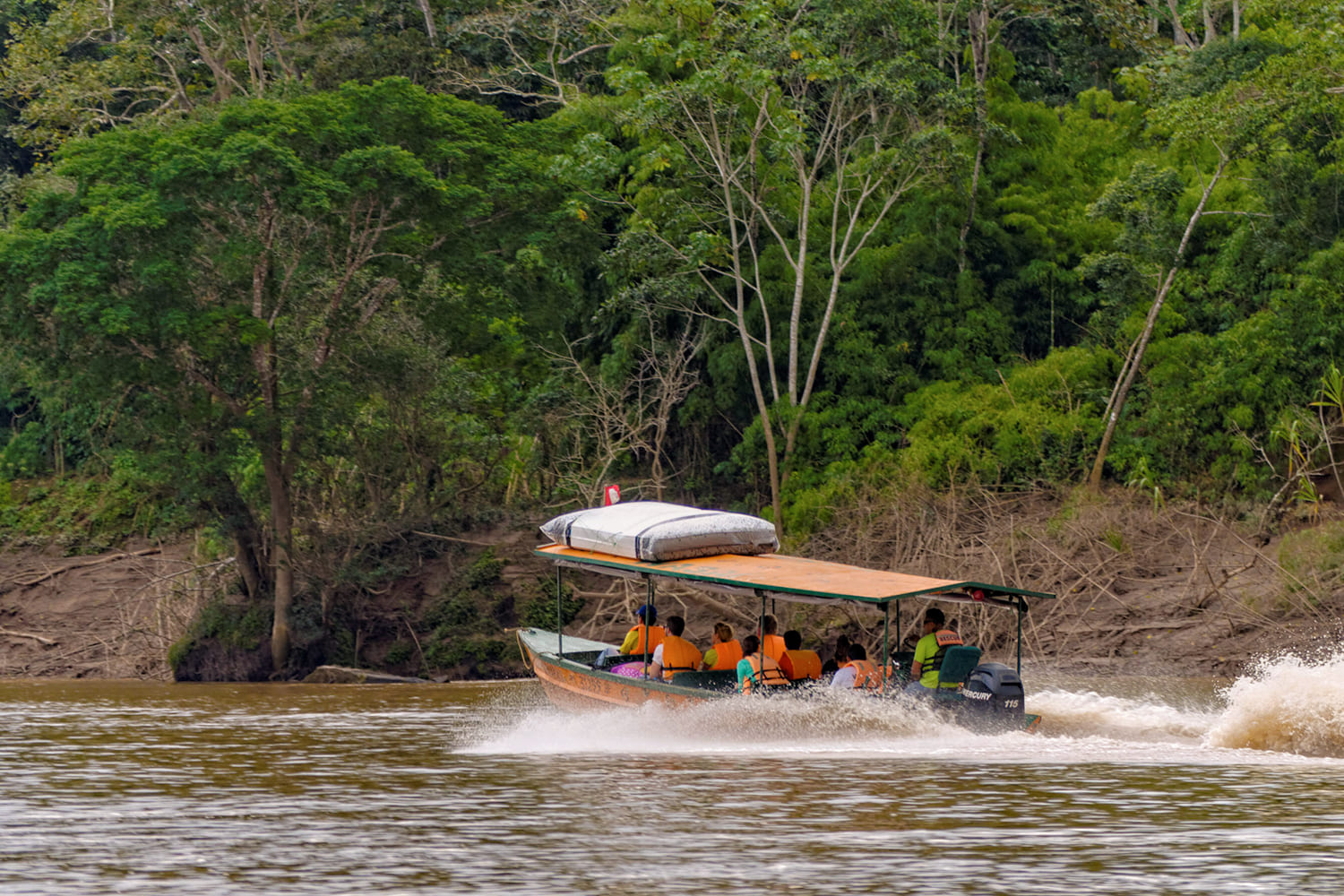
Tambopata is associated with Puerto Maldonado, the city most travelers use to reach the Tambopata National Reserve and nearby lodge areas. The most recognizable excursions include Sandoval Lake and the macaw clay licks along the upper Tambopata River. The reserve’s official page explains access to Sandoval by a river journey of approximately 30 minutes followed by a 3 km walk, while more distant clay-lick sectors require substantially longer navigation from the city. These are useful directional estimates, not universal transfer promises.
The practical distinction is that Tambopata’s airport access can allow a short but satisfying lowland rainforest trip; Manu can reward a traveler who wants the Andes-to-Amazon ecological transition and can dedicate more time to the road and rivers. A three-day Manu Cultural Zone tour should not be compared as though it reaches the same isolated national park lake system as a longer, specifically authorized Manu River itinerary.
Is Manu National Park the same as the Manu Cultural Zone?
No. The labels refer to different kinds of access and experience. Manu National Park is a strictly managed protected area with tourism concentrated in particular authorized sectors. The term ‘Cultural Zone’ is commonly used by operators for visitor experiences along the accessible road-and-river corridor outside the park’s deepest restricted zones. A photograph of a giant otter taken on the Manu River does not prove that every short ‘Manu’ package visits that place.
Before comparing prices, request the overnight itinerary and ask where the legal boundary of the park is crossed, if at all. Verify the actual sites included: cloud-forest birdwatching, a visit to Machuwasi Lake, a parrot clay lick, a river journey, or the more remote lakes and wildlife habitats permitted under national-park rules. Each is potentially worthwhile, but the access rights, travel days and conservation context differ.
Tambopata has its own boundaries. Some lodges stand inside reserve sectors under applicable permission; others are outside the protected area and travel into it for designated activities. A program that includes Sandoval Lake and the Chuncho Clay Lick may use two different lodge locations rather than treating both sites as one short walk from a single building. Ask precisely where you sleep on each night.
What wildlife experience can each destination offer?
Both destinations support monkeys, tropical birds, caimans, reptiles, insects, amphibians and elusive larger mammals. Manu is especially appealing to travelers intrigued by the transition from high-elevation birds to lowland Amazon species. The cloud forest offers a chance to look for the Andean cock-of-the-rock and other forest birds; permitted lowland river and oxbow-lake habitats may offer opportunities to observe giant river otters, waterbirds and, very occasionally, a jaguar from a safe distance.
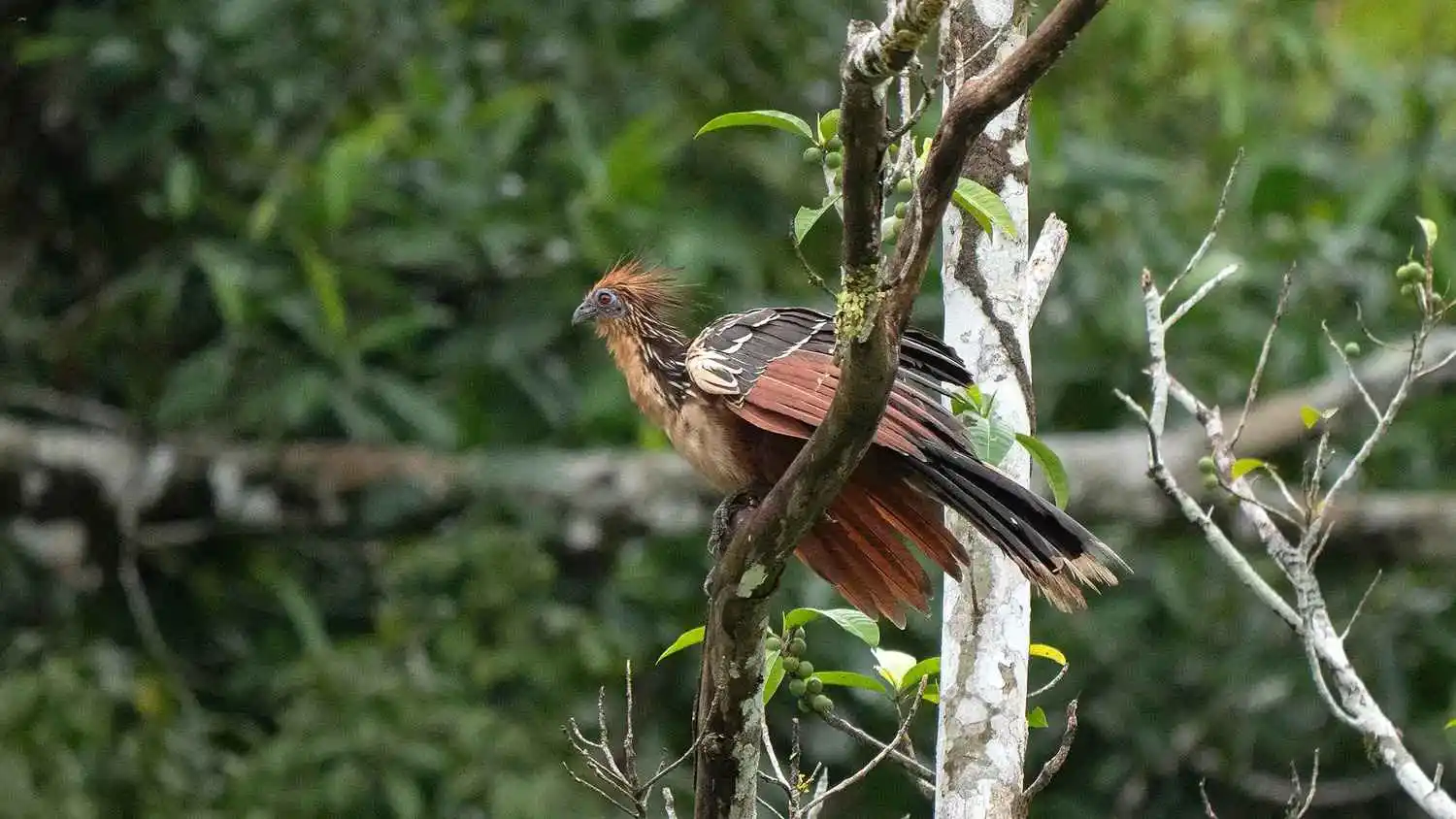
Tambopata’s appeal includes concentrations of macaws and parrots at particular clay licks, forest trails, rivers and lake outings. Sandoval Lake is often associated with giant river otters, but even there a sighting depends on the animals’ location and behavior. A responsible guide will not chase an otter family with a canoe or promise that a clay lick will be active every morning. Rain, predators, nesting cycles and disturbance can all alter the scene.
The safest comparison is between the particular habitats and guided activities included in the purchased program, not the entire biodiversity recorded in an enormous protected area. A short tour cannot show a destination’s full species list. Ask what times of day you will observe, how long you can remain quiet at promising sites, and whether the group leader has specialist skills for your priority animals.
| Decision factor | Manu | Tambopata |
|---|---|---|
| Typical gateway | Cusco, with substantial road travel and sometimes boats | Puerto Maldonado, with road and boat transfers |
| Signature landscapes | Andes, cloud forest, rivers and lowland forest depending on route | Lowland forest, oxbow lakes, rivers and clay licks |
| Short-trip option | Cultural Zone itineraries | Lodge and reserve excursions |
| More remote option | Authorized Manu River visitor sector | Farther-upstream river and forest lodge itineraries |
| Major planning caution | ‘Manu’ does not always mean entering the national park | Lodge address is not proof that all reserve activities are included |
| Wildlife promise | No guaranteed sightings | No guaranteed sightings |
| Best for | Travelers interested in ecological transitions and extended exploration | Travelers seeking manageable logistics and focused lowland wildlife activities |
Which is more practical for three, four or five days?
With three days, Tambopata usually has an efficiency advantage if the traveler can arrive in Puerto Maldonado in the morning. It is possible to combine forest walks with an early clay-lick visit and a separate lake outing, although actual route design determines whether this feels relaxed or rushed. Machu Picchu Team’s published three-day Tambopata program uses two lodges, one associated with the Tambopata River and one near Sandoval Lake. It lists a 4:30 a.m. departure for Chuncho on its second day and a 3 km walk to Sandoval on its third.
Three-day Manu Cultural Zone itineraries can be attractive from Cusco. The first day crosses the Andes and cloud forest; later days may use the Alto Madre de Dios River, Machuwasi Lake and a parrot clay lick. This does not leave the same number of hours in deep lowland forest as a purpose-built trip staying close to Puerto Maldonado. The long return drive to Cusco is a real part of the experience and should be considered in comparisons.
With four or five days, the balance becomes less simple. A Tambopata itinerary can go farther upstream, increase wildlife observation time and reduce the feeling of moving lodge every day. A Manu trip may become more rewarding by extending the cloud-forest and river portions, and some longer packages may reach specifically permitted areas associated with Manu National Park. The right question is not ‘How many days does Manu need?’ but ‘How many of these days involve meaningful observation at the habitats I want to see?’
Which destination works better for birdwatchers and photographers?
For a general birder, both are outstanding possibilities. Manu’s change in elevation can provide a broad range of bird communities, including cloud-forest species. Tambopata is particularly attractive to observers interested in macaw clay licks and lowland river or lake birds. Specialists should compare actual sites, the guide’s experience with calls and habitats, and whether a dawn departure is feasible. A generic wildlife group may stop for birds briefly; a dedicated birding departure can spend much longer on fewer locations.
Photographers need to compare not only subjects but usable shooting conditions. Cloud forest can be dim and wet, while a clay lick may require a long lens because the viewing position is deliberately distant. River travel creates vibration, glare and water exposure. A private itinerary might allow a slightly slower pace, but it does not grant permission to leave the designated viewing area, use disruptive playback or approach nests. A destination offering a famous species is not automatically the best location for an ethical close-up.
For a visitor whose primary ambition is to photograph jaguars, neither route should be sold as a guaranteed encounter. It is more honest to plan for birds, primates, landscapes and forest details while treating a distant glimpse of a large cat as an exceptional event. Wildlife conservation must determine how close visitors can safely and responsibly approach.
What are the actual protected-area tariffs and opening times?
The official SERNANP visitor portals, checked in November 2026, list a general tariff of S/30 for one day, S/60 for two to three days and S/150 for four to thirty days at both Manu National Park and Tambopata National Reserve. The rates are not prices for a lodge or guided expedition, and not every visitor category pays the same amount. They are an especially useful way to check whether a sales quote has included the correct protected-area entry component.
For Tambopata, the official general tourist visiting hours are shown as 5:00 a.m. to 7:00 p.m., seven days a week. Manu publishes different sector schedules: its Altoandino, Pusharo and Manu River areas have distinct opening windows. These should not be simplified into one 24-hour access rule. Authorized night activities and lodge arrangements need to comply with the applicable permission and sector restrictions; an operator’s ‘night walk’ description does not grant general access everywhere after dark.
SERNANP recommends drier months for visiting and identifies December to March as a rainy period. These official statements are a useful baseline, but they cannot predict the conditions on a specific 2027 departure. Check entry rules, trail status, operator authorization and prices when finalizing the trip.
Which experience is better for children or less active travelers?
Age, interest and tolerance for transport matter more than the word ‘easy’ printed on a brochure. A young child may enjoy listening to frogs from a lodge walkway but struggle with a pre-dawn departure and a long return drive. A traveler with knee problems may handle a slow river trip but find a muddy 3 km approach to Sandoval Lake difficult. At the same time, a short Manu cloud-forest stop can be pleasant for travelers who do not want a remote expedition.
Ask for the steepest walk, number of stairs to the rooms, length of uninterrupted boat travel, possibility of rain exposure and availability of private bathroom facilities. Boat safety is non-negotiable: properly fitting life jackets, safe boarding procedures and clear supervision are more important than an excursion’s advertised excitement. Family groups often benefit from shorter observation sessions and protected time to rest during the hottest hours.
Accessibility needs should be assessed individually, particularly for travelers using mobility aids or specialized equipment. Even a lodge described as comfortable can have uneven ramps, high boat steps or remote trails. Contact the operator with the practical details before buying rather than interpreting a hotel photograph as an accessibility certificate.
How does Machu Picchu Team present the two experiences?
Machu Picchu Team’s published three-day Manu Cultural Zone program starts in Cusco and describes the Acjanaco crossing, cock-of-the-rock habitat, Machuwasi Lake, a parrot clay lick and two lodge nights. Its published three-day Tambopata program begins and ends in Puerto Maldonado and combines the Chuncho Macaw Clay Lick, Sandoval Lake, two lodges and guided boat activities. These are concrete examples of how the two destinations differ in travel style.
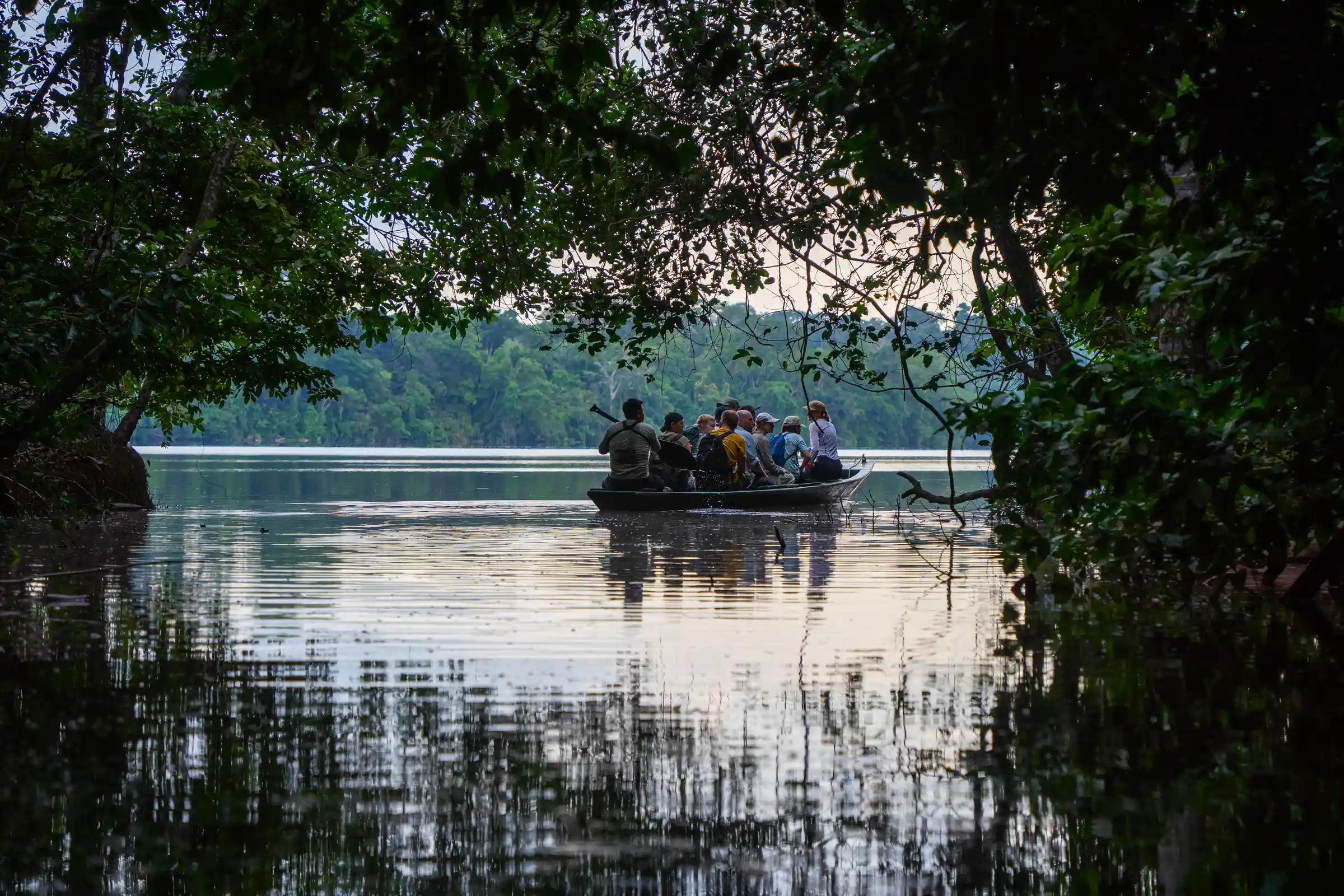
The company’s published Manu program describes rubber boots, life jackets, drinking water, first-aid equipment, meals and lodge rooms with private bathrooms. The Tambopata program specifies two lodge locations, particular meals, bilingual guiding and river transfers. Included equipment is itinerary-specific, so it is better to review each current product page and confirm dietary, equipment and accessibility requirements with reservations than to assume identical services under the same brand.
For a private journey, discuss whether the priority is family comfort, extended birdwatching, an unusual dietary need or an extra night near a particular observation area. Such modifications may change the price or require a different route. A professionally organized comparison starts with accurate inclusions, not with a slogan saying one rainforest is ‘better’ than the other.
So which one should you choose?
Choose a short Tambopata program if time is limited, Puerto Maldonado connections work and the main interests are a clay lick, oxbow lake and introductory lowland rainforest. Choose a Manu Cultural Zone program if you enjoy the idea of crossing the Andes into cloud forest and rainforest, and can accept more road travel as part of the story. Consider a longer authorized Manu itinerary if your priority is a remote, multi-day forest experience and you are prepared for more complex logistics.
Before making the final choice, compare the actual daily plans side by side. Count nights, transport hours, wildlife observation windows, park sectors entered and costs excluded. Then ask whether the program has a credible response to unsafe weather or river conditions. The best itinerary is the one that matches your interests and leaves enough margin to appreciate what the forest offers rather than racing through it.
What does traveling into the Peruvian Amazon actually involve?
The first surprise for many visitors is how much of an Amazon trip happens before the first wildlife sighting. A lodge may appear near Puerto Maldonado on a map, yet reaching its dining room can involve an airport pickup, a drive over paved and unpaved roads, a river transfer, a landing where bags are carried by hand, and a short walk on wet soil. In Manu, an itinerary beginning in Cusco can cross the high Andes and cloud forest before reaching tropical lowlands. The transitions are not wasted time: altitude, vegetation, farming, river traffic, and the types of birds change visibly along the way.
A good itinerary describes where each night is spent, what mode of transport is used, and how much time remains for nature observation after transfers. Ask whether a published duration means time on a boat, elapsed time including stops, or simply the operator’s typical estimate in favorable conditions. A one-hour transfer in low water may become slower when a skipper must avoid shallow channels; a journey delayed by a storm may end with less daylight. Rather than judge a program by the number of activities printed on its page, examine its usable early-morning and late-afternoon hours.
For travelers with only two or three nights, Tambopata often offers a convenient base through Puerto Maldonado. A longer Manu journey can be worthwhile for the gradual transition from cloud forest to lowland habitat, but not every tour marketed as ‘Manu’ enters the national park’s restricted tourism sectors. Ask for the exact route, checkpoint, destination and accommodation. The names ‘Manu Cultural Zone,’ ‘Manu Biosphere Reserve,’ and ‘Manu National Park’ are not interchangeable statements about legal visitor access.
What changes between the wet and relatively dry months?
Rainfall is possible in the Amazon at any time. Official visitor information for Manu and Tambopata identifies December to March as the wetter period and generally recommends visits in the comparatively drier months. That does not mean the forest becomes dry from May onward. Paths may remain muddy, humidity remains high, and a heavy downpour can interrupt an afternoon even in July or August. Seasonal transitions differ by river, elevation, and the weather pattern of a particular year.
In wetter months, river levels can rise, narrow paths may become slippery, and boats may need to wait for safer conditions. The landscape can look lush and waterways may give access to places that are difficult during low water. In drier months, exposed banks and firmer ground can make some activities more straightforward, while low water can oblige longer walks, different landing points, or a change in river route. Neither season guarantees more animals: breeding cycles, food availability, daily weather and the behavior of individual species matter as much as the calendar.
Plan with a flexible rather than a rigid hour-by-hour expectation. The operator should explain the alternate activity when an observation platform, trail or river sector is temporarily unsuitable. A worthwhile substitute might be a different forest trail, a sheltered interpretation walk, a quieter canoe excursion, or time devoted to listening for birds. The quality of guiding often becomes most visible on a day when the weather does not cooperate.
Which health preparations matter before departure?
Arrange travel-health advice well before arriving in Peru. The CDC’s Peru guidance recommends yellow fever vaccination for many lower-elevation Amazon destinations and identifies malaria risks in areas below 2,500 m east of the Andes. The right malaria prevention decision depends on an individual itinerary, medical history and professional advice. A recommendation for the lowland Amazon should not be confused with requirements for high-altitude Cusco, central Lima or Machu Picchu. The CDC states that Peru does not impose a yellow-fever vaccination requirement for entry, while recommending protection for relevant destinations; other countries on the itinerary can have their own rules.
Carry prescribed medicine in its original labeled packaging, together with an appropriate supply for travel delays. Tell the reservations team in advance about serious allergies, dietary restrictions, mobility needs and medical conditions relevant to the planned activity. Do not expect a riverside lodge to maintain a pharmacy, a full-time doctor or continuous communications. Check whether the operator has a documented evacuation procedure, first-aid equipment, a workable communications method, and staff who can contact medical services. These are more meaningful questions than whether the website uses the word ‘adventure.’
On the ground, prevention is practical: long lightweight sleeves, trousers, insect repellent used according to its label, footwear that closes securely, safe drinking water and regular hand cleaning. Heat and humidity make dehydration easy to miss. Drink regularly, but avoid forcing excessive water. Be careful at boat landings and after rain; a slip on wet steps is a more ordinary and sometimes more probable problem than a dramatic encounter with a dangerous animal.
What should visitors pack, and what should they leave at home?
Carry a daypack that can stay with you on walks and in the boat. It should hold rain protection, drinking water, medicines, an insect repellent, a headlamp, sun protection, a dry bag for valuables, a modest first-aid supply for personal use, and a spare battery or power bank. Include a small cloth to dry binocular eyepieces and camera equipment. A waterproof liner inside a normal backpack is usually more dependable than trusting a bag advertised as ‘water resistant.’
Choose subdued, lightweight clothing that dries quickly. Two or three light layers are more useful than a single heavy cotton garment. A brimmed hat, socks that rise above the ankle, and shoes with secure grip make walks more comfortable. Bring sandals for use inside appropriate lodge areas, not for unsupported nighttime trail exploration. Rubber boots may be provided on specific tours, but sizes and availability should be confirmed before booking rather than assumed. Professional photo lenses, drones, large tripods and recording equipment may be subject to operational or protected-area permissions.
Bring the original passport or other accepted travel document, insurance details, emergency-contact information, any required medical documents, and some small Peruvian-sol notes for expenses that are clearly excluded. Keep a digital backup of important documents offline. If traveling with a wheelchair, walking aid, support animal, specialized medical equipment, or another requirement affecting transport, tell the operator before payment; boats, stairs, narrow paths and remote bathrooms can create limitations that a standard accessibility label does not capture. Never assume that a service animal can enter a sensitive wildlife area without prior authorization.
How are environmental rules applied inside protected areas?
Peru’s protected areas are managed under rules that distinguish tourism sectors, visitor activities, approved service providers and sensitive conservation areas. SERNANP advises visitors to use authorized operators, register at control points when required, remain on permitted trails and avoid touching or feeding wildlife. A reservation with a lodge outside a protected area is not, by itself, permission to enter every trail, lake or clay lick inside it. Entrance charges and access arrangements should be checked against the protected area’s current official listing.
Visitors can help by keeping a respectful distance from animals, remaining quiet near viewing sites, staying with the guide and taking every piece of waste out. Avoid deliberate attempts to attract wildlife with food, recorded calls or bright light. Do not collect feathers, plants, insects, soil or artifacts as souvenirs. The ethical issue is not limited to species protection: river margins and forest paths are also used by local residents who deserve privacy and predictable access.
A professional guide may decide not to approach an animal, not to land at a crowded bank, or to turn around when conditions deteriorate. Such decisions can be disappointing in the moment, yet they are marks of responsible operation rather than evidence that a tour is poorly run. A memorable Amazon visit is one that leaves animals able to behave normally after the boat has departed.
How can travelers compare tour prices without being misled?
First establish exactly what is being sold. Some programs begin at a Cusco hotel; others start only after the traveler reaches Puerto Maldonado. Some include flights, while many do not. Lodge class, number of nights, permitted protected-area visits, guide language, boat travel, drinking water, meals and airport transfers may vary. An apparently cheaper trip can cost more after a flight, entrance ticket, equipment rental, private-room supplement or additional transfer is added.
The official SERNANP visitor page for Tambopata lists general entrance fees by duration: S/30 for one day, S/60 for two to three days and S/150 for four to thirty days at the time checked in November 2026. The Manu National Park page publishes the same general duration bands. These are park fees, not the total cost of an expedition; different visitor categories and individual access rules apply. Confirm the current tariff and whether it is included in your contracted tour. Fees shown on the official portal may change before travel in 2027.
Do not treat a sample price found in an article as an unchangeable quote for all travelers. Before paying, ask for the final price in a specified currency, the cancellation terms, what happens if river transport changes, whether international card-processing fees apply, and what proof of booking you will receive. A transparent operator can itemize the major services even when the itinerary is sold as an all-inclusive package.
What should a guide and operating team actually provide?
A trained local guide contributes much more than a list of species names. They know where visitors can legally walk, when to stop speaking, how to interpret alarm calls, and when a promising-looking encounter would cause an animal too much disturbance. Boat operators read currents and submerged obstacles; lodge staff monitor water, food storage and trail condition; kitchen staff keep meals practical for hot, humid field days. The quality of these often-overlooked roles shapes the experience.
Ask about the language and practical natural-history experience of the person who will lead your group. A large mixed group with different interests may spend less time quietly studying one animal than a small birdwatching group. Conversely, a general-interest tour can be excellent for first-time visitors because it balances forest ecology, short walks, river travel and rest. Private guiding is useful when a party has an unusually slow pace, specialist photography interests or specific dietary and accessibility requirements.
For food, ask what meals are actually included and whether vegetarian, vegan, gluten-free and serious allergen requirements can be supported safely. Responsible kitchens rely on hand hygiene, clean equipment, appropriate storage temperatures and safe water, but a specific certification or food-safety standard should never be claimed unless the provider can document it. On a private trip, customized menus can be discussed before booking; complex supplies or a separate cook may involve a surcharge that should be confirmed in writing.
What about the human side of rainforest travel?
The forest is not an empty stage constructed for visitors. Nearby towns, river settlements, farmers, Indigenous communities, boat crews and conservation staff live and work in these landscapes. Tourism can create income for guides, cooks, accommodation providers, transport workers and artisans, but it can also place pressure on water supplies, river wildlife, local prices and cultural privacy if the benefits are poorly shared. Ask who owns or manages the operation and whether local workers have meaningful roles rather than only token appearances.
Never assume that an Indigenous community is open to unannounced visits or photography. Community-based activities should be organized with informed agreement from residents, clear expectations and respectful payment. Peoples living in isolation or initial contact must not be treated as tourist attractions; Peru’s Ministry of Culture has specific protections for their territories and right to avoid contact. Ethical travel is sometimes the decision not to visit a sensitive place at all.
The most useful ‘authentic experience’ may be an ordinary conversation with a guide about why a river changes course, which plants fruit at different times, how a family adapts to a flood, or what conservation work looks like after tourists go home. These observations cannot be guaranteed on a schedule, but making space for them can turn a wildlife checklist into a deeper understanding of the Amazon.
How far in advance should a rainforest trip be organized?
For a standard short lodge program, practical planning can begin several weeks or months ahead, with additional lead time for school holidays, peak travel months, specialist guides and limited-capacity destinations. Small remote facilities may have fewer rooms and less flexibility for last-minute group changes. Longer trips in permitted Manu sectors, tailored wildlife photography departures and private transport merit earlier discussion. The exact lead time depends on the operator and permits, so resist articles that claim an official universal booking deadline where none exists.
Reserve essential arrival and departure connections with the lodge schedule in mind. If the group is expected to start river travel in the morning, an afternoon flight into Puerto Maldonado may not be useful. Build an overnight buffer when a missed long-distance connection would cause the loss of an expensive fixed tour. Keep the last day flexible too: boat arrivals can be slower than planned, and an international flight scheduled immediately after an uncertain river transfer is avoidable risk.
For 2027 travel, verify current SERNANP regulations, entrance fees, transport availability and medical advice close to departure. Future river conditions, animal activity and flight timetables cannot be reliably predicted a year in advance. A quality itinerary is resilient enough to handle change without pretending that tropical travel follows an exact script.
Relevant trip options and further reading
Compare the agency’s Manu Cultural Zone 3 Days, Manu Reserved Zone 5 Days, Tambopata 3 Days and Tambopata 4 Days itineraries. Confirm current access and inclusions with reservations.
Source notes and verification
- SERNANP: Manu National Park — tourism sectors, prices, visitor rules and routes.
- SERNANP: Tambopata National Reserve — Sandoval, clay licks, opening hours and entry fees.
- CDC: Peru travel health — Amazon-specific vaccination and malaria advice.
- Machu Picchu Team: Manu 3 Days and Tambopata 3 Days — examples of published itinerary services.