
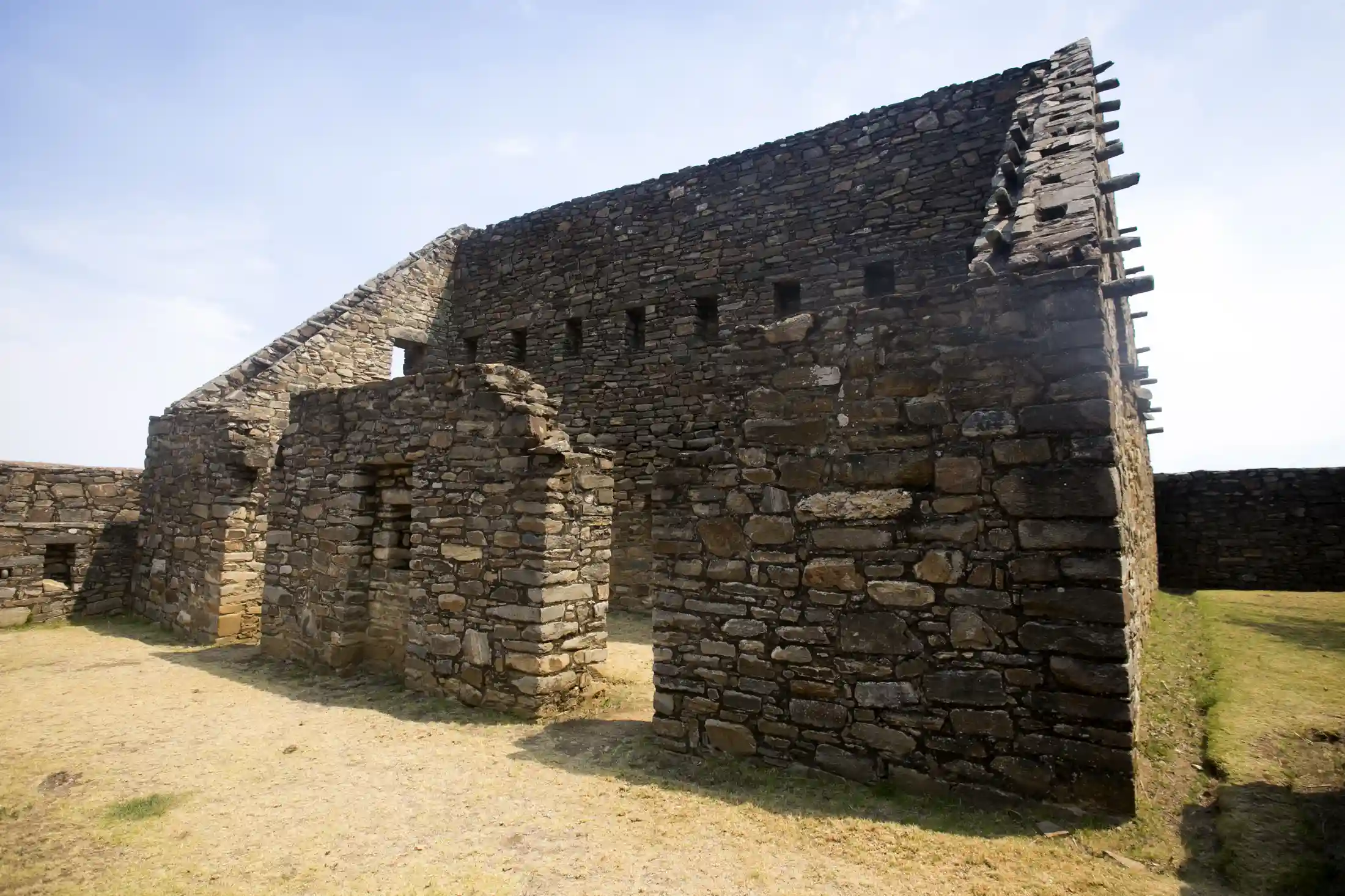
The Choquequirao Trek is one of the most rewarding multi-day adventures in Peru for travelers looking for impressive Inca archaeology, dramatic Andean landscapes, challenging hiking, and significantly fewer visitors than the routes around Machu Picchu.
Hidden high above the Apurímac Canyon, Choquequirao is a vast Inca archaeological complex surrounded by mountains, deep valleys, cloud forest, and remote rural communities.
The journey to reach it is part of the experience.
Unlike Machu Picchu, Choquequirao cannot normally be reached by train or tourist bus. Travelers must hike through steep mountain terrain, descending deep into the Apurímac Valley before climbing back toward the archaeological site.
For this reason, the Choquequirao Trek is best suited to travelers who enjoy challenging hikes and want a more adventurous experience in the Andes.
This complete Choquequirao Trek Guide from Machu Picchu Team in Cusco explains the route, difficulty, altitude, itinerary, best time to visit, packing requirements, training recommendations, camping conditions, and everything you should consider before beginning the trek.
Choquequirao Trek at a Glance
| Detail | Information |
|---|---|
| Destination | Choquequirao Archaeological Complex |
| Region | Cusco, Peru |
| Typical trek duration | 4 days / 3 nights |
| Alternative durations | 3, 5, 6 days or longer |
| Difficulty | Challenging |
| Terrain | Steep mountain trails |
| Main canyon | Apurímac Canyon |
| Highest areas | Around 3,000–3,100 m near Choquequirao |
| Lowest sections | Around 1,500 m near the Apurímac River |
| Accommodation | Campsites or basic local lodging depending on itinerary |
| Main archaeological site | Choquequirao |
| Best general season | April to October |
| Rainiest period | Approximately November to March |
| Recommended fitness | Good |
| Recommended acclimatization | At least 2 days around Cusco |
| Starting area | Capuliyoc / Cachora region |
What Is Choquequirao?
Choquequirao is an important Inca archaeological complex located in the mountains of southern Peru.
Its name is commonly interpreted as “Cradle of Gold.”
The archaeological site occupies a spectacular position above the Apurímac River and contains:
- Agricultural terraces.
- Ceremonial sectors.
- Residential areas.
- Plazas.
- Storage structures.
- Water channels.
- Staircases.
- Retaining walls.
- Religious areas.
- Terraces decorated with figures of llamas.
The complex extends across a large mountainous area, and many sections remain surrounded by vegetation.
Because reaching Choquequirao requires significant physical effort, visitor numbers are generally much lower than at Machu Picchu.
That isolation is one of the main reasons travelers choose this trek.
Why Visit Choquequirao?
Choquequirao is ideal for travelers looking for something more adventurous than the standard tourism routes around Cusco.
Reasons to choose Choquequirao include:
- Fewer visitors.
- Impressive Inca archaeology.
- Dramatic canyon landscapes.
- Multi-day hiking.
- Remote Andean scenery.
- Camping experience.
- Challenging terrain.
- Opportunities for wildlife observation.
- Greater sense of exploration.
- Less commercialized environment.
For hikers who appreciate remote trails, Choquequirao can become one of the highlights of an entire trip to Peru.
Why Is Choquequirao Compared With Machu Picchu?
Choquequirao is frequently compared with Machu Picchu because both are major Inca complexes located in dramatic mountain environments.
However, the experiences are very different.
| Choquequirao | Machu Picchu |
| Reached mainly by trekking | Accessible by train and bus |
| Much fewer visitors | Very popular |
| Remote environment | Developed tourism infrastructure |
| Challenging approach | Easier standard access |
| Large archaeological complex | Famous compact archaeological sanctuary |
| Camping normally required | Hotels widely available nearby |
| Adventure-focused | Accessible to many travel styles |
Choquequirao should not be seen as simply a substitute for Machu Picchu.
It offers a different kind of journey.
Where Is Choquequirao?
Choquequirao is located in the Andes northwest of Cusco.
The archaeological complex sits high above the Apurímac River, surrounded by steep mountains and deep valleys.
Most trekking itineraries begin with transportation from Cusco toward the Cachora and Capuliyoc area.
From Capuliyoc, hikers begin a major descent into the canyon.
The route then crosses the Apurímac River before climbing dramatically toward communities such as Santa Rosa and Marampata.
Choquequirao lies beyond this ascent.
How Do You Get to Choquequirao?
There is no traditional train service directly to Choquequirao.
For most travelers, reaching the archaeological site requires:
- Transportation from Cusco.
- Arrival at the Capuliyoc area.
- Hiking into the Apurímac Canyon.
- Crossing the river.
- Climbing toward Marampata.
- Continuing to Choquequirao.
The demanding access is exactly what keeps the destination relatively quiet.
How Long Is the Choquequirao Trek?
The most common itinerary lasts 4 days and 3 nights.
Other variations include:
- 3-day accelerated trek.
- 4-day classic trek.
- 5-day relaxed trek.
- 6-day Choquequirao to Machu Picchu routes.
- Longer expeditions connecting different Andean areas.
For most travelers, the 4-day Choquequirao Trek provides a good balance between hiking time and archaeological exploration.
Choquequirao Trek 4 Days
The classic four-day route normally follows this general structure:
Cusco → Capuliyoc → Chiquisca → Apurímac River → Santa Rosa → Marampata → Choquequirao → Return
The journey involves repeatedly descending and climbing the canyon.
This makes Choquequirao physically demanding despite its relatively moderate maximum altitude compared with other Peruvian treks.
Choquequirao Trek 4-Day Itinerary
Day 1: Cusco – Cachora – Capuliyoc – Chiquisca
The adventure normally begins early in Cusco.
Travelers leave the city by vehicle and head toward the starting area of the trek.
Depending on the itinerary, the journey may pass through rural Andean landscapes and areas near Cachora before arriving at Capuliyoc.
Capuliyoc provides one of the first dramatic views of the Apurímac Canyon.
From here, hikers can appreciate the enormous scale of the landscape.
The trail begins with a long descent.
During this section, travelers may encounter:
- Dry mountain vegetation.
- Canyon viewpoints.
- Narrow trails.
- Switchbacks.
- Increasing temperatures as elevation decreases.
The first night is normally spent around Chiquisca or a nearby campsite, depending on the exact itinerary.
Day 1 Hiking Characteristics
| Detail | Approximate Experience |
| Main terrain | Long descent |
| Difficulty | Moderate to challenging |
| Climate | Warmer as you descend |
| Main highlight | Apurímac Canyon views |
| Night | Chiquisca or nearby area |
The downhill hiking can be demanding on knees and legs.
Trekking poles can be particularly useful.
Day 2: Chiquisca – Apurímac River – Santa Rosa – Marampata – Choquequirao
Day 2 is usually the most demanding part of the Choquequirao Trek.
The day begins by continuing downhill toward the Apurímac River.
After reaching the bottom of the canyon, the route crosses the river and begins a long climb.
This ascent can take several hours.
The trail passes through areas such as:
- Playa Rosalinas.
- Santa Rosa.
- Marampata.
As hikers gain elevation, temperatures gradually become more comfortable and views become increasingly impressive.
The climb requires patience.
Walk slowly and maintain a steady rhythm.
After reaching Marampata, travelers continue toward Choquequirao or a nearby campsite depending on the itinerary.
Why Is Day 2 So Difficult?
The challenge comes from the elevation change rather than extreme altitude.
You first descend to the bottom of the canyon and then climb hundreds of meters through steep terrain.
Factors that make the day difficult include:
- Heat.
- Long uphill sections.
- Limited shade in some areas.
- Steep gradients.
- Fatigue from Day 1.
- Backpack weight.
- Humidity.
Proper hydration is essential.
Day 3: Explore Choquequirao – Begin the Return
The third day normally provides time to explore the Choquequirao Archaeological Complex.
This is the main reward after two demanding days of trekking.
A guided visit may include several important sectors.
Depending on available time and trail conditions, travelers can explore:
- Main plaza.
- Ceremonial areas.
- Agricultural terraces.
- Residential sectors.
- Water systems.
- Llama terraces.
- Panoramic viewpoints.
After exploring Choquequirao, the trek begins the return journey toward the Apurímac Canyon.
The group normally descends back toward Marampata, Santa Rosa, or the river area depending on pacing and campsite arrangements.
Day 4: Apurímac Canyon – Chiquisca – Capuliyoc – Cusco
The final day involves another demanding climb.
After crossing or departing from the lower areas of the canyon, hikers gradually ascend toward Capuliyoc.
This final ascent can feel difficult because the legs are already tired after several days of hiking.
Once the group reaches the road access area, transportation returns travelers to Cusco.
Arrival is normally later in the day or evening depending on the itinerary.
How Difficult Is the Choquequirao Trek?
The Choquequirao Trek is considered challenging.
It is generally more physically demanding than many travelers expect.
The main difficulty comes from:
- Major elevation changes.
- Long descents.
- Long climbs.
- Steep trails.
- Heat in the canyon.
- Multi-day hiking.
- Limited infrastructure.
- Repeated uphill and downhill sections.
You do not need technical mountaineering skills.
However, good physical fitness is strongly recommended.
Is Choquequirao Harder Than the Inca Trail?
For many hikers, yes.
The Classic Inca Trail reaches higher elevations, but Choquequirao includes extremely demanding canyon descents and ascents.
A simple comparison:
| Factor | Choquequirao | Classic Inca Trail |
| Maximum altitude | Lower | Higher |
| Steep descents | Extensive | Significant |
| Steep climbs | Extensive | Significant |
| Tourism infrastructure | Limited | More organized |
| Crowds | Low | Higher |
| Overall physical challenge | High | High |
| Remote feeling | Very high | Moderate |
The most difficult trek depends on individual strengths.
Travelers who struggle with long climbs may find Choquequirao particularly hard.
Is Choquequirao Harder Than Salkantay?
Both are challenging for different reasons.
Salkantay reaches much higher altitudes.
Choquequirao involves more dramatic canyon elevation changes.
| Choquequirao Trek | Salkantay Trek |
| Lower maximum altitude | Higher altitude |
| Deep canyon hiking | High mountain pass |
| Long climbs | Salkantay Pass challenge |
| Hot lower sections | Cold high-altitude sections |
| Remote archaeological focus | Mountain landscape focus |
| Fewer travelers | More popular |
Travelers concerned primarily about altitude may find Choquequirao more manageable.
Travelers concerned about steep climbing may prefer Salkantay.
Choquequirao Trek Altitude
Choquequirao itself lies at approximately 3,000 meters / 9,840 feet above sea level.
This is lower than Cusco.
However, the trail drops dramatically toward the Apurímac River.
| Location | Approximate Altitude |
| Cusco | 3,400 m / 11,155 ft |
| Capuliyoc | Around 2,900 m / 9,514 ft |
| Chiquisca | Around 1,900 m / 6,234 ft |
| Apurímac River area | Around 1,500 m / 4,920 ft |
| Marampata | Around 2,900 m / 9,514 ft |
| Choquequirao | Around 3,000–3,100 m / 9,840–10,170 ft |
The constant change in elevation is a defining feature of the route.
Is Altitude Sickness a Problem?
Altitude sickness is possible, but Choquequirao does not reach the extreme heights of several other Cusco treks.
Travelers normally spend time in Cusco before starting, meaning many already have some acclimatization.
Still, we recommend spending at least two days in Cusco or the Sacred Valley before beginning the trek.
This also gives travelers time to recover from international travel.
Best Time to Hike Choquequirao
The best period generally corresponds with the drier months in the Andes.
April to October
This period generally provides:
- Lower rainfall.
- Clearer views.
- Better trail conditions.
- Cooler nights.
- Strong sunshine.
June through August can offer very dry conditions, although nights can become cold.
Choquequirao During the Rainy Season
The rainy season generally occurs between November and March.
Travel is still possible during portions of this period, but conditions become more challenging.
Potential difficulties include:
- Mud.
- Slippery trails.
- Heavy rain.
- Reduced visibility.
- Landslides.
- Trail deterioration.
- Higher humidity.
Rain protection and good hiking footwear become especially important.
Best Months for Choquequirao
| Month | General Conditions |
| January | Rainy |
| February | Very rainy |
| March | Rain decreasing |
| April | Good transition period |
| May | Excellent |
| June | Excellent and dry |
| July | Excellent but colder nights |
| August | Excellent |
| September | Very good |
| October | Good |
| November | Rain increasing |
| December | Rainy |
Weather in the Andes is never completely predictable.
Rain can occur even during dry months.
How Much Training Do You Need?
Physical preparation is strongly recommended.
Start training several weeks before your trip if possible.
Useful activities include:
- Hiking.
- Running.
- Cycling.
- Stair climbing.
- Long walks.
- Strength training.
- Cardiovascular exercise.
The best preparation is hiking on hills while carrying a small backpack.
Training Plan for Choquequirao
6–8 Weeks Before
Focus on:
- Regular walking.
- Cardiovascular fitness.
- Basic leg strength.
3–5 Weeks Before
Add:
- Hills.
- Stairs.
- Longer hikes.
- Backpack training.
Final Week
Reduce training intensity.
Allow your body to recover before traveling.
Do You Need Hiking Experience?
Previous hiking experience is highly recommended but not absolutely required.
Fit beginners can complete Choquequirao with good preparation.
However, travelers should understand that this is not an easy introduction to trekking.
You should already be comfortable:
- Walking several hours.
- Climbing hills.
- Descending steep terrain.
- Spending multiple days outdoors.
What to Pack for the Choquequirao Trek
Pack carefully.
Carrying too much can make the trek significantly harder.
Essential Clothing
Bring:
- Hiking shirts.
- Lightweight pants.
- Fleece.
- Warm jacket.
- Waterproof jacket.
- Rain poncho.
- Hiking socks.
- Underwear.
- Sun hat.
- Warm hat.
Use lightweight and quick-drying fabrics whenever possible.
Essential Hiking Equipment
Recommended equipment includes:
- Hiking boots or trail shoes.
- Small daypack.
- Trekking poles.
- Reusable water bottle.
- Headlamp.
- Sunglasses.
- Sunscreen.
- Insect repellent.
- Portable charger.
Sleeping Equipment
Depending on your tour package, you may need:
- Sleeping bag.
- Sleeping bag liner.
- Comfortable sleep clothing.
Always confirm which camping equipment is included before traveling.
Toiletries
Keep personal items compact.
Bring:
- Toothbrush.
- Toothpaste.
- Toilet paper.
- Hand sanitizer.
- Wet wipes.
- Personal medication.
- Small towel.
- Biodegradable toiletries when appropriate.
Choquequirao Packing Checklist
| Item | Priority |
| Hiking shoes | Essential |
| Passport | Essential |
| Waterproof jacket | Essential |
| Hiking pants | Essential |
| Sunscreen | Essential |
| Insect repellent | Essential |
| Water bottle | Essential |
| Headlamp | Essential |
| Trekking poles | Highly recommended |
| Warm layer | Essential |
| Sleeping bag | Depends on tour |
| Portable charger | Recommended |
| Camera | Optional |
| Sandals | Optional |
| Extra snacks | Recommended |
Hiking Shoes for Choquequirao
Choose footwear with:
- Good grip.
- Ankle or foot support.
- Comfortable cushioning.
- Reliable traction.
The trail can become dusty, rocky, muddy, or slippery depending on weather.
Never begin the trek with brand-new shoes.
Break them in before traveling.
Trekking Poles
Trekking poles are highly recommended.
They are particularly helpful during the long descents into the Apurímac Canyon.
Benefits include:
- Better balance.
- Reduced knee impact.
- Improved stability.
- Support during steep climbs.
What Backpack Should You Use?
Most travelers should carry a small daypack.
A backpack of approximately 20–30 liters is generally sufficient for personal essentials during the day.
Depending on the tour, horses or mules may transport additional luggage.
Ask your operator about weight limits before packing.
Horses and Mules on Choquequirao
Pack animals are commonly used to transport camping equipment, food, and traveler luggage.
However, access conditions and operational arrangements may vary.
Travelers should still be prepared to carry a daypack with:
- Water.
- Rain jacket.
- Sunscreen.
- Camera.
- Personal medication.
- Snacks.
- Essential documents.
Can You Ride a Horse?
Horse support may be available in some sections, but travelers should not assume it is always guaranteed.
The terrain is steep and certain sections may not be ideal for riding.
Anyone concerned about physical capacity should discuss horse support before beginning the trek.
Camping on the Choquequirao Trek
Camping is part of most Choquequirao itineraries.
Campsites are generally basic.
Do not expect hotel-style facilities.
A typical camp may include:
- Tents.
- Dining area.
- Basic toilets.
- Limited or no showers.
- Rural surroundings.
The simplicity is part of trekking in a remote region.
Are There Showers?
Facilities vary between campsites.
Some locations may offer basic showers, while others may have limited washing facilities.
Wet wipes and a small travel towel are useful.
Food on the Choquequirao Trek
Organized treks generally include meals prepared by trekking cooks.
Meals may include:
- Soups.
- Rice.
- Pasta.
- Vegetables.
- Potatoes.
- Quinoa.
- Eggs.
- Chicken.
- Local ingredients.
- Hot drinks.
Trekkers burn significant energy, so meals are usually designed to provide sufficient carbohydrates and calories.
Vegetarian and Special Diets
Vegetarian meals can usually be arranged.
Other dietary requirements may also be possible.
Travelers should communicate dietary restrictions when booking rather than waiting until the trek begins.
Water During the Trek
Staying hydrated is extremely important.
The lower canyon can become very warm.
Your tour should explain how drinking water is provided and whether purification is required.
Carry a reusable bottle or hydration system.
How Hot Is the Apurímac Canyon?
Temperatures can feel surprisingly hot.
Travelers often associate Cusco with cold mountain weather, but the bottom of the canyon is much lower.
Sun exposure and heat can become intense during the day.
Carry:
- Water.
- Sunscreen.
- Hat.
- Lightweight clothing.
How Cold Does It Get?
Higher camps and nighttime conditions can become cold.
Bring:
- Fleece.
- Warm jacket.
- Warm hat.
- Appropriate sleeping bag.
Layering is the most effective strategy.
Insects on the Choquequirao Trek
Insects can be present, particularly in warmer and lower sections.
Insect repellent is highly recommended.
Also consider:
- Long pants.
- Long sleeves.
- Keeping tent doors closed.
- Avoiding exposed skin in the evening.
Wildlife Around Choquequirao
The region supports diverse wildlife.
Travelers may encounter or observe:
- Andean birds.
- Hummingbirds.
- Butterflies.
- Lizards.
- Condors.
- Various mountain species.
Wildlife sightings are never guaranteed.
Can You See Condors?
The Apurímac Canyon is suitable habitat for Andean condors.
Some hikers see condors flying above the canyon.
Early morning and favorable atmospheric conditions may provide good opportunities, but sightings cannot be guaranteed.
Choquequirao Llama Terraces
One of the archaeological site’s most unusual features is a group of terraces decorated with llama figures.
The animals are represented using contrasting stones incorporated into terrace walls.
These terraces demonstrate the symbolic and artistic elements incorporated into Inca engineering.
They are one of the most distinctive areas at Choquequirao.
What Will You See at Choquequirao?
The archaeological complex contains several sectors.
Highlights may include:
- Main plaza.
- Ceremonial structures.
- Agricultural terraces.
- Llama terraces.
- Residential sectors.
- Water channels.
- Storage buildings.
- Mountain viewpoints.
Choquequirao is extensive.
Exploring it requires additional walking even after reaching the site.
How Much Time Do You Need at the Archaeological Site?
Ideally, travelers should spend several hours exploring.
Rushing through Choquequirao after making such a demanding journey does not make sense.
A good itinerary provides enough time for:
- Guided explanation.
- Photography.
- Rest.
- Exploration.
- Different archaeological sectors.
Choquequirao Trek With Children
Choquequirao is not generally the first trek recommended for young children.
Parents should carefully consider:
- Hiking experience.
- Physical fitness.
- Heat tolerance.
- Long walking days.
- Steep trails.
- Camping experience.
Active teenagers with strong hiking experience may enjoy the trek.
Choquequirao for Older Travelers
Age alone does not prevent someone from completing Choquequirao.
However, the route places significant stress on:
- Knees.
- Ankles.
- Cardiovascular system.
- Legs.
Older travelers with good hiking fitness can complete it successfully.
Anyone with relevant medical conditions should seek professional medical advice before booking.
Can Beginners Hike Choquequirao?
Yes, but it is not ideal for unprepared beginners.
A beginner should train before arriving and understand the physical demands.
A better first trekking experience around Cusco may be appropriate for travelers with no hiking background.
Choquequirao Solo or With a Tour?
Independent trekking may appeal to experienced hikers, but an organized tour provides several advantages.
These include:
- Guide.
- Transportation.
- Food.
- Camping equipment.
- Pack animals.
- Route knowledge.
- Emergency support.
- Local coordination.
For most international travelers, an organized trek is significantly easier to manage.
Choquequirao vs Short Inca Trail
| Choquequirao | Short Inca Trail |
| Usually 4 days | Usually 2 days |
| Very challenging | Moderate |
| Camping | Hotel in Aguas Calientes |
| Remote | More developed |
| Few visitors | More visitors |
| Choquequirao ruins | Wiñay Wayna and Machu Picchu |
| Canyon landscapes | Cloud forest and Inca road |
| Adventure-focused | Short trekking experience |
Choquequirao vs Salkantay Trek
Choose Choquequirao if you prefer:
- Archaeology.
- Remote trails.
- Fewer travelers.
- Deep canyon landscapes.
Choose Salkantay if you prefer:
- High mountains.
- Glaciers.
- High-altitude passes.
- A trekking route leading toward Machu Picchu.
Choquequirao vs Classic Inca Trail
Choose Choquequirao for:
- Isolation.
- Adventure.
- Fewer hikers.
- Remote archaeology.
Choose the Classic Inca Trail for:
- Historic Inca roads.
- Multiple archaeological sites.
- Wiñay Wayna.
- Arrival at Machu Picchu.
Both are outstanding experiences.
Can You Trek From Choquequirao to Machu Picchu?
Longer trekking itineraries can connect the broader Choquequirao region toward areas leading in the direction of Machu Picchu.
These routes require significantly more time and physical preparation.
A Choquequirao–Machu Picchu expedition may take around 6 days or longer, depending on the itinerary.
This type of trek is suitable for experienced hikers looking for a demanding adventure.
How Many Days Should You Spend in Cusco Before Choquequirao?
At least two days is recommended for most travelers.
You can use this time to:
- Acclimatize.
- Explore Cusco.
- Visit the Sacred Valley.
- Prepare equipment.
- Attend your trek briefing.
Do not schedule Choquequirao immediately after arriving from sea level whenever your itinerary allows more time.
Suggested Peru Itinerary With Choquequirao
| Day | Activity |
| Day 1 | Arrive in Cusco |
| Day 2 | Cusco sightseeing and acclimatization |
| Day 3 | Sacred Valley or additional acclimatization |
| Day 4 | Choquequirao Trek Day 1 |
| Day 5 | Choquequirao Trek Day 2 |
| Day 6 | Choquequirao Trek Day 3 |
| Day 7 | Choquequirao Trek Day 4 |
| Day 8 | Rest in Cusco |
| Day 9 | Continue to Machu Picchu or another destination |
A recovery day after the trek is highly recommended.
Responsible Travel at Choquequirao
Choquequirao is located in an environmentally and culturally sensitive region.
Help protect it by:
- Carrying out your trash.
- Avoiding single-use plastics.
- Respecting archaeological structures.
- Staying on established trails.
- Respecting local communities.
- Using designated campsites.
- Avoiding unnecessary disturbance of wildlife.
- Following guide instructions.
Never climb archaeological walls.
Photography Tips
Choquequirao offers spectacular opportunities for photography.
Bring:
- Lightweight camera.
- Spare battery.
- Portable charger.
- Waterproof protection.
- Lens cloth.
The best light is often found during:
- Early morning.
- Late afternoon.
Clouds can also create dramatic mountain photography.
Frequently Asked Questions About the Choquequirao Trek
What is the Choquequirao Trek?
It is a multi-day hiking route through the Apurímac Canyon leading to the remote Inca archaeological complex of Choquequirao.
How many days is the Choquequirao Trek?
The classic itinerary normally takes 4 days and 3 nights.
Longer and shorter variations are also available.
How difficult is Choquequirao?
It is considered challenging because of long descents, steep climbs, heat, and major elevation changes.
Is Choquequirao harder than Machu Picchu?
A normal Machu Picchu visit requires relatively little hiking.
Choquequirao is significantly more physically demanding.
Is Choquequirao harder than the Inca Trail?
Many travelers find Choquequirao equally difficult or harder because of the long canyon descents and climbs.
What is the altitude of Choquequirao?
The archaeological complex lies at approximately 3,000–3,100 meters above sea level.
Is Choquequirao higher than Cusco?
No.
Cusco is approximately 3,400 meters above sea level.
Where does the Choquequirao Trek start?
Most itineraries begin hiking around Capuliyoc, reached by road from Cusco through the Cachora region.
Can you drive directly to Choquequirao?
No.
Reaching the archaeological complex requires hiking.
Is there a train to Choquequirao?
There is currently no standard tourist train providing direct access to the archaeological complex.
What is the best month to hike Choquequirao?
May through September generally provides some of the best dry-season conditions.
April and October can also be excellent.
Can you hike Choquequirao during the rainy season?
Yes during suitable conditions, but rain can make trails more slippery and difficult.
Do you need trekking poles?
They are strongly recommended, especially for long downhill sections.
Do you need hiking boots?
Hiking shoes or boots with good grip are strongly recommended.
Do you camp?
Most classic Choquequirao trekking itineraries include camping.
Are there hotels at Choquequirao?
There are no conventional tourist hotels directly beside the archaeological complex.
Accommodation along the trekking route is basic.
Are there showers?
Some camps or local facilities may offer basic showers, but travelers should not expect hot hotel-style showers every night.
Is there electricity?
Electricity may be limited along the route.
Carry a portable charger.
Is there phone signal?
Mobile coverage can be weak or unavailable in remote sections.
Do not depend on constant connectivity.
Can I buy water along the way?
Water or drinks may be available in some communities, but availability should not be assumed.
Your tour should provide a clear hydration plan.
Can vegetarians do the trek?
Yes.
Inform your travel agency about dietary requirements before departure.
Can I hire a horse?
Horse support may be available depending on the section, local conditions, and prior arrangements.
Can I hike Choquequirao without previous trekking experience?
Fit beginners can complete it, but training and preparation are strongly recommended.
Are there many tourists at Choquequirao?
Visitor numbers are generally much lower than at Machu Picchu.
This is one of the destination’s main attractions.
Is Choquequirao worth the effort?
For travelers who enjoy trekking and archaeology, absolutely.
The combination of a remote Inca complex, dramatic canyon scenery, and low visitor numbers creates a unique experience.
Can you visit Choquequirao and Machu Picchu on the same trip?
Yes.
Many travelers complete the Choquequirao Trek, return to Cusco, rest, and then visit Machu Picchu separately.
Longer trekking routes may also connect both regions.
What Should You Know Before Booking?
Before reserving your trek, understand that Choquequirao is physically demanding.
Ask yourself:
- Can I hike several hours per day?
- Am I comfortable with steep descents?
- Can I manage long uphill sections?
- Am I prepared for camping?
- Have I trained?
- Do I have suitable shoes?
- Am I comfortable with limited facilities?
Honest preparation makes the experience much more enjoyable.
Final Tips for Hiking Choquequirao
Choquequirao is not an easy trek, but the difficulty is precisely what makes reaching the archaeological complex so rewarding.
Remember:
Train before traveling.
Strong legs make the canyon significantly easier.
Spend time acclimatizing in Cusco.
Do not begin demanding trekking immediately after arriving.
Use trekking poles.
They can reduce pressure on your knees.
Pack lightly.
Unnecessary weight becomes exhausting.
Protect yourself from the sun.
The lower canyon can become hot.
Carry insect repellent.
Warmer sections can have insects.
Prepare for rain.
Mountain weather is unpredictable.
Respect your pace.
Do not compete with faster hikers.
Take time to explore Choquequirao.
The archaeological complex is the reward for all the effort required to reach it.
Plan Your Choquequirao Trek With Machu Picchu Team
The Choquequirao Trek is one of the best adventures in Peru for travelers searching for a remote alternative to the country’s more popular trekking routes.
The journey combines demanding hiking, deep canyon landscapes, Andean communities, camping, wildlife, archaeological exploration, and the extraordinary experience of reaching a major Inca complex on foot.
Machu Picchu Team, based in Cusco, organizes trekking experiences throughout the region and can help travelers prepare for routes such as Choquequirao, Salkantay, the Inca Trail, and other adventures in the Peruvian Andes.
For travelers willing to accept the challenge, Choquequirao offers something increasingly difficult to find: a major archaeological destination where the journey remains just as important as the ruins themselves.