
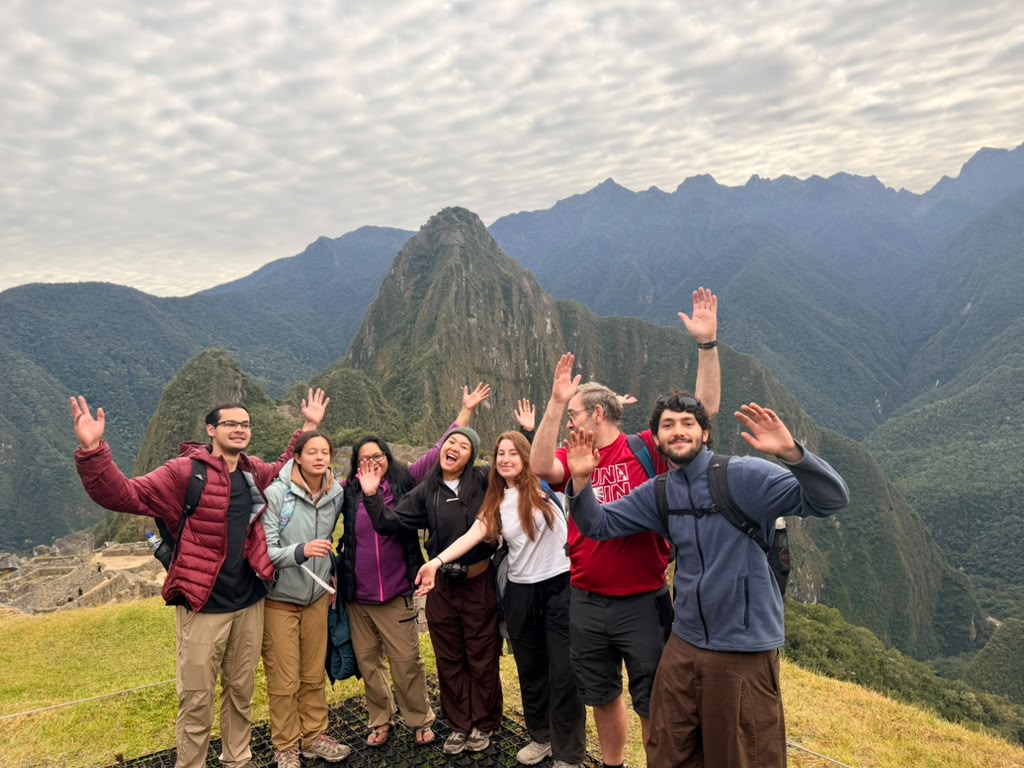
The Short Inca Trail to Machu Picchu is one of the best options for travelers who want to experience the legendary Inca Trail without committing to the traditional four-day trek.
Also known as the 2-Day Inca Trail, Short Inca Trail 2 Days, or Km 104 Inca Trail, this route follows a genuine section of the historic Inca road system. Along the way, hikers visit archaeological sites, cross lush cloud forest, climb original stone stairways, explore Wiñay Wayna, and approach Machu Picchu through Inti Punku, the Sun Gate.
Unlike the Classic Inca Trail, the short version requires only one main day of hiking. Travelers normally spend the night in Aguas Calientes (Machu Picchu Pueblo) before returning to Machu Picchu the following day for their scheduled visit.
For travelers with limited time in Peru—or those who prefer a challenging day hike instead of several nights of camping—the Short Inca Trail offers an excellent balance between adventure, history, scenery, and comfort.
This complete guide from Machu Picchu Team in Cusco explains how the Short Inca Trail works, its difficulty, permits, itinerary, altitude, weather, packing requirements, and everything you should consider before booking.
Short Inca Trail at a Glance
| Detail | Short Inca Trail Information |
|---|---|
| Location | Cusco Region, Peru |
| Starting point | Km 104 of the railway to Machu Picchu |
| Main hiking day | Day 1 |
| Typical duration | 2 days / 1 night |
| Approximate hiking distance | 10–12 km / 6.2–7.5 miles |
| Approximate hiking time | 5–7 hours |
| Maximum elevation | Around 2,720–2,730 m / 8,924–8,957 ft |
| Difficulty | Moderate |
| Highest important point | Inti Punku – Sun Gate |
| Main archaeological sites | Chachabamba and Wiñay Wayna |
| Accommodation | Hotel in Aguas Calientes |
| Camping | No |
| Permit required | Yes |
| Independent hiking | Not generally permitted |
| Annual closure | February |
| Best general period | April–October |
| Recommended acclimatization | At least 1–2 days in Cusco or the Sacred Valley |
Distances can vary slightly according to the exact access, control points, and itinerary used by each operator.
What Is the Short Inca Trail?
The Short Inca Trail is the shorter version of the famous Inca Trail to Machu Picchu.
Instead of beginning around Km 82 and trekking for approximately four days, travelers access the trail from Km 104 of the railway between Ollantaytambo and Machu Picchu.
From there, the route climbs through the cloud forest and passes important Inca archaeological sites before joining the final section of the traditional trail.
The main route includes:
Km 104 → Chachabamba → Wiñay Wayna → Inti Punku → Machu Picchu
This makes the Short Inca Trail very different from simply traveling to Machu Picchu by train.
You are not just taking transportation to the archaeological site—you are approaching Machu Picchu on foot through part of the original Inca road network.
For 2026, Peru’s Ministry of Culture establishes a daily carrying capacity of 250 users for Route 5, the Km 104 route. Access is therefore limited and should be arranged in advance.
Why Choose the Short Inca Trail to Machu Picchu?
There are many ways to reach Machu Picchu, but the Short Inca Trail offers something particularly special: you earn your arrival on foot without spending four days trekking and camping.
It is particularly suitable for travelers who:
- Have limited time in Cusco.
- Want to hike a genuine section of the Inca Trail.
- Prefer sleeping in a hotel rather than camping.
- Want to visit Wiñay Wayna.
- Want to approach Machu Picchu through the Sun Gate.
- Do not want to cross the much higher mountain passes of the Classic Inca Trail.
- Prefer one challenging hiking day rather than a multi-day expedition.
- Are combining Machu Picchu with other destinations in Peru.
For many travelers, it offers the best balance between hiking and comfort.
Short Inca Trail vs Classic Inca Trail
Both routes are part of the protected Inca Trail network, but the experiences are quite different.
| Feature | Short Inca Trail | Classic Inca Trail |
|---|---|---|
| Duration | 2 days / 1 night | Usually 4 days / 3 nights |
| Main trekking distance | Approx. 10–12 km | Approx. 42 km |
| Camping | No | Yes |
| Accommodation | Hotel | Campsites |
| Highest altitude | Around 2,730 m | Around 4,215 m |
| Main start | Km 104 | Km 82 |
| Wiñay Wayna | Yes | Yes |
| Sun Gate | Yes | Yes |
| Machu Picchu | Yes | Yes |
| Difficulty | Moderate | Moderate to challenging |
| Time commitment | Low | High |
| Best for | Limited time and moderate hiking | Full trekking experience |
The Short Inca Trail should not be considered merely a replacement for the Classic Trail. It is a different experience designed for a different type of traveler.
Short Inca Trail Route
One of the biggest advantages of this trek is how much travelers experience during a relatively short distance.
Km 104: Starting the Adventure
The trek normally begins at Km 104 of the railway line connecting Ollantaytambo with Machu Picchu.
There is no conventional road leading to the starting point.
Travelers usually reach Km 104 by train and disembark at the designated stop with their guide.
After crossing the Urubamba River and completing the required access formalities, the hike begins.
Your original identification document or passport used for the reservation should be kept accessible throughout the journey.
Chachabamba Archaeological Site
One of the first archaeological complexes encountered is Chachabamba, situated near the beginning of the trail.
Chachabamba is significantly quieter than Machu Picchu and offers travelers their first introduction to the archaeological character of the route.
Stone structures, ceremonial areas, terraces, and water-related features demonstrate how carefully the Incas adapted their settlements to the surrounding mountain environment.
From here, the trail begins a sustained ascent.
The Climb Through the Cloud Forest
The next section is often the most physically demanding part of the Short Inca Trail.
The path climbs gradually and sometimes steeply through vegetation typical of the Andean cloud forest.
Expect:
- Stone staircases.
- Uneven terrain.
- Humid conditions.
- Mountain views.
- Waterfalls.
- Orchids and other native vegetation.
- Views toward the Urubamba Valley.
- Significant sections of uphill walking.
Although the Short Inca Trail does not reach the extreme elevations found on the Classic Inca Trail, the combination of stairs, humidity, sun, and continuous climbing can make this section demanding.
A reasonable level of physical fitness is strongly recommended.
Wiñay Wayna: The Highlight of the Short Inca Trail
For many hikers, Wiñay Wayna is one of the greatest surprises of the entire journey.
Built dramatically into a mountainside, this impressive Inca complex contains:
- Agricultural terraces.
- Stone staircases.
- Residential structures.
- Ceremonial areas.
- Water channels.
- Fountains.
- Retaining walls.
The site sits at approximately 2,650–2,680 meters above sea level.
Because Wiñay Wayna can primarily be reached through the Inca Trail network, considerably fewer travelers see it compared with Machu Picchu.
This exclusivity is one of the reasons the Short Inca Trail is so rewarding.
After exploring the archaeological complex, hikers continue toward the final approach to Machu Picchu.
Inti Punku: Entering Through the Sun Gate
The trail eventually reaches Inti Punku, commonly known as the Sun Gate.
Located at approximately 2,720 meters above sea level, Inti Punku historically served as an important entrance along the approach to Machu Picchu.
For hikers, it provides one of the most memorable moments of the journey.
After hours of climbing and walking through the mountains, the landscape opens and Machu Picchu appears below.
This is fundamentally different from arriving at Machu Picchu by bus.
You see the archaeological sanctuary gradually emerge within the surrounding mountains, providing an excellent perspective of its relationship with the geography of the Andes.
From Inti Punku, the trail continues downhill toward Machu Picchu.
Do You Visit Machu Picchu on the First Day?
The Short Inca Trail reaches the Machu Picchu area on the first day, but the exact access permitted inside the archaeological site depends on the ticket and visitor regulations in effect.
This distinction has become particularly important under the current Machu Picchu circuit system.
For 2026, the Ministry of Culture has established that tickets associated with visitors arriving through the Inca Trail are linked to Circuit 3B inside Machu Picchu.
Because Machu Picchu regulations can change from one year to another, travelers should verify the circuit assigned to their reservation rather than relying on old travel blogs or videos.
Short Inca Trail 2-Day Itinerary
The exact schedule varies according to train availability, entrance times, accommodation, and tour operator, but a typical itinerary works as follows.
Day 1: Cusco – Ollantaytambo – Km 104 – Wiñay Wayna – Machu Picchu – Aguas Calientes
The adventure begins early.
Travelers are transferred from Cusco or another coordinated location to the train station, usually traveling toward Ollantaytambo before continuing by train along the Urubamba Valley.
Instead of continuing all the way to Aguas Calientes, Short Inca Trail passengers disembark at Km 104.
After completing the checkpoint procedures, the trek starts.
The general sequence is:
- Km 104.
- Chachabamba.
- Cloud forest ascent.
- Wiñay Wayna.
- Final Inca Trail section.
- Inti Punku.
- Machu Picchu area.
- Descent to Aguas Calientes.
The hike generally takes around 5 to 7 hours, depending on fitness, trail conditions, weather, group pace, and the amount of time spent at archaeological sites.
After completing the trek, travelers descend to Aguas Calientes, where they spend the night in a hotel.
Day 2: Aguas Calientes – Machu Picchu – Cusco
The second day is focused on Machu Picchu.
After breakfast, travelers head toward the archaeological sanctuary according to their assigned entrance schedule.
A professional guide explains important aspects of the site’s:
- History.
- Architecture.
- Religious significance.
- Agricultural terraces.
- Urban planning.
- Inca engineering.
- Relationship with the surrounding mountains.
After the visit, travelers return to Aguas Calientes and later board the train toward Ollantaytambo or another scheduled station.
Ground transportation normally completes the return journey to Cusco.
How Difficult Is the Short Inca Trail?
The Short Inca Trail difficulty is moderate.
However, “short” should not be confused with “easy.”
Most of the trekking occurs during one day, meaning the elevation gain is concentrated into several hours.
The main challenges are:
Continuous Uphill Hiking
The first half contains a considerable amount of climbing.
Inca Stone Stairs
Many sections contain original or reconstructed stone staircases. These require more effort than walking along a flat trail.
Humidity
The cloud forest around Machu Picchu can be humid, making warm days feel more demanding.
Rain
Wet stone can become slippery, especially during the rainy season.
Limited Recovery Time
Because most of the hiking happens on Day 1, there is less opportunity to spread the physical effort across several days.
Do You Need to Be an Experienced Hiker?
No.
You do not need mountaineering or technical trekking experience.
However, travelers should be comfortable walking continuously for several hours, including uphill sections and stairs.
A basic training program before traveling can make the trek considerably more enjoyable.
Useful preparation includes:
- Walking 5–10 km regularly.
- Hiking hills.
- Using stairs.
- Cardiovascular exercise.
- Strengthening legs and knees.
- Practicing with a small daypack.
Short Inca Trail Altitude
One important advantage of the Short Inca Trail is that it stays considerably lower than many other famous treks around Cusco.
| Location | Approximate Elevation |
|---|---|
| Cusco | 3,400 m / 11,155 ft |
| Km 104 / Chachabamba area | Approx. 2,200 m / 7,218 ft |
| Wiñay Wayna | Approx. 2,650–2,680 m / 8,694–8,793 ft |
| Inti Punku | Approx. 2,720 m / 8,924 ft |
| Machu Picchu | Approx. 2,430 m / 7,972 ft |
| Aguas Calientes | Approx. 2,040 m / 6,693 ft |
Interestingly, Cusco itself is considerably higher than the Short Inca Trail.
Travelers who have already acclimatized in Cusco often find the altitude along the trek more manageable.
Can You Get Altitude Sickness on the Short Inca Trail?
It is possible because individual reactions to altitude vary.
However, the route does not reach elevations comparable with Dead Woman’s Pass on the Classic Inca Trail or high-altitude treks such as Ausangate.
We recommend spending at least one or two days acclimatizing in Cusco or the Sacred Valley before beginning demanding outdoor activities.
Travelers with medical conditions or specific concerns about altitude should consult a qualified healthcare professional before traveling.
Best Time to Hike the Short Inca Trail
The trail passes through a mountainous region where conditions can change quickly.
Cusco generally experiences two broad weather periods:
| Season | Approximate Months | Conditions |
|---|---|---|
| Drier season | April/May–October | More sunshine, cooler nights, lower rainfall |
| Rainy season | November–March | More clouds, rain and wet trails |
| Annual Inca Trail closure | February | Trail closed |
May to September
These are among the most popular months.
Travelers generally experience:
- Lower rainfall.
- Better chances of clear mountain views.
- Cooler mornings.
- Busy trekking routes.
- Greater demand for permits.
June, July, and August are particularly popular.
Book early.
April and October
These months can offer an attractive balance between weather and visitor numbers.
Conditions are less predictable than during the middle of the dry season, but landscapes can be particularly green.
November to January
The Short Inca Trail can still be visited during much of the rainy season.
Travelers should expect:
- More frequent rain.
- Cloudy conditions.
- Wet stone stairs.
- Greener vegetation.
- Increased possibility of changing weather.
A quality waterproof jacket becomes essential.
Can You Hike the Short Inca Trail in February?
No.
The Inca Trail network closes during February for annual conservation, maintenance, and ecosystem recovery.
For 2026, SERNANP officially closed the network throughout February and reopened access on March 1, 2026 after conservation and maintenance work.
Travelers visiting Cusco in February can still explore alternative ways of reaching Machu Picchu, subject to normal Machu Picchu operations and availability.
Short Inca Trail Permits
Yes, permits are required.
The Short Inca Trail is a protected route inside the Historic Sanctuary of Machu Picchu and access is controlled.
It is not an unrestricted hiking trail where travelers can simply arrive at Km 104 and start walking.
For 2026, the official capacity established for Route 5 (Km 104) is 250 users per day.
Additionally, Inca Trail access and associated Machu Picchu tickets are handled through authorized tourism operations. Current regulations specify that the limited Machu Picchu spaces allocated to visitors arriving through the Inca Trail must be reserved and paid in advance through authorized agencies.
How Far in Advance Should You Book?
Booking requirements depend heavily on the month.
A practical planning guideline is:
| Travel Period | Suggested Planning |
|---|---|
| January | 1–3+ months |
| March–April | 2–4+ months |
| May–August | 4–6+ months or earlier |
| September–October | 3–5+ months |
| November–December | 1–3+ months |
These are recommendations rather than guarantees.
Availability ultimately depends on official permits, Machu Picchu spaces, train availability, and your exact travel date.
For peak dates, earlier is always safer.
Can You Do the Short Inca Trail Without a Guide?
The Inca Trail network is highly regulated.
Travelers should not plan the Short Inca Trail as an independent backpacking route.
Access is coordinated through authorized tourism operations and official controls, and the route should be booked with an authorized agency and appropriate professional guide.
This protects both travelers and one of Peru’s most important cultural and natural heritage areas.
What Documents Do You Need?
Carry the original document used for your reservation.
For most international travelers, this means their passport.
Your reservation information needs to correspond correctly with your travel document.
Pay particular attention to:
- Full name.
- Passport number.
- Nationality.
- Date of birth.
- Student information when applicable.
Never assume that major identification details can simply be changed at the checkpoint.
Send accurate information when booking.
What to Pack for the Short Inca Trail
Because there is no camping, travelers only need a daypack for the main hike.
Essential Items
Bring:
- Original passport.
- Small hiking backpack.
- Comfortable hiking shoes.
- Lightweight hiking pants.
- Breathable shirt.
- Waterproof jacket or rain poncho.
- Warm layer.
- Sun hat.
- Sunglasses.
- Sunscreen.
- Insect repellent.
- Water.
- Personal medication.
- Small amount of cash.
- Portable battery.
- Camera or phone.
- Basic personal toiletries for Aguas Calientes.
Hiking Shoes or Sneakers?
Proper hiking shoes are recommended.
The route contains:
- Stone stairs.
- Uneven surfaces.
- Wet areas.
- Uphill sections.
Trail-running shoes with good grip can also work well for experienced hikers.
Avoid breaking in brand-new footwear during the trek.
Do You Need Trekking Poles?
Trekking poles are optional but can be helpful.
They may reduce strain on the knees and improve stability on wet or uneven terrain.
Travelers with previous knee problems often find them especially useful.
Make sure any equipment complies with current archaeological-site restrictions.
What Should You Carry in Your Daypack?
Try to travel light.
For a one-day hike, a heavy backpack generally creates unnecessary fatigue.
An ideal setup includes:
Documents + water + rain protection + warm layer + sun protection + personal essentials + camera.
Your hotel items can often be organized separately depending on your tour logistics.
Short Inca Trail Weather
Weather around Machu Picchu can change within minutes.
A morning may begin cloudy, become sunny, experience rain in the afternoon, and return to clear conditions later.
This is why layering is more practical than relying on one heavy jacket.
A good combination is:
- Breathable base layer.
- Light warm layer.
- Waterproof outer layer.
During sunny conditions, ultraviolet radiation can also be strong.
Use sunscreen even when temperatures feel cool.
Short Inca Trail With Children
Active children who are accustomed to hiking may be able to complete the route successfully.
However, parents should consider:
- The child’s hiking experience.
- Ability to walk several hours.
- Comfort with stone stairs.
- Weather conditions.
- Early departure times.
- Limited possibilities to abandon the trail once hiking has begun.
A family should evaluate the trek based on actual hiking ability rather than age alone.
Short Inca Trail for Older Travelers
Age alone does not determine whether someone can complete the Short Inca Trail.
Fitness, mobility, knee condition, cardiovascular capacity, and hiking experience are much more important.
Active travelers in their 50s, 60s, and beyond frequently enjoy trekking in Peru.
However, anyone with relevant health concerns should seek professional medical advice before planning strenuous activity at altitude.
Short Inca Trail or Train to Machu Picchu?
The best option depends on the experience you want.
Choose the Short Inca Trail if you want:
- Adventure.
- Hiking.
- Archaeological sites away from the main crowds.
- Wiñay Wayna.
- The Sun Gate approach.
- A greater sense of journey.
Choose the Train to Machu Picchu if you want:
- Minimal hiking.
- Easier logistics.
- More comfort.
- A suitable option for travelers with limited mobility or physical restrictions.
- A shorter overall experience.
Neither is objectively better.
They are simply different ways of experiencing Machu Picchu.
Short Inca Trail or Salkantay Trek?
These routes are very different.
| Short Inca Trail | Salkantay Trek |
|---|---|
| 2 days | Usually 4–5 days |
| Archaeological focus | Mountain and landscape focus |
| Lower altitude | Much higher altitude |
| Wiñay Wayna | Salkantay Pass |
| Original Inca Trail | Alternative trekking route |
| No camping required | Usually multiple trekking nights |
| Moderate difficulty | More demanding |
| Inti Punku approach | Different approach to Machu Picchu |
Choose Salkantay for a longer mountain expedition.
Choose the Short Inca Trail for archaeology, authentic Inca pathways, and a more compact adventure.
Is the Short Inca Trail Worth It?
For the right traveler, absolutely.
The Short Inca Trail combines several experiences that are difficult to reproduce on a standard Machu Picchu tour:
walking original Inca paths, exploring Wiñay Wayna, crossing cloud forest, reaching Inti Punku, and approaching Machu Picchu on foot.
It also avoids some of the principal challenges of the four-day route:
- No camping.
- No Dead Woman’s Pass.
- No multi-day backpacking.
- Less time away from Cusco.
- Hotel accommodation after the main hike.
This makes it one of the most accessible ways to combine trekking with a traditional Inca Trail experience.
How to Plan the Short Inca Trail
A good Machu Picchu itinerary should be planned in the correct order.
Step 1: Choose Your Travel Month
First decide when you will be in Peru.
Remember that the Inca Trail is normally unavailable during February.
Step 2: Check Permit Availability
Before confirming non-refundable travel arrangements, check whether Short Inca Trail permits are available for your preferred date.
Step 3: Provide Correct Passport Information
Permit systems rely on personal information.
Double-check everything before confirming your reservation.
Step 4: Arrive in Cusco Before the Trek
Avoid planning the hike immediately after arriving at high altitude.
Spending at least one or two days in Cusco or the Sacred Valley provides time for acclimatization and helps protect your itinerary against possible transportation delays.
Step 5: Prepare Physically
Walk regularly before your trip.
A few weeks of stairs, hills, and cardiovascular activity can significantly improve your experience.
Step 6: Pack for Multiple Weather Conditions
Never assume the forecast guarantees completely dry weather.
Carry rain protection even during the dry season.
Suggested Cusco Itinerary Before the Short Inca Trail
Travelers often ask how the trek should fit into a larger Cusco itinerary.
A comfortable plan could look like this:
| Day | Activity |
|---|---|
| Day 1 | Arrive in Cusco and rest |
| Day 2 | Cusco City Tour or light sightseeing |
| Day 3 | Sacred Valley |
| Day 4 | Short Inca Trail to Machu Picchu |
| Day 5 | Machu Picchu and return to Cusco |
| Day 6 | Free day or another Cusco tour |
This schedule provides some acclimatization before trekking.
Travelers coming directly from sea level should avoid stacking several strenuous high-altitude activities immediately after arrival.
Frequently Asked Questions About the Short Inca Trail
Is the Short Inca Trail the real Inca Trail?
Yes.
It uses a genuine section of the historic Inca Trail network leading toward Machu Picchu.
It is not simply a modern alternative hiking path.
Where does the Short Inca Trail start?
The standard route begins around Km 104 of the railway to Machu Picchu, near Chachabamba.
How long is the Short Inca Trail?
Most itineraries involve approximately 10–12 km or 6.2–7.5 miles of main hiking, although exact distances can differ slightly depending on how an operator measures the route.
How many hours do you hike?
Most travelers spend approximately 5–7 hours hiking on Day 1, including stops and archaeological visits.
How hard is the 2-Day Inca Trail?
It is considered moderate.
The distance is manageable for reasonably fit travelers, but sustained uphill walking and numerous stairs make it physically demanding.
Does the Short Inca Trail include Wiñay Wayna?
Yes.
Wiñay Wayna is one of the main archaeological highlights of the route.
Does the Short Inca Trail go through the Sun Gate?
Yes.
Hikers approach Machu Picchu through Inti Punku, or the Sun Gate.
Do you camp on the Short Inca Trail?
Typically, no.
The standard 2-day version includes an overnight stay in Aguas Calientes rather than camping along the trail.
Do I need a permit?
Yes.
The route has controlled capacity and must be reserved in advance.
For 2026, Route 5 at Km 104 has an official capacity of 250 users per day.
Can I buy my Short Inca Trail permit when I arrive in Cusco?
Do not rely on this strategy.
Availability is limited, particularly during the busiest months.
Booking well in advance is much safer.
Can I hike without a travel agency?
The Inca Trail is a regulated protected route rather than an unrestricted public hiking trail. Reservations and access are managed through authorized tourism operations.
What is the highest point?
The highest significant section is around Inti Punku, approximately 2,720 meters / 8,924 feet above sea level.
Is the Short Inca Trail higher than Cusco?
No.
Cusco is approximately 3,400 meters above sea level, considerably higher than the main points of the Short Inca Trail.
What is the best month for the Short Inca Trail?
May through September usually offers some of the driest conditions, but these months are also popular.
April and October can also be excellent choices.
Is the Inca Trail open in February?
No. The trail network normally closes during February for conservation and maintenance. In 2026, it reopened on March 1 after the scheduled closure.
Can I do the Short Inca Trail during the rainy season?
Yes, outside the February closure, subject to availability and operational conditions.
Good waterproof equipment is essential.
Do I need trekking poles?
They are not mandatory for most travelers but can provide additional stability and reduce pressure on the knees.
Is the Short Inca Trail suitable for beginners?
Yes, provided the traveler has reasonable fitness and prepares for several hours of uphill hiking.
How early should I reserve?
For peak travel months, planning several months in advance is highly recommended.
What Machu Picchu circuit do Inca Trail hikers receive?
For 2026, official regulations link Inca Trail arrivals with Machu Picchu Circuit 3B. Regulations can change, so travelers planning later years should verify the rules applicable to their travel dates.
Final Tips for Hiking the Short Inca Trail
The Short Inca Trail may last only two days, but careful planning makes a major difference.
Book your permits early. Arrive in Cusco with enough time to acclimatize. Train before your trip. Pack light. Carry waterproof clothing. Use comfortable footwear. Keep your passport accessible.
Most importantly, do not rush through the experience.
Chachabamba, Wiñay Wayna, the cloud forest, the stone paths, Inti Punku, and Machu Picchu are all part of the journey.
The attraction of this route is not simply reaching the destination—it is walking toward Machu Picchu through landscapes and archaeological sites that have connected the Andes for centuries.
Plan Your Short Inca Trail with Machu Picchu Team
Based in Cusco, Peru, Machu Picchu Team helps travelers organize their visit to Machu Picchu and trekking adventures throughout the Cusco region.
Planning a Short Inca Trail involves more than reserving a hike. Permits, train schedules, Machu Picchu entrance times, transportation, accommodation, guides, and current government regulations all need to work together.
For travelers who want the experience of arriving at Machu Picchu on foot without completing the four-day Classic Inca Trail, the Short Inca Trail to Machu Picchu is one of the most rewarding adventures available in Cusco.
Suggested SEO Metadata
SEO Title:
Short Inca Trail to Machu Picchu: Complete 2026 Planning Guide
Meta Description:
Plan the Short Inca Trail to Machu Picchu from Km 104. Learn about permits, difficulty, itinerary, Wiñay Wayna, Sun Gate, weather, altitude, packing and the best time to hike.
Primary Keyword:
Short Inca Trail to Machu Picchu
Secondary Keywords:
2 Day Inca Trail, Short Inca Trail Peru, Short Inca Trail Machu Picchu, Km 104 Inca Trail, 2 Day Inca Trail to Machu Picchu, Short Inca Trail difficulty, Short Inca Trail permits, Wiñay Wayna hike, Inca Trail Sun Gate