
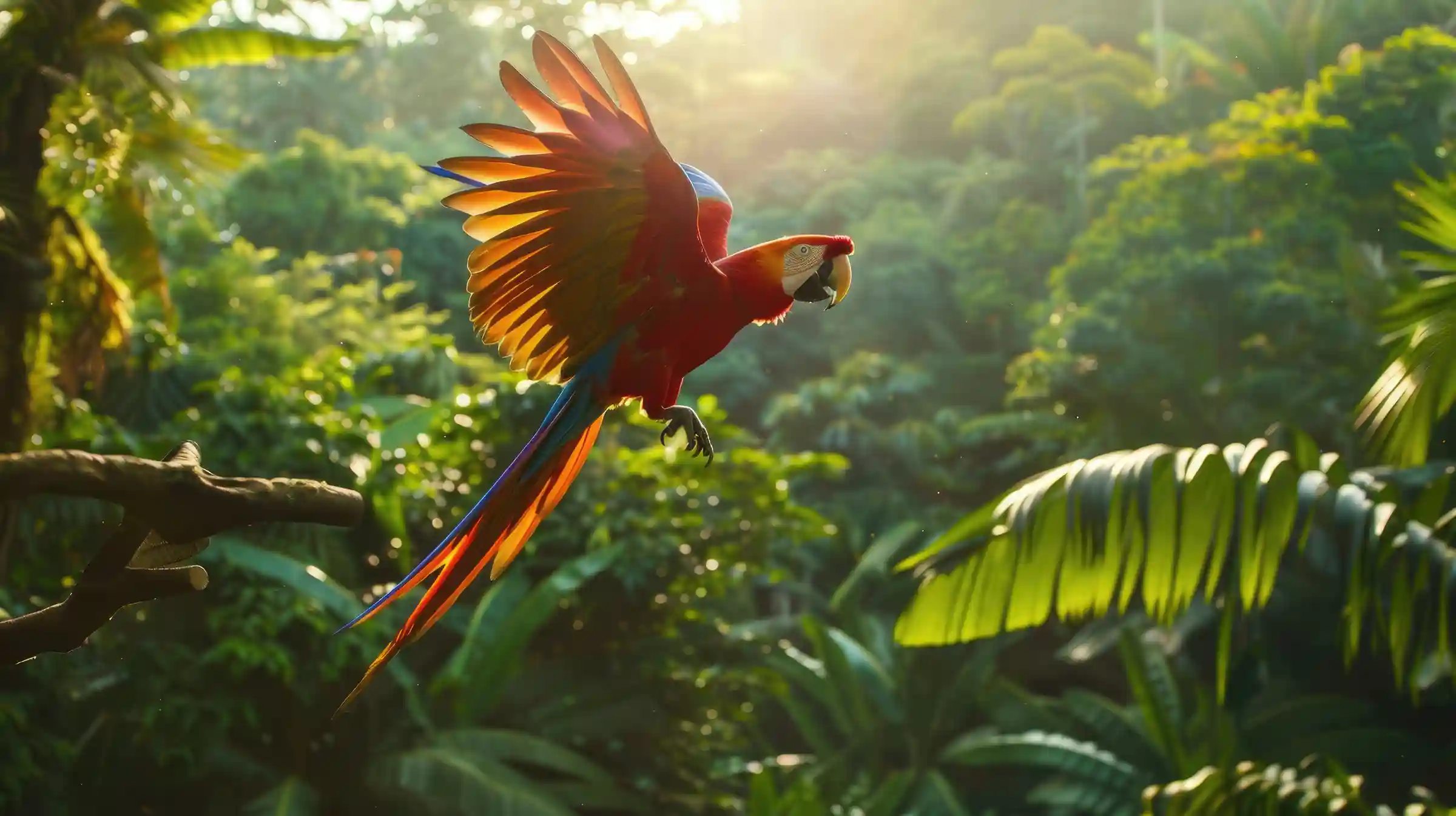
Manu National Park is one of the most extraordinary natural destinations in Peru.
Located between the high Andes and the Amazon rainforest, Manu protects an enormous range of ecosystems, wildlife, forests, rivers, and remote landscapes. It is one of the best destinations in Peru for travelers interested in wildlife watching, birding, rainforest exploration, photography, conservation, and immersive nature experiences.
Unlike a typical city tour or archaeological excursion, visiting Manu is a journey into a remote environment where roads disappear, rivers become the main transportation routes, and wildlife encounters depend on patience, timing, and respect for nature.
Travelers may see monkeys moving through the canopy, colorful macaws gathering near clay licks, caimans along riverbanks, giant river otters in oxbow lakes, and hundreds of bird species throughout the forest.
This complete Manu National Park Travel Guide from Machu Picchu Team in Cusco explains where Manu is located, how to get there, the difference between the Cultural Zone and deeper rainforest areas, what animals you may see, how many days you need, what to pack, the best time to visit, and how to plan a trip from Cusco.
Manu National Park at a Glance
| Detail | Information |
|---|---|
| Destination | Manu National Park and surrounding Manu region |
| Main departure city | Cusco |
| Region | Southeastern Peru |
| Environment | Andes, cloud forest and Amazon rainforest |
| Recommended trip length | 3–7 days or longer |
| Best for | Wildlife, nature, birding and photography |
| Main transportation | Vehicle and motorized boat |
| Accommodation | Jungle lodges and basic rainforest accommodation |
| Difficulty | Easy to moderate |
| Physical activity | Jungle walks, boat rides and wildlife observation |
| Best general travel period | Drier months, approximately May to October |
| Rainier period | Approximately November to April |
| Main wildlife | Monkeys, macaws, caimans, otters, birds and many other species |
| Main concern | Remote location, humidity, insects and changing weather |
| Starting altitude | Cusco around 3,400 m / 11,155 ft |
| Lowest areas | Tropical Amazon lowlands |
What Is Manu National Park?
Manu National Park is a protected natural area in southeastern Peru.
Its importance comes from the enormous variety of ecosystems contained within a relatively continuous landscape.
A journey from Cusco toward Manu can take travelers from high-elevation Andean environments down through cloud forest and eventually into tropical Amazon rainforest.
During this transition, the landscape changes dramatically.
Travelers may pass through:
- High Andean grasslands.
- Mountain valleys.
- Cloud forest.
- Subtropical forest.
- Lowland rainforest.
- Rivers.
- Wetlands.
- Oxbow lakes.
This ecological diversity supports an exceptional variety of wildlife.
Where Is Manu National Park?
Manu is located east of Cusco, extending from the eastern slopes of the Andes toward the Amazon Basin.
For travelers staying in Cusco, reaching Manu generally requires an overland journey followed by river transportation depending on the itinerary.
This means that Manu is not a destination for travelers looking for a quick half-day excursion.
The journey itself is part of the experience.
The transition from the mountains around Cusco into tropical rainforest is one of the most fascinating parts of visiting the region.
Why Visit Manu National Park?
Travelers choose Manu because it offers an experience that is completely different from Machu Picchu, the Sacred Valley, or the trekking routes around Cusco.
The main reasons to visit include:
- Exceptional wildlife diversity.
- Birdwatching.
- Amazon rainforest exploration.
- River travel.
- Cloud forest landscapes.
- Jungle lodges.
- Photography.
- Macaw clay licks.
- Monkey observation.
- Oxbow lakes.
- Conservation-focused tourism.
- Remote landscapes.
- Escape from crowded tourism routes.
For travelers who love nature, Manu can become one of the highlights of a trip to Peru.
Manu National Park vs the Manu Region
Travelers frequently use the term “Manu National Park” to describe a wider tourism region.
However, different itineraries may visit different protected or tourism zones around Manu.
This distinction is important when comparing tours.
Some itineraries focus on areas commonly known as the Manu Cultural Zone, while longer expeditions may travel deeper into protected rainforest areas under more controlled conditions.
Always check exactly which areas are included in the tour you are considering.
What Is the Manu Cultural Zone?
The Manu Cultural Zone is one of the most accessible parts of the wider Manu destination for tourists.
It combines:
- Rainforest.
- Wildlife.
- River travel.
- Local communities.
- Jungle lodges.
- Nature walks.
Trips to this area are often shorter and more affordable than deeper expeditions.
For travelers with limited time, a 3-day or 4-day Manu Cultural Zone tour can provide an excellent introduction to the Amazon.
Who Should Choose the Cultural Zone?
It is especially suitable for travelers who:
- Have only a few days available.
- Want to experience the rainforest from Cusco.
- Are visiting the Amazon for the first time.
- Want wildlife viewing without a very long expedition.
- Prefer a more accessible itinerary.
What Are Deeper Manu Expeditions?
Longer Manu journeys travel farther into more remote rainforest environments.
These trips may require several days and involve significant river travel.
They are especially attractive to:
- Serious wildlife enthusiasts.
- Birdwatchers.
- Nature photographers.
- Travelers interested in remote ecosystems.
- Visitors wanting a deeper Amazon experience.
Longer stays also increase the amount of time available for wildlife observation.
How Many Days Do You Need in Manu?
The ideal trip length depends on your priorities.
| Duration | Best For |
| 3 days | Short introduction |
| 4 days | Cultural Zone experience |
| 5 days | More wildlife and rainforest time |
| 6 days | Deeper exploration |
| 7+ days | Wildlife enthusiasts and photographers |
In general, more days provide better opportunities for wildlife observation because animals do not appear according to a fixed schedule.
Is 3 Days Enough for Manu?
Three days can provide an introduction to the Manu region.
However, a significant portion of the itinerary involves transportation.
A short trip works best for travelers who want:
- Cloud forest scenery.
- Basic jungle experience.
- Birdwatching.
- Wildlife observation.
- A few rainforest walks.
Travelers interested primarily in wildlife photography should consider staying longer.
Is 4 Days Enough for Manu?
A 4-day Manu tour is one of the most practical options for travelers combining the rainforest with Cusco and Machu Picchu.
It usually allows more time for:
- Jungle walks.
- Boat rides.
- Wildlife viewing.
- Nocturnal activities.
- Relaxation at the lodge.
For many first-time visitors, four days offers a good balance.
Typical Manu 4-Day Itinerary
Exact itineraries vary between operators, weather conditions, river levels, accommodation, and wildlife activity.
A general route may look like this.
Day 1: Cusco – Andes – Cloud Forest – Manu Region
The journey usually begins early in Cusco.
Travelers leave the city and travel through changing Andean landscapes.
As the route descends toward the eastern slopes of the Andes, vegetation gradually becomes denser.
The transition into the cloud forest is one of the highlights of the day.
Travelers may stop at viewpoints and locations suitable for observing birds and wildlife.
Possible sightings can include:
- Mountain birds.
- Hummingbirds.
- Tanagers.
- Monkeys.
- Butterflies.
- Orchids.
The day normally finishes at a lodge or basic accommodation in the Manu region.
Day 2: Cloud Forest – Lowland Rainforest – River Journey
After breakfast, the journey continues toward warmer and lower rainforest environments.
Depending on the itinerary, travelers may board a motorized boat and begin navigating local rivers.
River travel provides a completely different perspective of the rainforest.
Wildlife may appear along:
- Riverbanks.
- Sandbars.
- Forest edges.
- Tree canopies.
Travelers continue toward the lodge and participate in afternoon or evening activities.
Day 3: Wildlife Observation and Jungle Exploration
This is often one of the most rewarding days.
Activities may include:
- Early morning birdwatching.
- Jungle walks.
- Oxbow lake exploration.
- Observation platforms.
- River excursions.
- Nocturnal walks.
The schedule is usually influenced by wildlife behavior.
Early morning and late afternoon are particularly important periods for animal observation.
Day 4: Manu – Return to Cusco
After a final morning activity, travelers begin the journey back toward Cusco.
Return times vary significantly because of road conditions, transportation, river conditions, and the exact location of the lodge.
The transition back from rainforest to Andes provides another opportunity to appreciate how geographically diverse southern Peru is.
What Animals Can You See in Manu National Park?
Manu is famous for biodiversity.
However, wildlife sightings are never guaranteed.
Animals move freely through the forest and are not waiting at specific tourism stops.
The best approach is to treat every sighting as a reward.
Monkeys
Different monkey species inhabit the Manu region.
Depending on the location, travelers may see monkeys moving through the trees early in the morning or near feeding areas.
Possible observations may include:
- Capuchin monkeys.
- Squirrel monkeys.
- Howler monkeys.
- Spider monkeys.
- Tamarin species.
Your guide will help identify species correctly.
Macaws
Colorful macaws are among the most iconic animals associated with the Peruvian Amazon.
They may be observed:
- Flying over the forest.
- Feeding in trees.
- Around clay licks.
Their bright colors and loud calls make them easier to notice than many other rainforest animals.
Macaw Clay Licks
One of the most famous wildlife experiences in the Amazon is observing parrots and macaws gathering at clay licks.
These natural sites attract birds during certain periods of the morning.
Wildlife behavior depends on:
- Weather.
- Season.
- Disturbance.
- Natural feeding patterns.
Patience is essential.
Giant River Otters
Giant river otters are one of the most exciting animals travelers hope to see.
They inhabit freshwater environments such as rivers and oxbow lakes.
Because they are wild animals, sightings vary.
Visitors exploring suitable lake habitats may have better opportunities.
Caimans
Caimans may be seen along rivers and lakes.
Night excursions can sometimes provide opportunities to observe them using reflected light from their eyes.
Always follow your guide’s instructions around waterways.
Jaguars
The jaguar is one of the most famous predators of the Amazon.
It also remains one of the hardest animals to see.
Some travelers are fortunate enough to observe a jaguar along a riverbank, but no responsible tour should guarantee a sighting.
The possibility is exciting precisely because the animal is wild and elusive.
Tapirs
Tapirs inhabit rainforest environments but can be difficult to observe.
Longer expeditions and specialized wildlife itineraries may provide better opportunities.
Birds
Manu is especially famous among birdwatchers.
Travelers may observe a remarkable variety of:
- Macaws.
- Parrots.
- Toucans.
- Tanagers.
- Hummingbirds.
- Herons.
- Raptors.
- Kingfishers.
- Hoatzins.
Even travelers who do not consider themselves birdwatchers often become fascinated by the variety of colors and calls.
Cock-of-the-Rock
One of the most famous birds seen during journeys toward Manu is the Andean cock-of-the-rock.
The male has a striking red-orange appearance.
Certain cloud forest areas contain traditional display sites where these birds gather.
Early morning observation is often part of some itineraries.
Best Time to Visit Manu National Park
Manu can be visited during different periods of the year, but weather influences transportation and wildlife activities.
The region generally experiences:
- A drier season.
- A rainier season.
Dry Season
The drier period generally occurs approximately from May to October.
Advantages may include:
- Less rainfall.
- Easier road conditions.
- More predictable river travel.
- Better conditions for hiking.
- Lower humidity at certain times.
However, tropical rain can still occur.
Rainforest does not mean guaranteed sunshine during the dry season.
Rainy Season
The rainier period generally occurs from approximately November to April.
Travelers may experience:
- Heavy rain.
- Muddy trails.
- Higher river levels.
- Increased humidity.
- Changing road conditions.
- Lush vegetation.
The rainforest remains beautiful, but transportation can become less predictable.
Best Months for Manu
| Month | General Conditions |
| January | Rainy |
| February | Rainy |
| March | Rainy |
| April | Transition |
| May | Good |
| June | Very good |
| July | Very good |
| August | Very good |
| September | Very good |
| October | Good |
| November | Rain increasing |
| December | Rainy |
This is only a general guide.
Rainforest weather can change quickly.
Manu Weather and Climate
One of the most interesting aspects of a Manu trip is the enormous change in climate.
You may begin in cold Cusco and end in hot, humid Amazon rainforest.
Travelers should prepare for:
- Cold Andean mornings.
- Cloud forest mist.
- Rain.
- Humidity.
- Strong tropical sun.
- Warm afternoons.
- Cooler nights depending on location.
Layering is the best strategy.
What to Pack for Manu National Park
Packing correctly is essential.
You need enough protection for the rainforest without carrying excessive luggage.
Essential Clothing
Bring:
- Lightweight long-sleeve shirts.
- Lightweight long pants.
- Quick-drying T-shirts.
- Rain jacket.
- Light sweater.
- Comfortable sleep clothes.
- Extra socks.
- Hat.
Long sleeves and long pants are particularly useful for insect protection.
Footwear
Recommended footwear includes:
- Hiking shoes.
- Lightweight trekking boots.
- Shoes with good grip.
Trails can become:
- Wet.
- Muddy.
- Slippery.
Some lodges may provide or recommend rubber boots for specific activities.
Insect Repellent
Insect repellent is one of the most important items for a rainforest trip.
Apply it according to product instructions.
Also use physical protection such as:
- Long sleeves.
- Long pants.
- Socks.
- Mosquito nets where provided.
Sunscreen
Do not assume the rainforest canopy protects you completely from the sun.
Sun exposure can be strong during:
- Boat rides.
- River crossings.
- Open areas.
- Midday activities.
Bring sunscreen and a hat.
Rain Protection
Rain is always possible.
Pack:
- Waterproof jacket.
- Lightweight poncho.
- Waterproof backpack cover.
- Dry bags or plastic protection for electronics.
Rain protection is important even during drier months.
Manu Packing Checklist
| Item | Priority |
| Lightweight long pants | Essential |
| Long-sleeve shirts | Essential |
| Rain jacket | Essential |
| Insect repellent | Essential |
| Sunscreen | Essential |
| Hat | Essential |
| Comfortable hiking shoes | Essential |
| Small backpack | Essential |
| Water bottle | Essential |
| Headlamp | Essential |
| Binoculars | Highly recommended |
| Camera | Recommended |
| Portable charger | Recommended |
| Extra batteries | Recommended |
| Personal medication | Essential |
| Dry bags | Recommended |
| Swimsuit | Optional |
| Lightweight sandals | Optional |
Binoculars
Binoculars are one of the most useful items you can bring.
Many animals remain:
- High in the canopy.
- Across rivers.
- At the edge of lakes.
- Far from trails.
A pair of binoculars can transform your experience.
They are especially useful for birdwatching.
Camera Equipment
Photographers should prioritize useful equipment over excessive weight.
Consider:
- Camera.
- Telephoto lens.
- Spare batteries.
- Memory cards.
- Lens cloth.
- Rain protection.
- Dry bag.
Humidity can affect electronics.
Protect equipment carefully.
Portable Charger
Electricity can be limited in remote lodges.
Bring a portable power bank for:
- Phone.
- Camera.
- Headlamp.
- Other small electronics.
Charge equipment whenever electricity is available.
Headlamp
A headlamp is very useful.
You may need it for:
- Night walks.
- Walking around the lodge.
- Early morning departures.
- Power interruptions.
- Finding personal items after dark.
A headlamp leaves both hands free.
What Should You Wear in the Amazon?
The best rainforest clothing is:
Lightweight, breathable, quick-drying and protective.
Wear:
- Long pants.
- Long-sleeve shirt.
- Socks.
- Hiking shoes.
- Hat.
Avoid relying only on shorts and sleeveless shirts.
They provide less protection against:
- Mosquitoes.
- Other insects.
- Vegetation.
- Sun.
Should You Wear Shorts?
Shorts can be comfortable at the lodge, but long pants are usually better for jungle walks.
Lightweight trekking pants are ideal.
Do You Need Rubber Boots?
Some rainforest areas can become extremely muddy.
Rubber boots may be useful or provided depending on the lodge and itinerary.
Check before bringing your own because large boots can take up significant luggage space.
Accommodation in Manu
Accommodation depends heavily on the itinerary.
Travelers may stay in:
- Jungle lodges.
- Eco-lodges.
- Basic rainforest cabins.
- Rustic accommodation.
Facilities vary.
Do not expect the same level of infrastructure as a city hotel.
What Are Jungle Lodges Like?
A typical lodge may offer:
- Beds.
- Mosquito nets.
- Shared or private bathrooms.
- Dining areas.
- Hammocks or common spaces.
- Limited electricity.
- Cold or basic showers.
Some lodges are much more comfortable than others.
Always check what your specific tour includes.
Is There Electricity?
Electricity can be limited.
Some lodges use:
- Generators.
- Solar power.
- Scheduled electricity.
Do not assume power will be available throughout the entire day.
Is There Wi-Fi?
Internet access may be:
- Limited.
- Slow.
- Unavailable.
This is a remote rainforest destination.
Travelers should prepare to disconnect.
For many visitors, this becomes part of the experience.
Is There Phone Signal?
Mobile signal can disappear during remote sections.
Do not depend on your phone for constant communication.
Your tour operator should have appropriate communication procedures for the itinerary.
Food in Manu
Organized tours generally include meals.
Typical meals may include:
- Rice.
- Pasta.
- Chicken.
- Vegetables.
- Fruit.
- Eggs.
- Soups.
- Potatoes.
- Local ingredients.
Meals are usually designed to be practical and filling.
Vegetarian and Vegan Food
Vegetarian and vegan meals can often be arranged.
Tell your agency in advance.
This is especially important because food must be organized before traveling into remote areas.
Drinking Water
Your tour should explain how safe drinking water is provided.
Carry a reusable bottle.
Hydration is essential because heat and humidity can increase water loss.
How Difficult Is a Manu Tour?
A typical Manu tour is not comparable to a difficult mountain trek.
Most travelers can participate if they are comfortable with:
- Walking on jungle trails.
- Getting into boats.
- Humidity.
- Early mornings.
- Long transportation days.
- Basic accommodation.
Some activities can be adjusted according to fitness.
Jungle Walking
Most jungle walks are relatively slow.
This is because the goal is not to cover distance quickly.
Guides stop frequently to:
- Listen.
- Search for movement.
- Identify tracks.
- Observe birds.
- Explain plants.
Moving slowly often increases the chance of wildlife sightings.
Early Morning Activities
Wildlife is often most active during early morning hours.
Expect some activities to begin before or around sunrise.
This is especially common for:
- Birdwatching.
- Clay licks.
- River exploration.
Getting up early is usually worth it.
Night Walks
Night walks reveal a completely different side of the rainforest.
Possible observations may include:
- Frogs.
- Insects.
- Spiders.
- Nocturnal birds.
- Reptiles.
Follow your guide closely and do not touch wildlife.
Mosquitoes in Manu
Yes, mosquitoes and other insects are present.
The amount varies depending on:
- Location.
- Weather.
- Season.
- Time of day.
Use:
- Repellent.
- Long sleeves.
- Long pants.
- Mosquito nets.
Are There Dangerous Animals?
The rainforest contains snakes, spiders, caimans, insects, and other wildlife.
However, most animals avoid humans.
The greatest protection is simple:
- Stay on the trail.
- Follow your guide.
- Do not touch animals.
- Do not put your hands into holes or vegetation.
- Wear appropriate footwear.
- Use a light at night.
Responsible guided tourism minimizes risk.
Snakes in Manu
Snakes are part of the rainforest ecosystem.
You may or may not see one.
If you encounter a snake:
- Keep distance.
- Do not touch it.
- Allow your guide to manage the situation.
Never attempt to handle wildlife for photographs.
Is Manu Safe for Tourists?
Organized Manu trips are visited regularly by travelers interested in nature and wildlife.
The environment is remote, so travelers should follow instructions carefully.
The most important safety considerations include:
- Transportation.
- River conditions.
- Heat.
- Hydration.
- Insects.
- Slippery trails.
- Wildlife.
- Personal medical needs.
Choose an organized itinerary appropriate for your physical condition.
Manu National Park With Children
Families can visit Manu, but the ideal itinerary depends on the child’s age and travel experience.
Parents should consider:
- Long driving days.
- Boat journeys.
- Insects.
- Heat.
- Early mornings.
- Limited internet.
- Basic facilities.
Children who enjoy animals and nature may find the rainforest fascinating.
Shorter Cultural Zone itineraries are generally more practical for families than long remote expeditions.
Manu for Older Travelers
Older travelers can also enjoy Manu.
The experience often involves much less strenuous walking than high-altitude treks.
However, consider:
- Getting in and out of boats.
- Uneven trails.
- Humidity.
- Long travel days.
- Basic lodge facilities.
A comfortable lodge-based itinerary can be an excellent choice.
Manu for Birdwatchers
Manu is one of Peru’s most exciting birding destinations.
Serious birdwatchers should consider:
- Longer itineraries.
- Smaller groups.
- Specialist guides.
- Early morning activities.
- Binoculars.
- Telephoto lenses.
The transition from Andes to Amazon allows birders to encounter species from very different ecosystems.
Manu for Photographers
Wildlife photographers should stay as long as possible.
More days provide:
- More mornings.
- More evening sessions.
- More opportunities when weather changes.
- Better chances of unpredictable wildlife sightings.
Bring equipment suited to:
- Low light.
- Distance.
- Humidity.
- Rain.
Manu vs Tambopata
Travelers frequently compare Manu with other Amazon destinations such as Tambopata.
| Manu | Tambopata |
| Commonly accessed from Cusco | Commonly accessed via Puerto Maldonado |
| Long overland and river journey | Usually easier access |
| Andes-to-Amazon transition | Primarily lowland Amazon |
| Very remote options | Strong lodge infrastructure |
| Excellent biodiversity | Excellent biodiversity |
| Best for longer expeditions | Good for shorter Amazon stays |
Both are excellent.
Choose Manu if the journey and changing ecosystems are part of what attracts you.
Choose a more easily accessible Amazon destination if you have very limited time.
Manu vs Machu Picchu
These destinations are completely different.
| Manu | Machu Picchu |
| Wildlife | Archaeology |
| Rainforest | Inca citadel |
| River travel | Train and bus travel |
| Jungle lodges | Hotels |
| Nature-focused | History-focused |
| Multi-day rainforest immersion | Archaeological visit |
A Peru itinerary combining both provides an excellent contrast.
Manu vs the Inca Trail
The Inca Trail is primarily a mountain trekking experience.
Manu is primarily a wildlife and rainforest experience.
Choose the Inca Trail for:
- Hiking.
- Inca archaeology.
- Mountain passes.
- Camping.
Choose Manu for:
- Wildlife.
- Jungle.
- Birds.
- Rivers.
- Rainforest photography.
Travelers with enough time can experience both.
How to Get From Cusco to Manu
Most organized trips begin in Cusco.
The journey generally starts by road.
Travelers cross the Andes and descend toward cloud forest areas.
Depending on the tour, transportation may later continue by:
- Minivan.
- Private vehicle.
- Motorized boat.
Travel time is significant.
This is why trips shorter than three days provide limited time in the rainforest.
How Long Does It Take From Cusco to Manu?
The exact journey depends on the part of Manu being visited.
Closer Cultural Zone itineraries may require a long day of road travel.
Deeper destinations require additional river transportation.
Rather than thinking of Manu as a simple point-to-point transfer, consider the journey itself part of the expedition.
Can You Visit Manu in One Day?
No practical wildlife-focused Manu experience should be planned as a one-day excursion from Cusco.
The destination is too remote.
Travelers should allocate at least several days.
Suggested Cusco and Manu Itinerary
A comfortable itinerary could look like this:
| Day | Activity |
| Day 1 | Arrive in Cusco |
| Day 2 | Explore Cusco |
| Day 3 | Sacred Valley |
| Day 4 | Machu Picchu |
| Day 5 | Return to Cusco |
| Day 6 | Manu Day 1 |
| Day 7 | Manu Day 2 |
| Day 8 | Manu Day 3 |
| Day 9 | Manu Day 4 and return |
| Day 10 | Rest or departure |
This itinerary combines archaeology, culture, mountains, and rainforest.
Should You Visit Manu Before or After Machu Picchu?
Either option works.
However, many travelers prefer:
Cusco → Sacred Valley → Machu Picchu → Manu
This allows them to complete the main archaeological portion of the trip before entering the rainforest.
Another advantage is that travelers already have several days to adjust to Peru before beginning the remote Amazon section.
What Documents Should You Bring?
Carry your passport or appropriate identification.
Keep important documents protected from humidity and rain.
A waterproof pouch is highly recommended.
Money in Manu
Carry some Peruvian soles.
There may be few or no ATMs once you leave major towns.
Cash can be useful for:
- Drinks.
- Small purchases.
- Tips.
- Local products.
- Optional expenses.
Do not depend exclusively on credit cards in remote areas.
Responsible Travel in Manu
Rainforest tourism should be approached responsibly.
Travelers can help protect the environment by:
- Staying on established trails.
- Never feeding wildlife.
- Avoiding loud behavior around animals.
- Not touching plants or animals unnecessarily.
- Avoiding litter.
- Carrying reusable bottles.
- Following guide instructions.
- Respecting local communities.
- Keeping distance from wildlife.
Wildlife should never be disturbed simply to obtain a photograph.
Do Not Feed Animals
Feeding wildlife can change natural behavior.
It can make animals:
- Dependent on humans.
- Aggressive.
- Vulnerable to disease.
- Less capable of natural feeding.
A responsible wildlife experience involves observation, not interaction.
Photography Ethics
Avoid forcing wildlife encounters.
Do not:
- Chase animals.
- Touch animals.
- Use excessive disturbance.
- Block animal movement.
- Demand that guides manipulate wildlife.
The best wildlife photographs come from patience.
Frequently Asked Questions About Manu National Park
Where is Manu National Park?
Manu is located in southeastern Peru, east of Cusco, between the Andes and Amazon Basin.
How do you get to Manu from Cusco?
Most tours begin with overland transportation from Cusco and may continue by motorized boat.
How many days do you need in Manu?
At least 3–4 days is recommended for a basic experience.
Wildlife enthusiasts should consider 5–7 days or longer.
Is Manu National Park worth visiting?
Yes, particularly for travelers interested in wildlife, biodiversity, birdwatching, photography, and rainforest environments.
What animals can you see?
Possible sightings include:
- Monkeys.
- Macaws.
- Parrots.
- Caimans.
- Giant river otters.
- Toucans.
- Hummingbirds.
- Many other bird species.
More elusive animals such as jaguars may occasionally be seen but should never be expected.
Can you see jaguars in Manu?
It is possible, but sightings are rare and unpredictable.
No responsible operator should guarantee a jaguar sighting.
Can you see monkeys?
Yes.
Several monkey species inhabit the Manu region, although sightings always depend on wildlife activity.
What is the best time to visit Manu?
The drier months from approximately May to October are often considered the easiest period for travel.
Can you visit Manu during the rainy season?
Yes, but rain can affect roads, trails, rivers, and travel times.
Is Manu hot?
Lower rainforest areas are generally warm and humid.
However, the journey begins in much cooler Andean conditions.
Are there mosquitoes?
Yes.
Bring insect repellent and lightweight long clothing.
Do I need malaria medication?
Medical recommendations depend on your itinerary, health, and current travel-health guidance.
Travelers should consult a qualified healthcare professional or travel medicine specialist before visiting tropical regions.
Do I need a yellow fever vaccination?
Vaccination recommendations can vary according to itinerary and individual circumstances.
Discuss your travel plans with a qualified healthcare professional before traveling.
Is Manu difficult physically?
Most standard tours are not extremely strenuous.
However, travelers should be comfortable with jungle walks, boat travel, humidity, and long transportation days.
Can children visit Manu?
Yes, depending on age and travel experience.
Shorter itineraries are usually more practical for families.
Can older adults visit Manu?
Yes.
Choose an itinerary with appropriate accommodation and physical activity.
Is there Wi-Fi in Manu?
Internet access can be limited or unavailable.
Prepare to disconnect.
Is there electricity?
Some lodges have limited electricity from generators or solar systems.
Bring portable chargers.
Are there showers?
Most lodges provide basic shower facilities, although water temperature and comfort levels vary.
Do you sleep in tents?
Most tourism itineraries use jungle lodges or cabins rather than tents.
The exact accommodation depends on the tour.
Do I need hiking boots?
Comfortable hiking or trekking shoes with good grip are recommended.
Should I bring binoculars?
Yes.
Binoculars are one of the best items to bring for wildlife observation.
What should I wear?
Wear lightweight long pants, breathable long-sleeve shirts, comfortable shoes, and insect protection.
Should I bring a rain jacket?
Absolutely.
Rain is possible throughout the year.
Can I swim in Manu?
Swimming depends on the location and conditions.
Never enter rainforest rivers or lakes without explicit guidance because of currents and wildlife.
Is Manu better than Puerto Maldonado?
Neither is universally better.
Manu generally requires more travel and offers a strong sense of expedition.
Amazon destinations near Puerto Maldonado are often easier to reach.
The right choice depends on your time and travel style.
Is Manu good for birdwatching?
Yes.
It is one of the strongest reasons to visit.
What is the Manu Cultural Zone?
It is a tourism area within the wider Manu region that provides easier access to rainforest landscapes, wildlife, lodges, and local communities.
Can I visit only the Cultural Zone?
Yes.
Many 3-day and 4-day tours focus on this area.
Do I need a guide?
A guided itinerary is strongly recommended because the rainforest requires specialized knowledge of wildlife, trails, river transportation, and local conditions.
What is the biggest mistake travelers make in Manu?
Common mistakes include:
- Staying too few days.
- Bringing inadequate insect protection.
- Expecting guaranteed wildlife sightings.
- Packing inappropriate clothing.
- Bringing too much luggage.
- Expecting constant Wi-Fi.
- Underestimating travel times.
Final Tips for Visiting Manu National Park
A trip to Manu is very different from conventional sightseeing.
The rainforest rewards patience.
Remember:
Stay several days if possible.
Wildlife is unpredictable.
Bring binoculars.
Many animals are easier to observe from a distance.
Protect yourself from insects.
Long clothing and repellent are essential.
Prepare for rain.
Even the dry season can bring tropical showers.
Protect your electronics.
Humidity and water can damage cameras and phones.
Wake up early.
Many of the best wildlife experiences happen around sunrise.
Listen to your guide.
Rainforest guides notice sounds, tracks, and movement that visitors often miss.
Do not expect guaranteed animals.
This is a natural ecosystem, not a zoo.
Travel responsibly.
Do not feed, touch, or disturb wildlife.
Enjoy the journey from the Andes to the Amazon.
The changing ecosystems are one of the most remarkable parts of visiting Manu.
Explore Manu National Park With Machu Picchu Team
Visiting Manu National Park and the surrounding Manu rainforest region gives travelers the opportunity to experience a completely different side of Peru.
After exploring Cusco, the Sacred Valley, and Machu Picchu, the journey toward Manu reveals cloud forest, tropical rivers, jungle lodges, extraordinary birdlife, monkeys, macaws, and some of the most biodiverse landscapes in South America.
Machu Picchu Team, based in Cusco, helps travelers organize itineraries combining the main cultural attractions of the Andes with rainforest adventures in the Manu region.
Whether you choose a shorter Cultural Zone experience or a longer wildlife expedition, Manu is best approached with curiosity, patience, and respect for nature.
The greatest reward is not simply checking animals off a list.
It is waking to the sounds of the rainforest, navigating tropical rivers, watching wildlife behave naturally, and experiencing one of Peru’s most extraordinary ecosystems.