Pallay Punchu is one of the most spectacular and lesser-known colorful mountain destinations in the Cusco region.
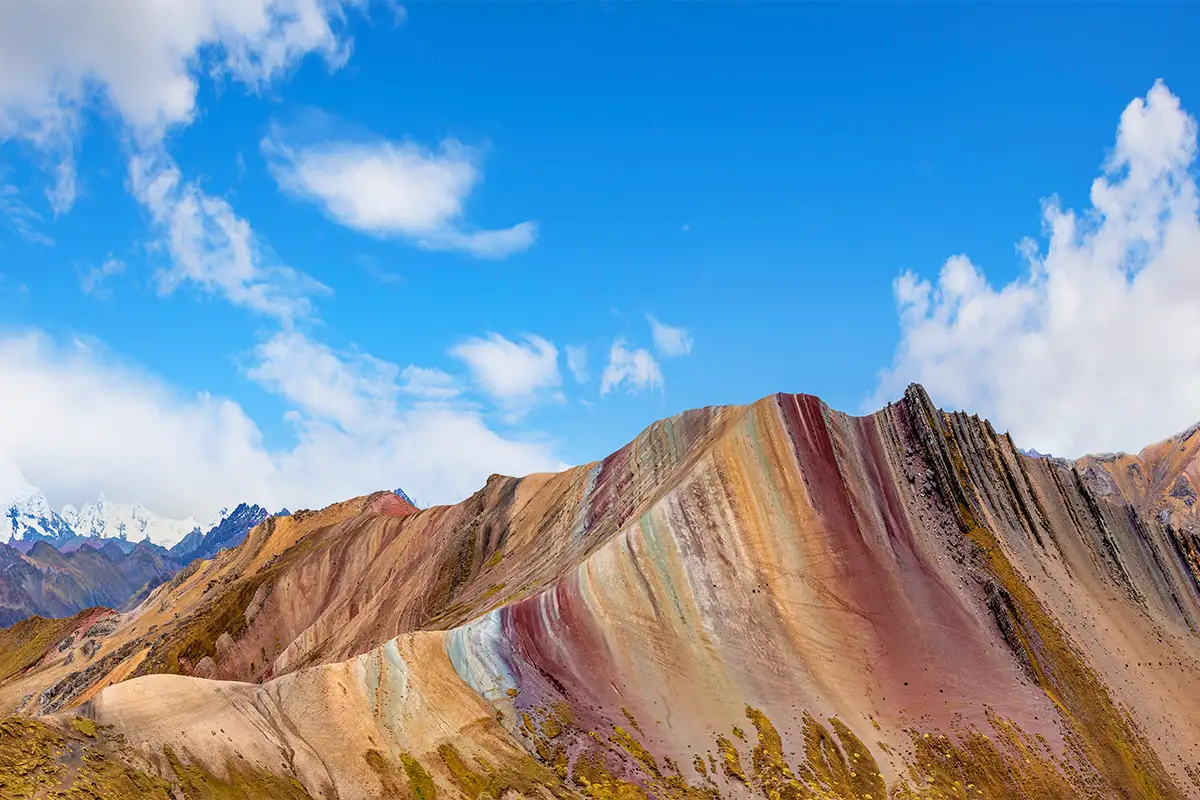
Located in the district of Layo, in the province of Canas, Pallay Punchu rises above dramatic high-Andean landscapes characterized by colorful ridges, sharp geological formations, grasslands, mountain communities, and impressive views toward the surrounding valleys.
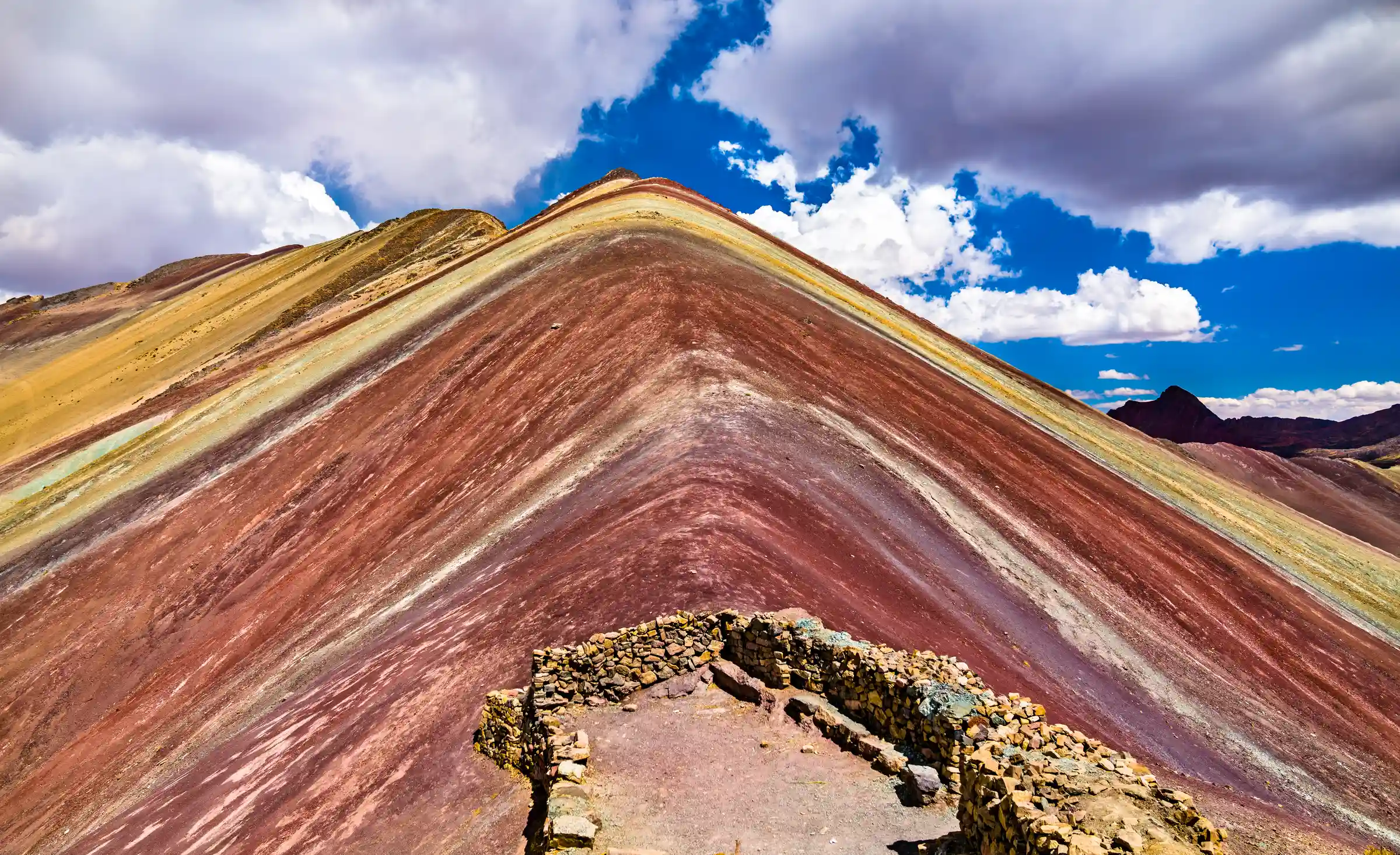
The mountain became increasingly known to travelers around 2020 because of its unusual striped appearance. Its combination of red, ochre, green, purple, and pale mineral layers reminded observers of the patterns found in traditional Andean ponchos.
Today, Pallay Punchu is considered an alternative to better-known destinations such as Vinicunca Rainbow Mountain and Palcoyo, particularly for travelers looking for a quieter adventure away from Cusco’s busiest tourism routes.
However, Pallay Punchu should not be confused with an easy sightseeing excursion.
The mountain reaches approximately 4,800 meters / 15,750 feet above sea level, and the journey from Cusco requires several hours of transportation followed by a high-altitude hike.
This complete Pallay Punchu Travel Guide from Machu Picchu Team in Cusco explains how to get there, hiking difficulty, altitude, best time to visit, transportation, what to bring, how to acclimatize, and how Pallay Punchu compares with Rainbow Mountain and Palcoyo.
Pallay Punchu at a Glance
| Detail | Information |
|---|---|
| Destination | Pallay Punchu |
| Also known as | Pallay Punchu of Apu T’acllo |
| Region | Cusco, Peru |
| Province | Canas |
| District | Layo |
| Approximate altitude | Around 4,800 m / 15,750 ft |
| Distance from Cusco | More than 190 km by the longer road journey |
| Tour duration | Full day |
| Difficulty | Moderate to challenging |
| Main challenge | Altitude and uphill hiking |
| Typical hiking time | Around 2 hours uphill depending on trailhead and pace |
| Recommended acclimatization | At least 2–3 days |
| Best general season | April to October |
| Rainier period | November to March |
| Main attraction | Colorful sharp mountain ridges |
| Best for | Adventure, landscapes, photography and fewer crowds |
What Is Pallay Punchu?
Pallay Punchu is a colorful mountain formation in the southern part of the Cusco region.
Like Vinicunca and Palcoyo, its striking appearance results from different mineral layers exposed within the mountain.
However, Pallay Punchu looks very different from the classic rounded slopes of Rainbow Mountain.
Its landscape contains sharp ridges and dramatic triangular formations, giving the mountain a more rugged appearance.
The combination of colorful layers and pointed formations is one of the reasons Pallay Punchu has become increasingly popular among photographers and adventure travelers.
Why Is It Called Pallay Punchu?
The name is associated with the appearance of traditional Andean textiles and ponchos.
The mountain contains natural lines and colors that resemble woven designs commonly found in traditional clothing from the Andes.
Colors may include shades of:
- Red.
- Burgundy.
- Purple.
- Ochre.
- Brown.
- Green.
- White.
- Yellow.
The appearance changes according to sunlight, moisture, clouds, and season.
Pallay Punchu or Pallay Poncho?
Travelers may encounter several spellings online, including:
- Pallay Punchu.
- Pallay Poncho.
- Pallay Punchu del Apu T’acllo.
- Pallay Punchu Apu Tacllo.
They generally refer to the same colorful mountain attraction near Layo.
For search and travel purposes, Pallay Punchu is one of the most commonly used names.
Where Is Pallay Punchu?
Pallay Punchu is located in the district of Layo, province of Canas, Cusco.
The destination lies far south of Cusco in a remote high-Andean environment.
This region contains:
- High mountain grasslands.
- Lakes.
- Rural communities.
- Alpaca and llama herds.
- Colorful geological formations.
- Cold and windy mountain landscapes.
The mountain is considerably farther from Cusco than attractions such as Sacsayhuaman, Sacred Valley, Maras, or Moray.
How Far Is Pallay Punchu From Cusco?
The Pallay Punchu area is more than 190 kilometers from Cusco depending on the access route used.
Travel requires several hours.
A common approach follows:
Cusco → Sicuani → Layo → Pallay Punchu trailhead
Reaching Layo from Cusco generally requires approximately four hours of overland travel before accounting for the final access toward the hiking area.
For this reason, Pallay Punchu is normally visited as a very early full-day excursion.
How to Get to Pallay Punchu From Cusco
The most practical route for visitors is:
Cusco → Sicuani → Layo → trailhead → Pallay Punchu
The journey involves several transportation stages.
Step 1: Cusco to Sicuani
Travel south from Cusco toward Sicuani, one of the most important towns in this part of the region.
The journey takes approximately three hours depending on traffic, transportation, and road conditions.
Step 2: Sicuani to Layo
From Sicuani, continue toward Layo.
This part of the journey takes approximately another hour under normal conditions.
As the road enters more remote areas, travelers begin to see increasingly dramatic high-Andean landscapes.
Step 3: Layo to the Hiking Area
From Layo, transportation or hiking logistics depend on the selected route.
There are several possible approaches to Pallay Punchu.
The exact trailhead used by an organized tour may depend on:
- Road conditions.
- Season.
- Weather.
- Group fitness.
- Local access arrangements.
Step 4: Hike to Pallay Punchu
From the hiking area, visitors continue on foot toward the main viewpoints.
Many itineraries involve approximately two hours of uphill hiking, although total walking time can vary considerably depending on the selected access route.
Some longer approaches can result in approximately four hours of total round-trip walking.
Can You Drive Directly to Pallay Punchu?
No standard tourist route takes vehicles directly to the principal mountain viewpoints.
Transportation reduces the walking distance, but visitors should expect to hike.
The final sections involve high-altitude mountain terrain.
Typical Pallay Punchu Full-Day Tour
A typical excursion may follow this schedule.
Early Morning: Departure From Cusco
Tours normally begin very early.
A departure around 4:00 AM or earlier may be necessary because of the long driving distance.
Travelers should prepare the night before.
Drive Toward Sicuani
The first part of the journey follows the highway south of Cusco.
Many tours include a breakfast stop before continuing deeper into the mountains.
Continue Toward Layo
After Sicuani, the route continues toward Layo.
The landscapes gradually become more remote.
Expect views of:
- Mountains.
- Agricultural areas.
- Lakes.
- Small villages.
- High-Andean grasslands.
Arrive at the Trailhead
Your guide provides instructions before beginning the hike.
This is a good moment to:
- Apply sunscreen.
- Adjust clothing.
- Organize trekking poles.
- Drink water.
- Check your backpack.
Begin the Pallay Punchu Hike
The hike crosses open mountain terrain.
Because vegetation is limited, travelers have wide views of the surrounding landscapes.
The trail may contain:
- Dirt paths.
- Rocky areas.
- Gradual climbs.
- Steeper sections.
- Narrow mountain paths.
- Wind-exposed terrain.
The altitude quickly becomes noticeable.
Reach the Main Pallay Punchu Viewpoint
The colorful ridges become increasingly visible as the trail climbs.
From the main observation areas, travelers can appreciate the dramatic combination of:
colorful geological layers + pointed ridges + high-Andean valleys + mountain landscapes.
This is the main reward of the excursion.
Explore the Mountain Area
Depending on weather and group condition, visitors may explore several viewpoints.
Do not approach unstable cliff edges simply to obtain a photograph.
Follow your guide’s instructions.
Return Hike
After sufficient time for photographs and exploration, begin descending toward transportation.
The downhill section is generally faster.
However, rocky terrain can still require careful walking.
Lunch and Return to Cusco
Depending on the operator, lunch may be organized in Layo, Sicuani, or another location along the return route.
The journey then continues to Cusco.
Expect arrival during the late afternoon or evening.
How Difficult Is Pallay Punchu?
Pallay Punchu is generally considered moderate to challenging.
The route itself does not require technical mountaineering.
You do not need:
- Ropes.
- Climbing equipment.
- Technical climbing experience.
However, the combination of altitude and steep terrain can make the hike demanding.
The principal challenges include:
- Almost 4,800 meters of elevation.
- Thin air.
- Uphill walking.
- Cold wind.
- Strong sunlight.
- Long transportation.
- Remote terrain.
Pallay Punchu Altitude
The highest areas of Pallay Punchu are approximately 4,791–4,800 meters / around 15,720–15,750 feet above sea level.
This is extremely high.
| Destination | Approximate Altitude |
| Machu Picchu | 2,430 m / 7,972 ft |
| Sacred Valley | Around 2,800–3,000 m |
| Cusco | 3,400 m / 11,155 ft |
| Humantay Lake | Around 4,200 m / 13,780 ft |
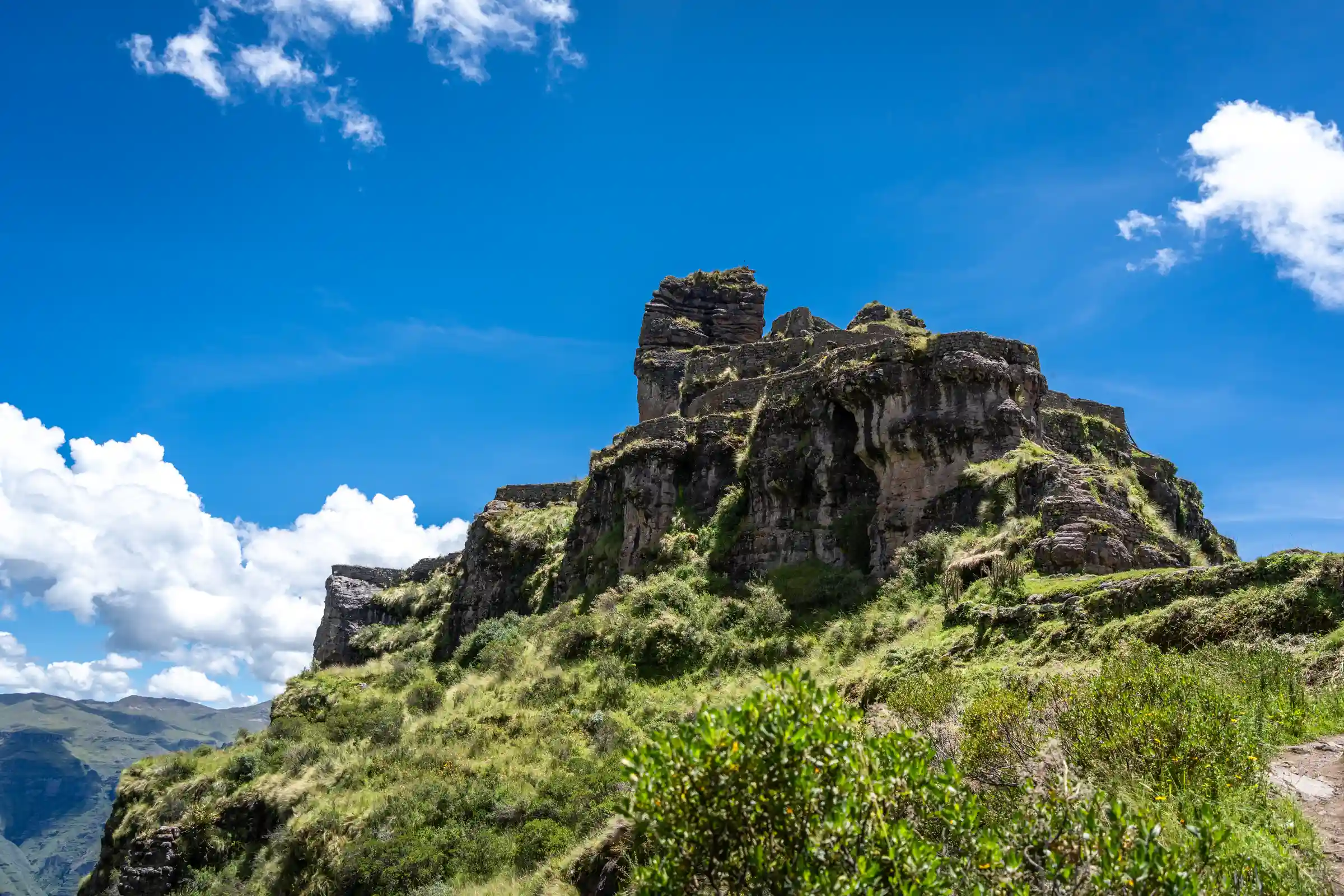
| Waqrapukara | Around 4,100–4,300 m |
| Pallay Punchu | Around 4,800 m / 15,750 ft |
| Palcoyo | Around 4,900 m / 16,076 ft |
| Rainbow Mountain | Around 5,000 m / 16,400 ft |
Although Pallay Punchu is slightly lower than Vinicunca, the elevation remains extreme.
Can You Get Altitude Sickness at Pallay Punchu?
Yes.
Travelers can experience altitude-related symptoms such as:
- Headache.
- Shortness of breath.
- Nausea.
- Dizziness.
- Fatigue.
- Weakness.
- Reduced appetite.
Physical fitness does not provide complete protection against altitude sickness.
How Long Should You Acclimatize?
Spend at least two or three days in Cusco or the Sacred Valley before visiting Pallay Punchu.
A gradual itinerary could be:
Day 1: Arrive in Cusco.
Day 2: Cusco City Tour.
Day 3: Sacred Valley.
Day 4: Pallay Punchu.
This is considerably better than traveling directly to Pallay Punchu immediately after arriving from sea level.
Is Pallay Punchu Good for Acclimatization?
No.
Pallay Punchu should be attempted after acclimatization, not used as an acclimatization activity.
At almost 4,800 meters, it is significantly higher than Cusco.
Begin with lower destinations first.
How to Prepare for the Altitude
Before the excursion:
- Sleep well.
- Stay hydrated.
- Avoid excessive alcohol.
- Eat a balanced dinner.
- Acclimatize in Cusco.
- Avoid exhausting activities the previous evening.
During the hike:
- Walk slowly.
- Take shorter steps.
- Rest when necessary.
- Drink water regularly.
- Tell your guide if you feel unwell.
Never try to prove your fitness by walking quickly at extreme altitude.
Pallay Punchu vs Rainbow Mountain
Travelers frequently compare Pallay Punchu with Vinicunca.
| Pallay Punchu | Rainbow Mountain |
| Around 4,800 m | Around 5,000 m |
| Sharp colorful ridges | Broad colorful mountain |
| Fewer visitors | Much more popular |
| Longer road journey | More established tourism route |
| More remote | Easier tourism logistics |
| Moderate to challenging | Moderate to challenging |
| Strong adventure feeling | Iconic Rainbow Mountain experience |
Is Pallay Punchu Better Than Rainbow Mountain?
Neither is universally better.
Choose Pallay Punchu if you prefer:
- Fewer crowds.
- Remote landscapes.
- Sharper mountain formations.
- Adventure.
- Lesser-known destinations.
- Landscape photography.
Choose Rainbow Mountain if you prefer:
- The famous Vinicunca view.
- More established tourism infrastructure.
- Easier tour availability.
- The classic colorful mountain experience.
Pallay Punchu vs Palcoyo
Palcoyo is another alternative Rainbow Mountain destination.
| Pallay Punchu | Palcoyo |
| Sharper ridges | Broader rolling mountains |
| More challenging hiking | Generally easier walking |
| More remote | Increasingly established |
| Around 4,800 m | Around 4,900 m |
| Fewer visitors | More visitors than Pallay Punchu |
| Dramatic narrow formations | Multiple rainbow ridges |
| Long road journey | Full-day journey |
Which Is Easier: Palcoyo or Pallay Punchu?
For most travelers, Palcoyo is easier.
Palcoyo usually involves a shorter and more gradual walk.
Pallay Punchu can involve steeper terrain and longer hiking depending on the access route.
Travelers mainly concerned about physical difficulty may prefer Palcoyo.
Pallay Punchu vs Humantay Lake
Choose Pallay Punchu for:
- Colorful geology.
- Remote hiking.
- Less crowded trails.
- High-Andean landscapes.
Choose Humantay Lake for:
- Turquoise glacial water.
- Snow-capped mountains.
- Easier transportation from Cusco.
- A more established tourism route.
Pallay Punchu is higher than Humantay Lake.
Pallay Punchu vs Waqrapukara
These are two excellent alternatives for travelers seeking less crowded excursions.
Pallay Punchu
Best for:
- Colorful mountains.
- Geology.
- High-altitude photography.
- Remote adventure.
Waqrapukara
Best for:
- Archaeology.
- Canyon landscapes.
- Inca history.
- Lower elevation.
Travelers sensitive to extreme altitude may find Waqrapukara more manageable.
Best Time to Visit Pallay Punchu
The best general period is during the dry season from approximately April to October.
These months generally provide:
- Less rain.
- Clearer skies.
- Better mountain visibility.
- Drier trails.
- Easier road conditions.
Dry Season: April to October
This is usually the best period for hiking.
May through September provide particularly favorable conditions.
However, mornings can be extremely cold.
Rainy Season: November to March
During the wetter months, visitors may encounter:
- Rain.
- Clouds.
- Mud.
- Hail.
- Snow.
- Reduced mountain visibility.
The surrounding landscapes become greener, but access can become more difficult.
Pallay Punchu by Month
| Month | General Conditions |
| January | Rainy |
| February | Rainy |
| March | Rain decreasing |
| April | Transition to drier conditions |
| May | Excellent |
| June | Dry and cold |
| July | Very dry, cold mornings |
| August | Excellent |
| September | Very good |
| October | Good |
| November | Increasing rainfall |
| December | Rainy |
Mountain weather is never completely predictable.
Can Pallay Punchu Be Covered in Snow?
Yes.
Because Pallay Punchu is located at almost 4,800 meters, snow and hail are possible.
A layer of snow can temporarily hide part of the mountain’s colors.
This is another reason why clear views can never be guaranteed.
What Is the Weather Like?
Conditions are typically cold and windy at high elevation, with strong sunshine possible during the middle of the day.
Travelers should prepare for:
- Freezing mornings.
- Wind.
- Strong sunlight.
- Sudden clouds.
- Rain.
- Hail.
- Temperature changes.
Layering is essential.
What to Wear to Pallay Punchu
Wear several layers.
Recommended clothing includes:
- Breathable base layer.
- Long-sleeve shirt.
- Fleece.
- Warm jacket.
- Waterproof jacket.
- Hiking pants.
- Warm hat.
- Sun hat.
- Gloves.
- Hiking socks.
You may feel warm while climbing but become cold quickly when you stop.
Best Shoes for Pallay Punchu
Choose shoes with good traction.
Recommended options include:
- Hiking shoes.
- Trekking shoes.
- Lightweight hiking boots.
- Trail-running shoes with strong grip.
Avoid:
- Sandals.
- Smooth casual sneakers.
- Formal footwear.
Do You Need Hiking Boots?
Heavy mountain boots are not normally necessary.
However, supportive hiking footwear can provide additional confidence on rocky or steep terrain.
Most importantly, use shoes you have already worn before.
Do You Need Trekking Poles?
Trekking poles are highly recommended.
They can help with:
- Balance.
- Uphill sections.
- Downhill terrain.
- Rocky paths.
- Knee support.
They become particularly useful when trails are wet.
What to Pack for Pallay Punchu
Use a small hiking backpack.
Bring:
- Water.
- Sunscreen.
- Sunglasses.
- Hat.
- Warm jacket.
- Waterproof jacket.
- Gloves.
- Personal medication.
- Camera or phone.
- Portable charger.
- Snacks.
- Small amount of cash.
- Toilet paper.
- Hand sanitizer.
Pallay Punchu Packing Checklist
| Item | Priority |
| Hiking shoes | Essential |
| Warm jacket | Essential |
| Waterproof jacket | Essential |
| Water | Essential |
| Sunscreen | Essential |
| Sunglasses | Essential |
| Hat | Essential |
| Gloves | Highly recommended |
| Trekking poles | Recommended |
| Small backpack | Essential |
| Snacks | Recommended |
| Camera | Recommended |
| Portable charger | Recommended |
| Personal medication | Essential |
| Cash | Recommended |
How Much Water Should You Bring?
Carry enough water for several hours of hiking.
Services are limited in the mountain area.
A reusable water bottle or hydration system is practical.
Drink regularly rather than waiting until you feel very thirsty.
Food During the Tour
Organized tours may provide:
- Breakfast.
- Lunch.
Carry simple snacks such as:
- Nuts.
- Dried fruit.
- Energy bars.
- Chocolate.
- Crackers.
Avoid eating extremely heavy foods immediately before hiking.
Are There Restaurants at Pallay Punchu?
Do not expect conventional restaurants at the mountain itself.
Food services are more likely to be found around:
- Layo.
- Sicuani.
- Communities along the driving route.
Organized tours usually handle meal logistics in advance.
Are There Bathrooms?
Facilities near remote trailheads can be basic.
Use bathrooms whenever they are available before starting the hike.
Carry:
- Toilet paper.
- Hand sanitizer.
- Small cash.
Is There Phone Signal?
Mobile connectivity can be weak or unavailable.
Do not depend on:
- Mobile internet.
- Online navigation.
- Constant phone calls.
Download important information before leaving Cusco.
Can You Take a Horse to Pallay Punchu?
Horse services may be available in the area depending on local operations and route. Some recent visitor information reports horse rental options from local communities.
However, travelers should not depend on horses being available without prior confirmation.
The terrain may also require walking during certain sections.
Does Riding a Horse Solve the Altitude Problem?
No.
This is extremely important.
Even if you ride a horse, your body is still at almost 4,800 meters.
Travelers experiencing significant altitude symptoms should not continue ascending simply because they can avoid walking.
Pallay Punchu With Children
Pallay Punchu is not the easiest mountain excursion for young children.
Parents should consider:
- Extreme altitude.
- Long driving time.
- Hiking difficulty.
- Cold.
- Wind.
- Limited facilities.
Active older children or teenagers with previous altitude experience may enjoy the trip.
Pallay Punchu for Older Travelers
Fit older travelers may successfully complete the excursion.
The main considerations are:
- Cardiovascular fitness.
- Knee condition.
- Balance.
- Altitude tolerance.
- Hiking experience.
The long travel day should also be considered.
Can Beginners Hike Pallay Punchu?
Yes, but Pallay Punchu is more demanding than some beginner-oriented excursions.
A beginner should:
- Have good general fitness.
- Acclimatize properly.
- Walk regularly before traveling.
- Use trekking poles.
- Move slowly.
Travelers looking for an easier colorful mountain experience may prefer Palcoyo.
How to Train for Pallay Punchu
You do not need months of professional trekking preparation.
Useful activities include:
- Walking.
- Hiking hills.
- Stair climbing.
- Cycling.
- Cardiovascular exercise.
Try to complete several longer walks before traveling.
However, fitness cannot replace acclimatization.
Photography at Pallay Punchu
Pallay Punchu is particularly attractive for landscape photographers.
Its sharp ridges create compositions very different from Vinicunca.
Best Photography Opportunities
Look for:
- Colorful mountain patterns.
- Sharp ridgelines.
- Wide valley landscapes.
- Layo landscapes.
- Alpacas and llamas.
- Distant mountains.
- People for scale.
Use a Wide-Angle Lens
A wide-angle perspective helps capture the unusual shape of the mountain.
Use People for Scale
Including a traveler in the photograph can demonstrate the enormous size of the ridges.
Protect Your Camera
Cold, rain, hail, and wind can affect equipment.
Bring waterproof protection.
Do Not Risk Your Safety for a Photograph
Pallay Punchu contains steep mountain terrain.
Avoid:
- Cliff edges.
- Unstable rocks.
- Leaving designated paths.
- Climbing formations.
A spectacular photograph is not worth an accident.
Why Is Pallay Punchu Less Crowded?
Pallay Punchu remains much less visited than Rainbow Mountain because:
- It is farther from Cusco.
- Fewer agencies operate regular departures.
- Tourism infrastructure is more limited.
- It requires more complicated logistics.
This creates a more adventurous atmosphere.
Recent traveler discussions in 2026 still describe Pallay Punchu as considerably less crowded than Cusco’s better-known colorful mountain routes.
Is Pallay Punchu Worth Visiting?
Yes, particularly for travelers who have enough time in Cusco and enjoy remote mountain experiences.
Pallay Punchu offers:
- Dramatic geology.
- Few visitors.
- High-altitude adventure.
- Excellent photography.
- Rural landscapes.
- A different experience from Machu Picchu.
It is best suited to travelers who have already visited or planned Cusco’s essential attractions.
Should You Visit Pallay Punchu Before Machu Picchu?
For most travelers, Machu Picchu should come first.
Machu Picchu is much lower and is usually one of the principal reasons for traveling to Cusco.
Pallay Punchu works well later in the itinerary after several days of acclimatization.
Suggested Cusco Itinerary With Pallay Punchu
| Day | Activity |
| Day 1 | Arrive in Cusco and acclimatize |
| Day 2 | Cusco City Tour |
| Day 3 | Sacred Valley |
| Day 4 | Machu Picchu |
| Day 5 | Rest or explore Cusco |
| Day 6 | Pallay Punchu |
| Day 7 | Free day or departure |
This provides several days of altitude adaptation before the hike.
Can You Visit Pallay Punchu and Rainbow Mountain on the Same Day?
No.
Both require long transportation and high-altitude hiking.
They should be visited on separate days.
Can You Visit Pallay Punchu and Palcoyo on the Same Day?
This is also not recommended.
Although both are south of Cusco, combining two extreme-altitude attractions would create an unnecessarily long and physically demanding day.
Choose one.
Can You Visit Pallay Punchu Independently?
Yes, but independent travel requires substantially more planning.
A possible route involves:
Cusco → Sicuani → Layo
followed by local transport and hiking arrangements.
Travelers need to coordinate:
- Bus transportation.
- Local vehicle.
- Trailhead.
- Hiking route.
- Return transportation.
- Meals.
Independent travel is best suited to experienced travelers who speak Spanish and have a flexible schedule.
Organized Tour or Independent Travel?
| Organized Tour | Independent Travel |
| Easier logistics | More complicated |
| Guide included | Route planning required |
| Transportation coordinated | Several transport stages |
| Meals often included | Arrange meals independently |
| Better for first visit | Better for experienced travelers |
| Fixed schedule | More flexibility |
Group Tour or Private Tour?
Because Pallay Punchu receives fewer visitors, daily group departures may be less common than Rainbow Mountain tours.
Group Tour
Best for:
- Budget travelers.
- Solo travelers.
- Travelers flexible with dates.
Private Tour
Best for:
- Couples.
- Families.
- Photographers.
- Groups of friends.
- Travelers who want flexible pacing.
Advantages of a Private Tour
A private Pallay Punchu tour can provide:
- Flexible departure.
- Personalized hiking pace.
- Additional photo stops.
- More guide attention.
- Greater control over rest periods.
This can be particularly valuable at extreme altitude.
What Should a Pallay Punchu Tour Include?
Before booking, check whether your tour includes:
- Round-trip transportation.
- Professional guide.
- Breakfast.
- Lunch.
- Entrance fee.
- Trekking poles if available.
- First-aid equipment.
- Emergency oxygen when appropriate.
Also ask about:
- Pickup time.
- Hiking route.
- Hiking distance.
- Expected return time.
- Group size.
Responsible Travel at Pallay Punchu
Pallay Punchu remains a relatively remote destination.
Responsible tourism is especially important.
Visitors should:
- Stay on established trails.
- Carry out all waste.
- Respect local communities.
- Avoid disturbing animals.
- Do not remove rocks.
- Avoid damaging vegetation.
- Use reusable bottles when practical.
- Follow guide instructions.
Respect Local Communities
Tourism operates within landscapes used by local communities for everyday activities.
You may encounter:
- Shepherds.
- Alpacas.
- Llamas.
- Farms.
- Rural homes.
Always respect private property.
Ask permission before photographing people closely.
Do Not Remove Rocks
The unusual geological formations are the reason travelers visit.
Leave everything where you find it.
Do not remove colorful stones as souvenirs.
Common Mistakes When Visiting Pallay Punchu
Mistake 1: Visiting Too Soon After Arriving in Cusco
Acclimatize first.
Mistake 2: Thinking Pallay Punchu Is Easy Because It Is Lower Than Rainbow Mountain
It is still almost 4,800 meters high.
Mistake 3: Underestimating the Travel Time
The road journey is long.
Mistake 4: Wearing Poor Shoes
Some trail sections can be steep or rocky.
Mistake 5: Forgetting Warm Clothing
Wind can make conditions extremely cold.
Mistake 6: Forgetting Sunscreen
High-altitude sunlight is intense.
Mistake 7: Carrying Too Much
Use a lightweight daypack.
Mistake 8: Walking Too Fast
A steady, slow pace is much more effective.
Mistake 9: Expecting Perfect Colors
Light, clouds, rain, and snow affect the mountain’s appearance.
Mistake 10: Ignoring Altitude Symptoms
Never continue climbing simply because you want to reach the photograph viewpoint.
Frequently Asked Questions About Pallay Punchu
What is Pallay Punchu?
Pallay Punchu is a colorful high-altitude mountain formation in the Cusco region known for its sharp ridges and striped mineral colors.
Where is Pallay Punchu?
It is located in Layo district, Canas province, Cusco, Peru.
How high is Pallay Punchu?
Its highest areas are approximately 4,800 meters / 15,750 feet above sea level.
Is Pallay Punchu higher than Cusco?
Yes.
Cusco is approximately 3,400 meters above sea level.
Is Pallay Punchu higher than Machu Picchu?
Yes.
Machu Picchu is only approximately 2,430 meters above sea level.
Is Pallay Punchu higher than Rainbow Mountain?
No.
Vinicunca is slightly higher, at around 5,000 meters.
Is Pallay Punchu higher than Palcoyo?
Generally, Palcoyo reaches slightly higher elevations.
How far is Pallay Punchu from Cusco?
The destination lies more than 190 kilometers from Cusco depending on the route used.
How long does it take to get there?
Reaching Layo generally requires approximately four hours of road travel from Cusco, with additional travel toward the hiking area.
How long is the Pallay Punchu hike?
Many routes require approximately two hours of uphill hiking, while longer approaches can result in around four hours of total walking.
Is Pallay Punchu difficult?
The hike is moderate to challenging primarily because of the altitude.
Do I need hiking experience?
Technical hiking experience is not necessary.
Reasonable fitness and proper acclimatization are much more important.
How many days should I acclimatize?
At least two to three days in Cusco or the Sacred Valley is recommended.
Can I visit on my first day in Cusco?
No.
It is much better to acclimatize first.
What is the best time to visit Pallay Punchu?
April through October generally provides the best hiking conditions.
Can I visit during the rainy season?
Yes when conditions allow, but expect more rain, mud, cloud cover, hail, and possible snow.
Can snow cover Pallay Punchu?
Yes.
Snow can temporarily reduce visibility of the colorful formations.
Do I need hiking boots?
Comfortable hiking shoes or trail shoes with good traction are recommended.
Do I need trekking poles?
They are not mandatory but are highly recommended.
Is Pallay Punchu suitable for beginners?
Fit beginners can complete the hike after proper acclimatization.
Palcoyo may be a better choice for travelers seeking easier walking.
Can children visit Pallay Punchu?
Older children or teenagers with hiking and altitude experience may be able to participate.
The extreme altitude should be taken seriously.
Can older travelers visit?
Fit older travelers can visit, but altitude tolerance and cardiovascular condition are important.
Can you ride a horse?
Horse support may be available depending on local conditions and the route.
Confirm availability before traveling.
Is Pallay Punchu crowded?
It generally receives considerably fewer visitors than Vinicunca Rainbow Mountain.
Is Pallay Punchu better than Rainbow Mountain?
Pallay Punchu is better for travelers seeking fewer crowds and a more remote experience.
Vinicunca is better for travelers who specifically want the famous Rainbow Mountain viewpoint.
Is Pallay Punchu better than Palcoyo?
Pallay Punchu offers a more rugged adventure.
Palcoyo generally provides easier walking.
Can I visit without a tour?
Yes, but reaching the trailhead independently requires several transportation connections and local planning.
Is Pallay Punchu included in the Cusco Tourist Ticket?
No.
It is separate from the Boleto Turístico del Cusco.
What should I bring?
Bring:
- Water.
- Hiking shoes.
- Warm jacket.
- Waterproof clothing.
- Gloves.
- Sunscreen.
- Sunglasses.
- Hat.
- Personal medication.
- Small backpack.
- Camera.
Is Pallay Punchu Worth Adding to Your Cusco Trip?
Pallay Punchu is not an essential destination for every first-time visitor.
Travelers with limited time should generally prioritize:
- Machu Picchu.
- Cusco.
- Sacred Valley.
After those experiences, Pallay Punchu becomes an excellent addition for travelers who want something less conventional.
It is especially worthwhile for:
- Adventure travelers.
- Photographers.
- Experienced hikers.
- Repeat visitors to Cusco.
- Travelers avoiding large crowds.
- Travelers fascinated by colorful geology.
Final Tips for Visiting Pallay Punchu
Pallay Punchu remains one of the more adventurous colorful mountain experiences around Cusco.
Remember:
Acclimatize properly.
The mountain is almost 4,800 meters high.
Prepare for a very early departure.
It is far from Cusco.
Walk slowly.
Altitude is the main challenge.
Bring warm layers.
Cold and wind can be intense.
Use sunscreen.
High-altitude sunlight is powerful.
Carry waterproof clothing.
Mountain weather changes rapidly.
Wear good hiking shoes.
Terrain can be rocky and steep.
Bring trekking poles.
They can provide valuable stability.
Pack lightly.
A heavy backpack makes high-altitude walking harder.
Carry enough water.
Services around the mountain are limited.
Respect altitude symptoms.
Reaching the viewpoint is never more important than your safety.
Do not expect identical colors every day.
Weather and sunlight significantly affect the landscape.
Respect local communities.
Pallay Punchu exists within a living Andean environment.
Take time to appreciate the journey.
The villages, lakes, grasslands, alpacas, mountain valleys, and remote landscapes are part of the adventure.
Visit Pallay Punchu With Machu Picchu Team
Pallay Punchu offers a completely different experience from Cusco’s most famous attractions.
There are no enormous crowds like those commonly associated with major tourism destinations, and reaching the mountain requires a genuine journey into the southern Andes.
The reward is a landscape of sharp colorful ridges, enormous valleys, high-altitude grasslands, local communities, and extraordinary geological formations.
At Machu Picchu Team, based in Cusco, we help travelers explore both Peru’s iconic attractions and the lesser-known destinations hidden throughout the Andes.
A complete Cusco itinerary can combine Machu Picchu, the Sacred Valley, Rainbow Mountain, Palcoyo, Pallay Punchu, Waqrapukara, Humantay Lake, the Inca Trail, Salkantay Trek, and other adventures throughout the region.
For travelers who have already experienced the classic Cusco attractions and want to go farther, Pallay Punchu offers something increasingly difficult to find:
a colorful Andean mountain adventure where the road, the hike, the altitude, the landscapes, and the feeling of remoteness are as memorable as the destination itself.