Exploring the traditional markets in Cusco is one of the best ways to experience everyday life beyond the city’s famous archaeological sites.
While most travelers come to Cusco for Machu Picchu, the Sacred Valley, and Inca history, local markets reveal another important side of the destination: food, agriculture, textiles, medicinal plants, traditional products, local commerce, and daily Andean culture.
Inside a Cusco market, visitors may find enormous varieties of potatoes, colorful corn, tropical fruits from the nearby jungle, handmade textiles, cheeses, breads, herbs, fresh juices, flowers, traditional meals, and products used by local families every day.
The best-known market is San Pedro Market, located within walking distance of Cusco’s historic center. However, travelers interested in a deeper local experience can also explore markets such as Wanchaq, Ttio, Vinocanchón, and neighborhood markets throughout the city.
This complete guide from Machu Picchu Team in Cusco explains the best traditional markets to visit, what to buy, which foods to try, how to behave respectfully, what to expect, and how to include a market visit in your Cusco itinerary.
Traditional Markets in Cusco at a Glance
| Market | Best For | Location/Area | Visitor Experience |
|---|---|---|---|
| San Pedro Market | Food, souvenirs, juices, local products | Historic center | Best for first-time visitors |
| Wanchaq Market | Everyday local shopping and food | Wanchaq | More local atmosphere |
| Ttio Market | Produce and neighborhood life | Ttio | Authentic local experience |
| Vinocanchón Market | Large-scale produce and commerce | San Jerónimo area | Very local and less touristy |
| Chinchero Market | Textiles and Andean crafts | Outside Cusco | Excellent with Sacred Valley trip |
| Pisac Market | Crafts, textiles and regional products | Sacred Valley | Good combination with archaeology |
Why Visit a Traditional Market in Cusco?
Cusco’s markets are much more than shopping areas.
They are places where different regions of Peru meet.
Products arrive from:
- High Andean communities.
- Sacred Valley farms.
- Tropical valleys.
- The Amazonian regions east of Cusco.
- Nearby agricultural communities.
This diversity makes the markets interesting for travelers who want to understand the relationship between geography and Peruvian food.
A market visit can also help travelers discover ingredients they may later encounter in restaurants throughout Cusco.
What Can You Experience in a Cusco Market?
Depending on the market, travelers can experience:
- Traditional Andean foods.
- Native potatoes.
- Different varieties of corn.
- Tropical fruits.
- Fresh juices.
- Local cheeses.
- Traditional breads.
- Herbs and medicinal plants.
- Flowers.
- Peruvian spices.
- Textiles.
- Handicrafts.
- Everyday household products.
- Small local restaurants.
- Regional ingredients.
Markets are particularly interesting in the morning when vendors are active and fresh products are arriving.
San Pedro Market: The Most Famous Market in Cusco
San Pedro Market, known locally as Mercado de San Pedro, is the market most international travelers visit.
Its central location makes it easy to reach from Cusco’s Plaza de Armas.
Walking there also gives travelers an opportunity to explore streets outside the most tourism-focused part of the historic center.
San Pedro combines local commerce with products aimed at visitors.
Inside, you will find sections dedicated to:
- Fruits.
- Vegetables.
- Meat.
- Bread.
- Cheese.
- Juices.
- Meals.
- Herbs.
- Flowers.
- Handicrafts.
- Textiles.
- Souvenirs.
For first-time visitors, San Pedro is the easiest introduction to Cusco’s traditional market culture.
What to See at San Pedro Market
The market is divided informally into different areas.
Walking slowly through the aisles allows you to observe how diverse local commerce can be.
Fresh Fruit Section
One of the most colorful parts of the market is the fruit section.
Depending on season and availability, travelers may find fruits from both the Andes and tropical regions.
Look for products such as:
- Chirimoya.
- Granadilla.
- Maracuyá.
- Lucuma.
- Papaya.
- Pineapple.
- Mango.
- Avocado.
- Bananas.
- Local citrus fruits.
Some may be unfamiliar to international visitors.
Trying regional fruit is one of the easiest ways to experience Peruvian food culture.
Fresh Juice Stalls
Juice stalls are among the most popular sections for visitors.
Travelers can choose combinations of fresh fruit and watch the drink being prepared.
Popular ingredients may include:
- Orange.
- Papaya.
- Pineapple.
- Mango.
- Banana.
- Passion fruit.
- Strawberry.
When ordering, travelers with sensitive stomachs can ask about how water and ice are used.
Bread Section
Bread is an important part of local market culture.
You may see large traditional loaves as well as smaller breads prepared for daily consumption.
Some breads are associated with particular towns around Cusco.
Trying local bread with cheese can make a simple and enjoyable snack.
Cheese Section
Different regional cheeses are commonly sold at traditional markets.
Some are fresh and mild, while others are saltier or firmer.
Cheese is often eaten with:
- Bread.
- Corn.
- Potatoes.
Travelers interested in local food can ask vendors about where each product comes from.
Native Potatoes
Peru is famous for its extraordinary potato diversity.
Markets are one of the best places to appreciate this visually.
Potatoes can vary dramatically in:
- Size.
- Shape.
- Color.
- Texture.
You may see yellow, purple, red, white, and multicolored varieties.
Potatoes remain one of the most important ingredients in Andean cuisine.
Corn in Cusco Markets
Corn is another essential Andean product.
The Cusco region is particularly famous for large-kernel corn.
Travelers may encounter:
- Fresh corn.
- Dried corn.
- Toasted corn.
- Purple corn.
- White corn.
Corn is used in numerous Peruvian foods and beverages.
Medicinal Plants and Traditional Herbs
Some sections of traditional markets sell herbs and plants associated with regional cooking or traditional practices.
You may see products used for:
- Herbal teas.
- Cooking.
- Traditional remedies.
- Ritual purposes.
Travelers should remember that traditional use does not automatically mean a plant is medically appropriate for everyone.
Do not consume unfamiliar medicinal products without understanding what they are.
Flowers and Ritual Products
Cusco’s markets also reflect the continued importance of traditional Andean beliefs and religious practices.
Certain stalls may sell:
- Flowers.
- Incense.
- Herbs.
- Decorative items.
- Products associated with traditional offerings.
These items provide insight into the mixture of Andean and Catholic traditions present throughout the region.
Handicrafts and Souvenirs
San Pedro also contains stalls selling tourism-oriented products.
Travelers can find:
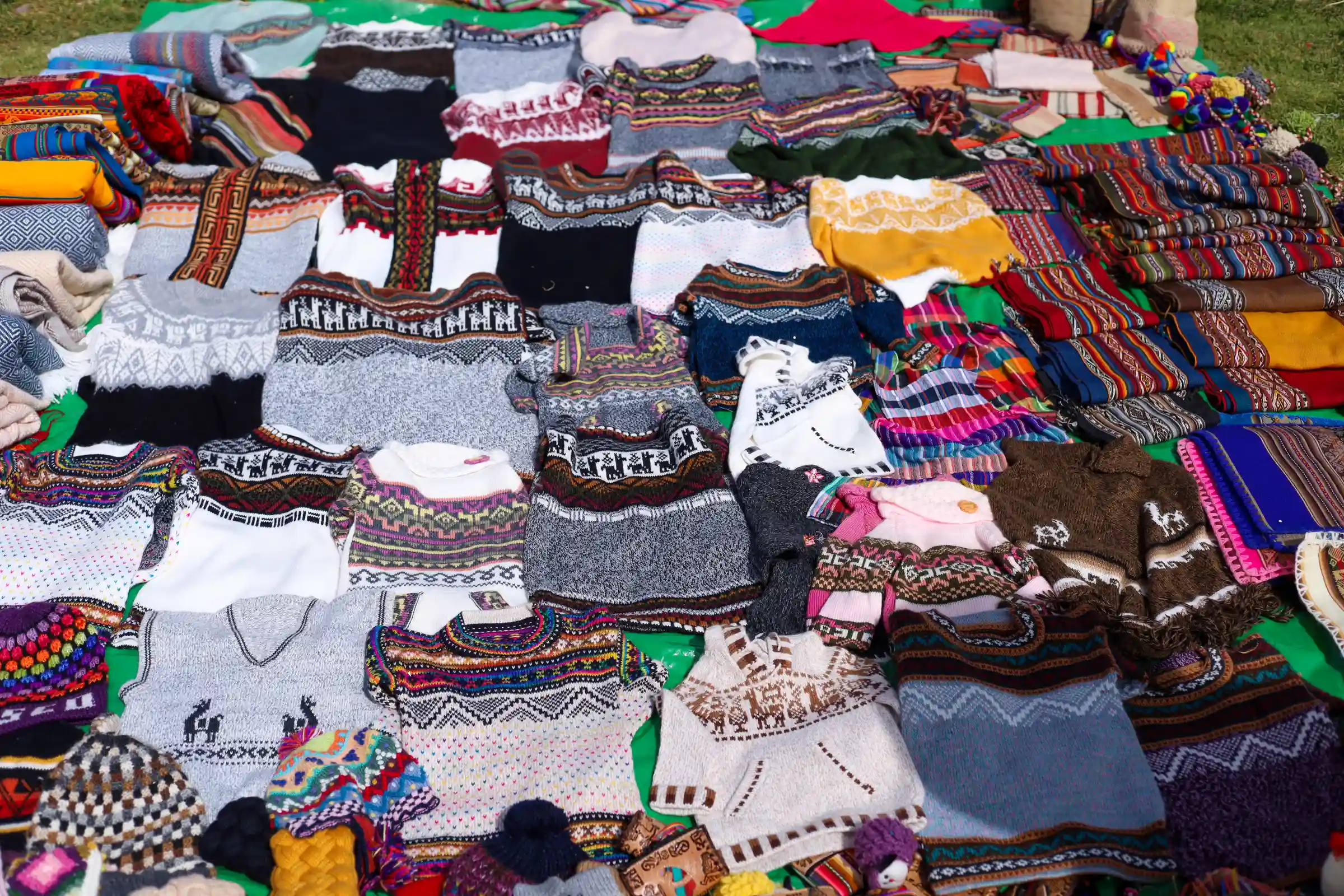
- Textiles.
- Hats.
- Scarves.
- Bags.
- Keychains.
- Small decorations.
- Alpaca-style products.
- Souvenirs.
Quality varies considerably.
Travelers seeking high-quality handmade textiles should learn to distinguish between handmade local products and industrially manufactured souvenirs.
Eating at San Pedro Market
San Pedro contains food stalls where local residents and visitors can eat inexpensive meals.
Possible dishes may include:
- Soups.
- Rice dishes.
- Chicken.
- Trout.
- Stews.
- Noodles.
- Potatoes.
- Local breakfasts.
Eating at a market is a very different experience from dining in a tourism-oriented restaurant near Plaza de Armas.
It is simpler, busier, and more closely connected with everyday local life.
Is It Safe to Eat at San Pedro Market?
Many travelers eat successfully at local markets, but food hygiene can vary between vendors.
Choose busy stalls with:
- High customer turnover.
- Freshly prepared food.
- Clean preparation areas.
- Hot food served hot.
Travelers with particularly sensitive stomachs may prefer cooked meals rather than raw foods.
Use additional caution before important activities such as:
- Inca Trail.
- Salkantay Trek.
- Rainbow Mountain.
- Machu Picchu.
- Long bus journeys.
Wanchaq Market
Wanchaq Market provides a more local experience than San Pedro.
Because it is outside the main tourism center, visitors are more likely to encounter residents completing their everyday shopping.
The market is useful for observing:
- Local produce.
- Meat.
- Fish.
- Fruit.
- Vegetables.
- Household products.
- Prepared foods.
Wanchaq is a good choice for travelers who have already explored San Pedro and want to see another side of Cusco.
Why Visit Wanchaq Market?
Choose Wanchaq if you are interested in:
- Everyday local life.
- Less tourism-focused commerce.
- Fresh produce.
- Local food.
- Photography of ordinary city life.
Unlike San Pedro, the primary purpose of Wanchaq is not tourism.
Approach the market as a guest in a working commercial space.
Ttio Market
The Ttio area contains another important neighborhood market experience.
It is particularly interesting for travelers staying outside the historic center or those who want to explore modern residential Cusco.
Here you may encounter fewer souvenir stalls and more products intended for local households.
This can include:
- Vegetables.
- Fruits.
- Meat.
- Grains.
- Bread.
- Local food.
- Household products.
For cultural travelers, this difference is valuable.
You are seeing how people shop rather than visiting an attraction created primarily for tourists.
Vinocanchón Market
Travelers interested in a truly local market experience may consider the Vinocanchón area, associated with one of Cusco’s larger commercial markets.
It is farther from the historic center and generally receives far fewer international visitors than San Pedro.
This market is particularly useful for understanding the scale of food distribution and commerce in Cusco.
Visitors may see:
- Large quantities of fruit.
- Vegetables.
- Grains.
- Potatoes.
- Corn.
- Regional produce.
- Commercial activity.
This is better suited to experienced independent travelers or visitors accompanied by someone familiar with Cusco.
San Pedro vs Local Neighborhood Markets
| San Pedro | Neighborhood Markets |
| Close to Plaza de Armas | Farther from tourism center |
| Many international visitors | Mostly local shoppers |
| Souvenirs available | Mainly everyday products |
| Easy to explore independently | More local knowledge useful |
| Good first market | Better for deeper cultural experience |
First-time visitors should generally begin with San Pedro.
Travelers with more time can explore beyond the center.
Traditional Markets Outside Cusco City
The broader Cusco region also contains markets that can easily be combined with tours.
Chinchero Market
Chinchero is famous for its traditional textile culture.
Markets and weaving centers around Chinchero provide opportunities to see:
- Traditional clothing.
- Textiles.
- Alpaca and wool products.
- Local crafts.
- Agricultural products.
Chinchero can be combined with:
- Moray.
- Maras Salt Mines.
- Sacred Valley tours.
Textiles in Chinchero
Visitors frequently see demonstrations explaining traditional textile production.
The process can involve:
- Cleaning wool.
- Spinning fibers.
- Preparing natural dyes.
- Dyeing wool.
- Weaving patterns.
Colors may traditionally be created using:
- Plants.
- Minerals.
- Insects.
- Other natural materials.
Travelers interested in textiles should ask about:
- Materials.
- Production time.
- Whether the piece is handmade.
- Origin of the product.
Pisac Market
Pisac Market is one of the best-known markets in the Sacred Valley.
It combines regional commerce with a substantial handicraft industry.
Travelers may find:
- Textiles.
- Ceramics.
- Jewelry.
- Clothing.
- Art.
- Souvenirs.
- Regional products.
Pisac can easily be combined with a visit to the Pisac Archaeological Site.
Cusco Market vs Pisac Market
| Cusco Markets | Pisac Market |
| Everyday city life | Sacred Valley setting |
| Food and produce | Strong handicraft focus |
| Local residents | Mix of locals and travelers |
| Easy from city hotels | Requires travel from Cusco |
| San Pedro good for food | Pisac excellent for crafts |
Both are worth visiting if your itinerary allows.
What Food Should You Try at a Cusco Market?
Markets provide opportunities to try simple local products rather than elaborate restaurant dishes.
Fresh Fruit
Try fruits you may not commonly encounter at home.
Ask the vendor what is in season.
Fresh Juice
A fruit juice can be one of the easiest market experiences.
Choose your fruit combination and watch it being prepared.
Choclo con Queso
Large-kernel Andean corn served with cheese is a simple classic.
It combines two important products from Andean agriculture.
Local Bread
Try regional bread with:
- Cheese.
- Avocado.
- Coffee.
Different towns around Cusco have their own bread traditions.
Soups
Markets often have stalls specializing in soups.
A warm soup can be especially enjoyable during cool Cusco mornings.
Quinoa
Quinoa may appear in:
- Soups.
- Breakfast dishes.
- Drinks.
- Prepared meals.
Potatoes
Look for meals using native potatoes.
The number of varieties can surprise travelers accustomed to only one or two commercial types.
Traditional Ingredients to Look For
Cusco markets can introduce travelers to ingredients such as:
- Quinoa.
- Kiwicha.
- Tarwi.
- Purple corn.
- Giant Cusco corn.
- Native potatoes.
- Rocoto.
- Ají amarillo.
- Huacatay.
- Muña.
- Coca leaves.
- Chirimoya.
- Lucuma.
- Granadilla.
Learning these ingredients makes restaurant menus much easier to understand later in your trip.
What Is Huacatay?
Huacatay is an aromatic Andean herb commonly used in Peruvian cooking.
Its distinctive flavor appears in sauces and regional dishes.
Travelers visiting local markets may see fresh bundles of the herb.
What Is Muña?
Muña is an aromatic Andean plant traditionally prepared as an herbal infusion.
It is commonly encountered in mountain communities around Cusco.
Visitors may see dried or fresh muña sold at markets.
Coca Leaves in Cusco Markets
Coca leaves have deep cultural and historical significance in the Andes.
They may be used traditionally for:
- Chewing.
- Herbal infusions.
- Ceremonial purposes.
Travelers should remember that international regulations concerning coca products are very different from Peruvian regulations.
Do not assume coca leaves or products can legally be transported into another country.
What Souvenirs Can You Buy?
Markets can be useful places for souvenirs.
Popular choices include:
- Textiles.
- Scarves.
- Hats.
- Small bags.
- Ceramics.
- Local chocolate.
- Coffee.
- Salt from Maras.
- Decorative items.
- Handmade crafts.
Alpaca Products: What Should You Know?
Many shops and markets advertise alpaca products.
Quality varies dramatically.
Products may contain:
- Alpaca fiber.
- Blended fibers.
- Synthetic materials.
- Sheep wool.
Very inexpensive items marketed as premium alpaca should be approached carefully.
Ask what the product is made from rather than relying only on a label.
Handmade vs Machine-Made Textiles
Not every colorful textile sold in a market is handmade.
Handmade products generally require much more time and therefore cost more.
Signs of handcrafted work may include:
- Small irregularities.
- More complex patterns.
- Detailed weaving.
- Information about the producer.
- Higher prices.
Buying directly from recognized weaving communities can provide a stronger connection with the people who created the item.
Should You Bargain at Cusco Markets?
Negotiation may be acceptable for certain souvenirs and handicrafts.
However, bargaining should be respectful.
Do not aggressively reduce the price of a handmade item that required many hours or days of work.
For everyday food products, fixed prices may be more common.
Responsible Bargaining
A good principle is:
Negotiate politely, not competitively.
Remember that a small amount of money may mean much more to the person selling the product than it does to the traveler.
Best Time to Visit Cusco Markets
Morning is generally the best time.
Advantages include:
- Fresher produce.
- More active vendors.
- Local breakfast activity.
- Better natural light.
- More interesting daily commerce.
Late mornings can also be lively.
Are Markets Open Every Day?
Major city markets generally operate regularly, but activity can vary according to:
- Day of the week.
- Holidays.
- Festivals.
- Local events.
The busiest atmosphere is often during mornings.
How Long Should You Spend at San Pedro Market?
For most travelers:
45 minutes to 1.5 hours is sufficient.
Food lovers and photographers may prefer longer.
You can combine San Pedro with a walking tour of the historic center.
Suggested Cusco Market Walking Experience
A simple morning route could include:
Plaza de Armas
Begin in the historic center.
San Francisco Area
Walk toward the San Francisco area while observing local streets and businesses.
San Pedro Market
Spend approximately one hour exploring different sections.
Local Café
Finish with Peruvian coffee or a light lunch nearby.
This creates an easy cultural activity without requiring transportation.
Market Visit on Your First Day in Cusco
A market can be a good activity during acclimatization.
Unlike Rainbow Mountain or Humantay Lake, exploring San Pedro does not require strenuous high-altitude hiking.
Take it slowly.
Cusco is still approximately 3,400 meters / 11,155 feet above sea level.
Even walking through the city can feel tiring during your first day.
Suggested Cusco Itinerary Including Traditional Markets
| Day | Activity |
| Day 1 | Arrival, Plaza de Armas and San Pedro Market |
| Day 2 | Cusco City Tour |
| Day 3 | Sacred Valley and Pisac Market |
| Day 4 | Machu Picchu |
| Day 5 | Maras, Moray and Chinchero |
| Day 6 | Free day, food tour or additional market |
This itinerary combines archaeology with living culture.
Are Traditional Markets Safe in Cusco?
Markets are busy public spaces.
Most visitors explore them without problems, but normal urban precautions should be followed.
Keep your:
- Phone.
- Wallet.
- Passport.
- Camera.
secure.
Avoid leaving valuables in open backpack pockets.
Pickpocket Prevention
Busy market aisles naturally create opportunities for petty theft.
Helpful precautions include:
- Wear your backpack securely.
- Keep your phone out of back pockets.
- Carry only the cash you need.
- Avoid displaying large amounts of money.
- Stay aware in crowded sections.
These are standard precautions for busy markets anywhere in the world.
Should You Bring Your Passport?
For a simple market visit, carrying your original passport is generally unnecessary unless you need it for another activity that day.
A secure copy or other appropriate identification may be more practical for casual sightseeing.
Store important travel documents safely.
Can You Take Photos in Cusco Markets?
Yes, but photography should be respectful.
Wide photographs of products and market scenes are generally straightforward.
When photographing a specific vendor or person closely, ask permission.
Photography Etiquette
Do:
- Smile.
- Ask first.
- Respect a refusal.
- Buy something when appropriate.
- Avoid blocking business.
Do not treat vendors as objects for photographs.
Markets are workplaces.
Best Things to Photograph
Look for:
- Native potatoes.
- Corn.
- Fruit displays.
- Flowers.
- Bread.
- Spices.
- Textiles.
- Juice stalls.
- Market architecture.
- Daily interactions.
Visiting Markets With Children
Markets can be excellent for families because they provide an interactive way to learn about food and culture.
Children may enjoy:
- Choosing fruit.
- Trying juice.
- Seeing colorful corn and potatoes.
- Looking at textiles.
Keep children close because markets can become crowded.
Markets for Vegetarian and Vegan Travelers
Traditional markets are particularly interesting for plant-based travelers.
You will see enormous quantities of:
- Fruit.
- Vegetables.
- Grains.
- Potatoes.
- Corn.
- Beans.
- Quinoa.
Prepared-food sections may have fewer clearly identified vegan options, so ask about ingredients.
Gluten-Free Travelers
Many traditional Andean ingredients are naturally gluten-free, including:
- Potatoes.
- Corn.
- Quinoa.
- Rice.
However, people with celiac disease should ask about cross-contamination when purchasing prepared foods.
Cusco Markets and Andean Agriculture
One of the greatest benefits of exploring a traditional market is seeing the extraordinary agricultural diversity of the Andes.
Cusco’s cuisine has developed around products adapted to radically different environments.
Within a few hours of the city, elevation can change significantly.
This allows regional trade in products from:
- High mountain zones.
- Inter-Andean valleys.
- Cloud forest.
- Tropical areas.
Markets bring these ecosystems together.
Potatoes and Andean Culture
Potatoes are not simply a side dish in Peru.
They are deeply connected with Andean agriculture.
Farmers have developed varieties adapted to:
- Different elevations.
- Different soils.
- Frost.
- Rain.
- Dry conditions.
Seeing dozens of potato varieties in a market helps travelers appreciate the agricultural knowledge behind Peruvian cuisine.
Corn and the Sacred Valley
The Sacred Valley is particularly famous for producing large-kernel corn.
Corn has historical, economic, culinary, and ceremonial significance throughout the Andes.
Markets provide opportunities to see it in several forms.
Markets During Cusco Festivals
Markets can become especially interesting around major celebrations.
Demand increases for:
- Flowers.
- Traditional foods.
- Special ingredients.
- Decorative products.
Cusco’s major festivities can therefore influence what travelers see inside local markets.
Traditional Markets vs Supermarkets
Visiting both reveals how food shopping differs within modern Cusco.
| Traditional Market | Supermarket |
| Local vendors | Corporate retail |
| Regional products | Standardized products |
| Negotiation sometimes possible | Fixed prices |
| Strong cultural experience | Convenient shopping |
| Fresh produce sections | Packaged products |
| Direct interaction | Less personal |
For travelers, markets provide significantly more cultural value.
Market Tour vs Visiting Independently
Both are possible.
Visit Independently If:
- You want to browse.
- You mainly want photographs.
- You are comfortable exploring.
- You only have basic questions.
Choose a Guided Market Experience If:
- You want to understand ingredients.
- You want food explanations.
- You are interested in Andean agriculture.
- You want to combine the market with cooking.
- You want help communicating with vendors.
A knowledgeable guide can transform an ordinary market walk into a cultural and culinary experience.
Cooking Classes and Market Visits
Some culinary experiences in Cusco begin with a market visit.
Travelers may learn how to identify ingredients before preparing Peruvian dishes.
This can be especially interesting for travelers interested in:
- Gastronomy.
- Cooking.
- Agriculture.
- Local food traditions.
A market plus cooking class can occupy approximately half a day.
What to Bring to a Cusco Market
You do not need special equipment.
Bring:
- Small amount of cash.
- Reusable shopping bag.
- Phone or camera.
- Hand sanitizer.
- Small water bottle.
- Light jacket.
- Rain protection when necessary.
Avoid carrying a large backpack through narrow aisles.
Cash or Credit Card?
Cash remains the most practical payment method at traditional markets.
Carry Peruvian soles in small denominations.
Small vendors may not accept:
- Credit cards.
- Foreign currency.
- Large banknotes.
Common Mistakes When Visiting Cusco Markets
Mistake 1: Visiting Only the Souvenir Section
San Pedro is much more interesting once you explore the produce and food areas.
Mistake 2: Photographing People Without Asking
Markets are working environments.
Always show respect.
Mistake 3: Carrying Too Many Valuables
Bring only what you need.
Mistake 4: Assuming Everything Is Handmade
Ask about materials and production.
Mistake 5: Aggressive Bargaining
A fair price supports local vendors and artisans.
Mistake 6: Ignoring Food Hygiene
Use normal travel precautions when eating.
Mistake 7: Thinking San Pedro Is the Only Market
Travelers with more time should explore beyond the historic center.
Frequently Asked Questions About Traditional Markets in Cusco
What is the most famous market in Cusco?
San Pedro Market is the best-known traditional market among international travelers.
Is San Pedro Market worth visiting?
Yes.
It is one of the easiest places to experience local food, products, and everyday commerce within walking distance of Cusco’s historic center.
How far is San Pedro Market from Plaza de Armas?
It is within comfortable walking distance for most travelers.
What can you buy at San Pedro Market?
You can find:
- Fruit.
- Vegetables.
- Juices.
- Bread.
- Cheese.
- Traditional foods.
- Herbs.
- Textiles.
- Souvenirs.
What is the best time to visit San Pedro Market?
Morning is generally the best time for fresh products and active market life.
Can you eat at San Pedro Market?
Yes.
There are juice stalls and local food sections.
Is food at Cusco markets safe?
Many travelers eat successfully at markets, but hygiene varies.
Choose busy vendors and freshly cooked food.
Is San Pedro Market touristy?
Parts of it are tourism-oriented, particularly souvenir sections.
However, it remains an active local market used by Cusco residents.
Are there more authentic markets in Cusco?
Yes.
Wanchaq, Ttio, Vinocanchón, and other neighborhood markets generally receive fewer international tourists.
What is the best market for souvenirs?
San Pedro is convenient, while Pisac and Chinchero are particularly popular for crafts and textiles.
What is the best market for food?
San Pedro is easiest for first-time visitors.
Local markets such as Wanchaq also provide excellent produce and everyday food.
What market should I visit in the Sacred Valley?
Pisac Market is one of the most popular choices.
Chinchero is particularly interesting for textile traditions.
Can I buy alpaca products at the markets?
Yes.
However, verify materials because not every product labeled as alpaca is made entirely from alpaca fiber.
Should I bargain?
Polite negotiation can be acceptable for some handicrafts.
Avoid aggressive bargaining.
Do market vendors accept cards?
Some tourism-oriented vendors may, but cash is more reliable.
What currency should I use?
Use Peruvian soles.
Can I take pictures?
Yes, but ask permission before taking close photographs of vendors or local residents.
Are markets good for children?
Yes.
They provide a colorful and educational introduction to Peruvian food and culture.
Can I find vegetarian food?
Yes.
Markets contain a huge variety of vegetables, fruits, grains, and plant-based ingredients.
Can I find local coffee?
Yes.
Cusco and surrounding regions produce coffee, and packaged local coffee can be found in markets and specialty stores.
Can I buy Peruvian chocolate?
Yes.
Chocolate made with Peruvian cacao is widely available throughout Cusco.
Can I buy Maras salt?
Yes.
Packaged Maras salt is commonly sold in Cusco.
Can I buy coca leaves?
Coca leaves are available locally, but travelers should never assume they can legally bring them into another country.
What should I try at the market?
For a simple first visit, consider:
- Fresh fruit.
- Fruit juice.
- Local bread.
- Choclo with cheese.
- Regional potatoes.
- Peruvian coffee or chocolate.
Is a Market Visit Worth Adding to a Cusco Itinerary?
Absolutely.
Cusco’s archaeological attractions explain the city’s past.
Its markets help explain how the city lives today.
A market visit requires relatively little time and can easily be incorporated into:
- An acclimatization day.
- A historic-center walking tour.
- A food tour.
- A cooking class.
- A free morning.
For travelers interested in local culture, it is one of the easiest experiences to add.
Final Tips for Visiting Traditional Markets in Cusco
Traditional markets can reveal more about Cusco than a souvenir shop or international restaurant.
Keep these recommendations in mind.
Visit in the morning.
The markets are more active and produce is fresher.
Explore beyond souvenirs.
Fruit, vegetables, bread, cheese, herbs, and prepared food are often the most interesting sections.
Carry small amounts of cash.
Peruvian soles are the easiest way to pay.
Try something unfamiliar.
A new fruit or local bread can become a memorable part of your trip.
Ask before photographing people.
Respect is essential.
Do not over-negotiate.
Fair prices support local families.
Protect your valuables.
Markets can become crowded.
Visit more than San Pedro if you have time.
Neighborhood markets provide another perspective on local life.
Combine markets with regional travel.
Pisac and Chinchero provide excellent market experiences outside Cusco.
Remember that markets are not museums.
They are living commercial spaces where people work and shop every day.
Discover Cusco’s Traditional Markets With Machu Picchu Team
A trip to Cusco should include more than archaeological sites.
Visiting a traditional market allows travelers to discover the ingredients, colors, aromas, agricultural traditions, and everyday routines that continue shaping life throughout the Andes.
From the busy aisles of San Pedro Market to the more local atmosphere of Wanchaq and neighborhood markets, each provides a different perspective on the city.
Travelers continuing into the Sacred Valley can expand the experience by exploring Pisac and Chinchero, where markets connect local agriculture with important textile and handicraft traditions.
At Machu Picchu Team, based in Cusco, we encourage travelers to combine famous destinations such as Machu Picchu and the Sacred Valley with experiences that reveal the living culture of Peru.
Take time to walk through a market, taste a new fruit, discover native potatoes, speak with local vendors, observe traditional ingredients, and look beyond the souvenir stalls.
The archaeological sites explain the extraordinary civilization that once ruled the Andes.
Cusco’s traditional markets show how Andean culture continues to live every day.